Valve has given its first public answer on the extortion emails that have been landing in indie developers’ inboxes this month, the ones demanding a few hundred dollars in Steam items or an AI-made clone of the game ships first. Asked about them on stage at Steam Indie Connect in South Korea on October 27, Tom Giardino of the Steam Business team said it was the first he had heard of the practice, that extortion “is more a matter for investigators than for game platforms,” and that developers should still send Valve the cases: “If you report such cases, I’d like to look into them more and help in some way.” The session, co-hosted by Valve, the Busan Indie Connect Festival organizing committee and the Korea Creative Content Agency, was transcribed by the Korean outlet Inven; the quotes here are translated from that transcript.
The rest of the Q&A covered the ground developers have been arguing about all month: Valve will not restrict games made with AI, Next Fest is deliberately random for its first two days, and wishlists do nothing for a game’s visibility on the store.
Giardino heard about the extortion emails on stage and pointed developers to the police
A developer in the audience said indie studios were receiving emails threatening to copy their games with AI and release the copies first unless they paid, and asked whether Steam had any protection. Giardino expressed regret, said he had not come across the scheme before, and framed it as a law-enforcement problem that Valve would nonetheless look at if reported. Asked what defenses exist, he said the first line is community and personality: a developer site, direct customer relationships, a game people recognize as yours, with or without AI in the pipeline. He added that this takes time, so studios should “keep adding features, personality and creativity” rather than relying on one mechanic that is “easy to copy.”
No tool bans: “I don’t want to be a gatekeeper”
On whether Valve would restrict AI-made games, Giardino was direct. “I don’t want to be a gatekeeper telling developers which tools they should or shouldn’t use,” he said, calling the use of AI in development the developer’s decision. “Rather than limiting developers’ access, making Steam a smarter, more dynamic platform is the starting point of our philosophy.” Inven’s write-up notes that Valve offered no finished solution to either the clones or the low-quality flood, only the direction it intends to take.
Next Fest is random for two days, and Valve knows what that lets through
Another developer said the community had complained loudly about low-quality games during this month’s Next Fest and asked whether the next one would change. Marc Wilkinson, also of the Steam Business team, explained the design: for the first two days players see demos essentially at random, and personalized recommendations take over after that. The randomness stops anyone gaming the system and gives every entry a fair share of exposure, and Wilkinson said many of the articles about junk in Next Fest were written after looking only at those two days. “We know some low-quality games will get exposure as a result,” he said. “We’re fully aware of the situation, and many people are thinking about how to solve this problem.” Our own Next Fest numbers show what rose to the top once recommendations kicked in.
Wishlists don’t raise visibility; buying and playing do
A question about “wishlist farming” and the new personalized Calendar drew the clearest line of the night. Wilkinson said wishlists are a useful marketing indicator but do not affect visibility on Steam at all. “What raises visibility is the number of people who buy and play,” he said, and he does not recommend farming wishlists. Giardino added that developers should treat wishlists as “a thermometer and speedometer” for interest rather than “a magic number” to hit.
The emails behind the question: $200 in Steam items within 24 hours
The question came from a real wave. Earlier this month Takashi Mochibe, developer of the upcoming tactical RPG Dragon’s Chronicles: Twin Stars of Reginleiv, published an email demanding $200 in Steam items within 24 hours, with the sender claiming to have rebuilt the game with AI and to have enough to publish it first. No proof was attached. Mochibe’s public reply was “Isn’t that pretty cheap?” followed by “Feel free to copy it if you want, but you’ll probably be the one regretting it,” and he has said he suspects random phishing spam aimed at indie developers rather than a targeted threat. Weasel Pit, the studio behind Iron Pilgrim, reported a near-identical $200 demand on September 30, and Psicodart Games said its roguelike Circusar received one on October 2. No studio has reported paying.
Spookitchen pulled its demo, and other studios are tagging themselves “ORIGINAL”
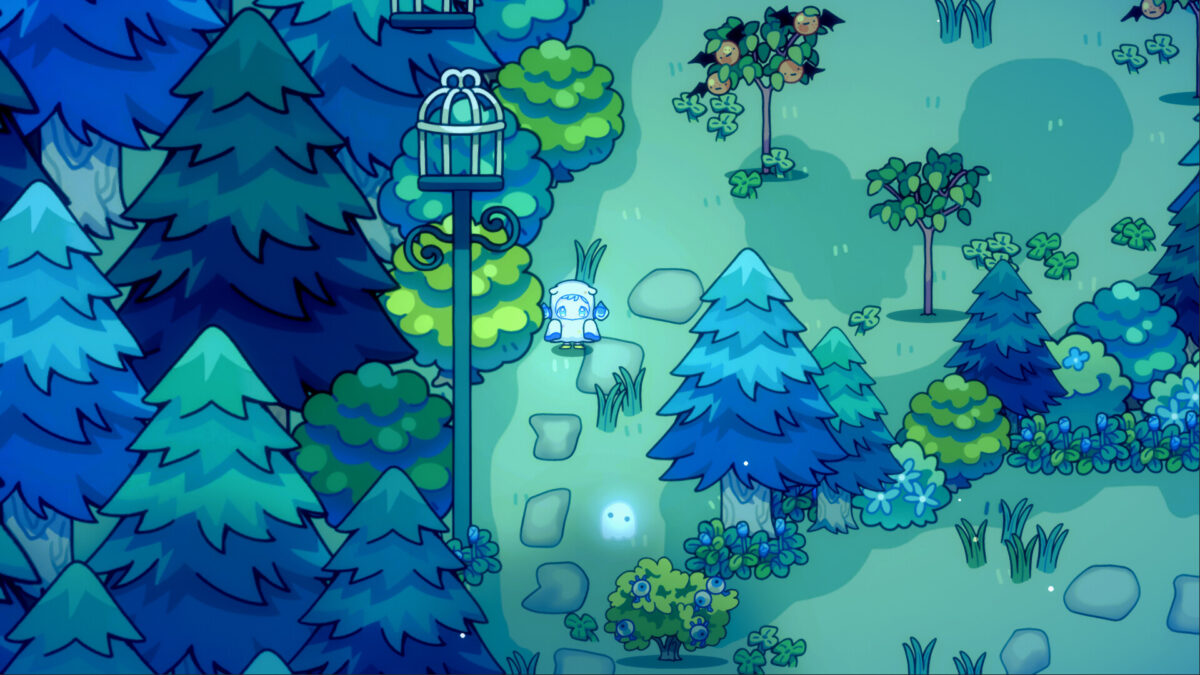
The clone fear has already changed what some studios ship. YNOT, the two-person Korean team behind the Halloween cooking game Spookitchen, was told on October 17 that someone was copying the game with AI and took its public Steam demo down on October 20, days into Next Fest. “Pulling the demo is only a temporary measure, not a fundamental solution,” the team wrote, adding that it hoped going public would show “that stealing and cloning even an unreleased small game won’t be easy.” Studio Bitdot, whose Needle In A Haystack Simulator spawned at least eight similarly named titles, added an “ORIGINAL” tag to its store images instead of pulling anything.
The r/gaming thread on Valve’s answer passed 800 upvotes and 200 comments in its first hours. The most upvoted replies were skeptical that any store could police copycats at all, and the most practical suggestion was for Steam to show when a store page was first created so buyers can see which version came first.
Valve responds to Steam devs getting extortion emails threatening AI clones of their games
byu/JohnGalactusX ingaming