Meta sold fewer Quest headsets last quarter, and it says it will slow down on VR hardware until it has something it considers a real leap. On the company’s third-quarter earnings call on October 21, chief financial officer Susan Li said Reality Labs revenue came in at $443 million, down 6 percent from a year ago, because of lower Quest headset sales. Growth in AI glasses revenue partly offset the drop.
Chief executive Mark Zuckerberg told investors that Meta will “only ship new devices when we have major breakthroughs” in VR, and that the company will pace its VR investment more slowly so it can put what it calls personal superintelligence first. He pointed to the Meta VR Glasses shown at Connect in September as the kind of breakthrough that clears the bar.
Reality Labs lost $4.13 billion in three months
The division’s operating loss for the quarter was $4.13 billion. Meta now expects Reality Labs to lose between $18 billion and $19 billion across 2026, which is less than it lost in 2025, and it told investors the loss should shrink to about $15 billion in 2027 as spending shifts toward AI. After that, Zuckerberg said, the segment should trend toward profitability.
Meta’s total revenue for the quarter was $64.6 billion, up 26 percent, so the headset business is small next to the ads machine. That is why Meta can afford to wait out a Quest slump in a way a company that lives on headset sales could not.
Meta VR Glasses arrive in spring 2027 at $1,299.99
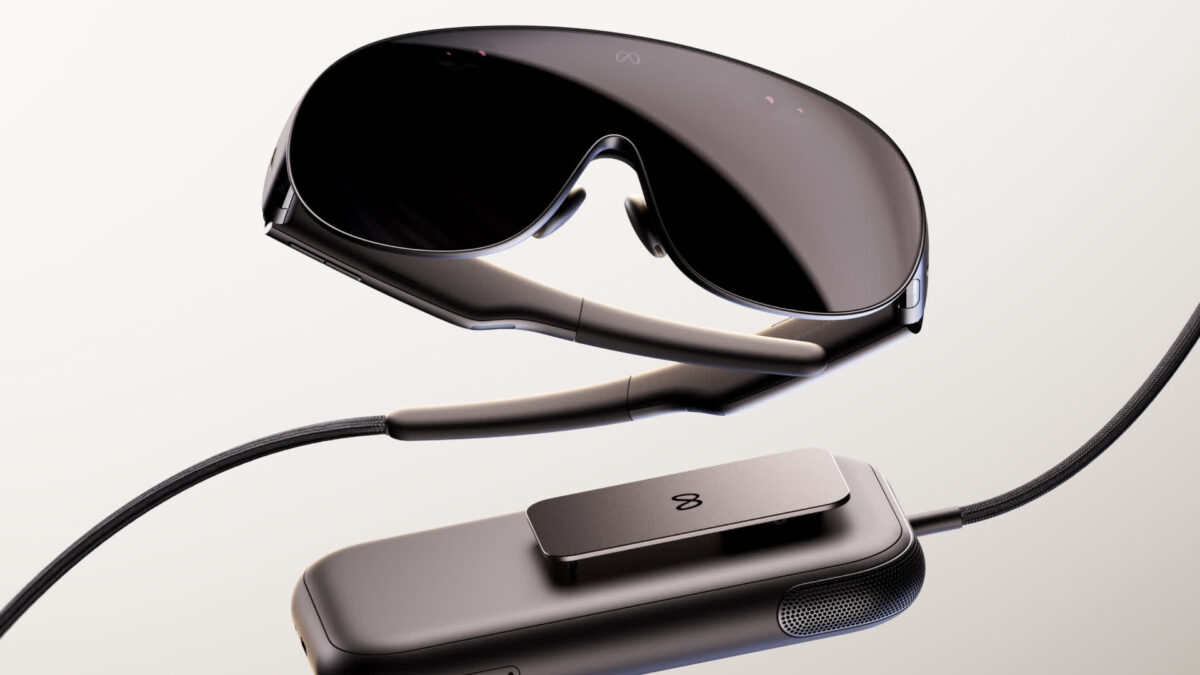
The next VR device on Meta’s roadmap is not a Quest. The Meta VR Glasses, unveiled at Connect 2026 on September 23, weigh about 100 grams and run off a separate compute puck connected by a cable. They are priced at $1,299.99 and launch in spring 2027. Meta pitches them as a personal cinema, a courtside seat and a workspace, which is a long way from the Quest’s pitch as an affordable gaming headset.
Meta has not announced a new Quest headset, and Zuckerberg’s comments suggest one will not arrive until the company has a device it considers a breakthrough. For Quest 3 and Quest 3S owners that means a longer gap between hardware generations, though the current headsets keep getting software updates and Meta’s own glasses still need a VR software library to sell.
Valve’s Steam Frame arrives as Meta pulls back
The timing matters for PC VR players. Meta’s retreat from fast hardware cycles leaves room for Valve, whose Steam Frame headset we are tracking in our Steam Frame hardware hub. The Quest line still has the largest installed base in VR, but for the first time in years Meta is telling investors it is in no hurry to replace it.