
30-Second Quick-Start (TL;DR)#
- Don’t loot all legendary gear early—it scales to your level when found, so wait until mid-to-late game to avoid constant expensive upgrades.
- Leave one item in chests to avoid using a time segment while still claiming the good loot.
- Skip low-value activities like shrine repairs and every ancient circle unless you’re building witchcraft.
- Check NPC merchant inventories regularly—they refresh as you level and carry crucial manuals and recipes.
- Don’t sabotage every core objective; stop once the core member is fully angered and you unlock their hidden quest.
- Raise infamy cautiously early—it locks gates, adds patrols, and makes exploration harder permanently.
- Craft healing ointments (ribwort + water) instead of relying on food; equip them to quick slots before combat.
- Don’t equip heavy armor without the Second Skin perks, or you’ll suffer movement penalties.
- Spend perk points carefully—no respec exists, and spreading too thin delays powerful late-game abilities.
- Heal before talking to NPCs at night when low on health, or Cohen may bite them and end their questline.
- Climb scouting towers at night (free, no time cost) to reveal nearby activities and plan your route.
- Quick-slot your torch to avoid inventory spam in dark areas.
- Read manuals and recipes from your inventory to unlock perks and abilities before leveling up.
- Use shrine storage before you’re over-encumbered; sell junk instantly and find the fence in Sprata for silver exchange.

What This Guide Helps You Do#
This guide helps you avoid the 14 most common and costly mistakes in The Blood of Dawnwalker so you don’t waste time, money, and progression on activities and choices that don’t serve your build or story goals. Whether you’re early in your playthrough or already mid-level, these mistakes can lock you into permanent penalties, drain your resources, or leave you with perks you can never respec. It’s best for players who want to understand the game’s systems before they hit a wall—or for those already playing who realize something feels inefficient and want to course-correct.
Requirements & Prep#
You don’t need special items or unlocks to avoid these mistakes, but a basic understanding of time segments, inventory management, and the perk system will help. If you’re just starting, you’ll encounter most of these pitfalls naturally—this guide simply shows you how to sidestep them. No specific consumables or gear are required to read this, though understanding how legendary items work and how to craft healing ointments (ribwort + canteen of water) will be useful as you progress.
Optional but Helpful: Keep a mental note of which NPC merchants you encounter early, especially those selling manuals and recipes. You’ll want to revisit them regularly.
Route Overview#
The 14 mistakes in The Blood of Dawnwalker span resource management, quest prioritization, combat preparation, and inventory handling. Rather than a linear path, think of them as guardrails: some protect your early economy (don’t loot all legendaries yet), some preserve your flexibility (don’t spend perks blindly), and some prevent permanent world changes (be cautious with infamy). The flow is roughly: understand gear scaling → manage time efficiently → pick valuable quests → prepare combat properly → handle inventory smartly. By the end, you’ll have a checklist to audit your own playthrough and catch mistakes before they compound.
Step-by-Step Walkthrough#
Mistake 1: Looting All Legendary Gear Too Early#
Legendary and unique items in The Blood of Dawnwalker scale to your character level when you first find them. If you loot a legendary sword at level 10, it stays level 10 forever—until you upgrade it at a blacksmith. You can upgrade any legendary item all the way to level 50, and every 10 levels the item’s buffs scale up as well, so the gear remains viable end-game. The problem is cost: upgrading legendary gear is expensive, and if you grab a full legendary set at level 10, you’ll spend all your money just keeping it current as you level.
What to do: Pick one legendary sword you like early and upgrade it as you level for consistent damage output. Leave legendary armor pieces for mid-to-late game when you’ve more money and can afford the upgrade costs without draining your economy. The stats on the item matter most—only grab legendaries that actually fit your build and playstyle, not just because they’re rare.
Mistake 2: Not Using the Chest Exploit to Save Time#
Time segments are a currency in The Blood of Dawnwalker. Many chests cost one time segment to fully loot. Here’s the thing: if you leave a single unwanted item in the chest, it doesn’t count as looted, so the time segment doesn’t progress. You can pull out all the good gear and leave the junk behind, essentially getting free loot.
What to do: When you encounter a chest with a time cost, loot the valuable items and deliberately leave one crappy item inside. You’ll skip the time penalty. Note that if there’s a related quest, you won’t get the quest experience, but you can grind a few mobs in the wilderness to compensate.
Mistake 3: Wasting Time on Low-Value Open World Activities#
Not every activity on the map is worth your time. Broken shrines, for example, take one hour (one time segment) to repair, but shrines are already fast travel and storage points—repairing them is pointless. Ancient circles reward witchcraft manuals and random loot, but if you’re not investing in witchcraft abilities, you’re spending time on rewards you don’t need.
What to do: Evaluate each activity before committing. Ask yourself: Does this reward fit my build? Is there a faster way to get the same resource? If the answer is no to either, skip it and come back later if you’ve time left. You can complete the main quest and companion quests with plenty of time to spare, so don’t avoid exploration—just be selective about which activities you prioritize.
Mistake 4: Ignoring NPC Merchants#
Most games have static merchant inventories. The Blood of Dawnwalker is different: NPC merchants refresh their stock as you level up. Merchants selling manuals and recipes are especially valuable because these unlock perks and crafting abilities you’ll need throughout the game.
What to do: Check NPC merchant inventories regularly as you level. Don’t pass by a merchant and assume they’ve nothing useful—come back every few levels. Be aware that some merchants can die during certain quests, so if you see something you want, grab it before it’s too late.
Mistake 5: Not Looting Random Chests and Bodies#
All loot in The Blood of Dawnwalker is randomized except for a few legendary weapons and unique named relics at specific locations. This means random chests and bodies always have a chance to contain something valuable.
What to do: Loot everything you encounter. You never know what’s inside, so treat every chest and corpse as a potential source of useful gear or materials.
Mistake 6: Wasting Time on Core Sabotage Missions#
Gold diamond symbols on the map mark core sabotage activities, each costing three time segments to complete. Sabotaging these increases a core member’s anger level. Once their anger is fully triggered (visible when you hover over their face), you unlock a hidden quest to take them down. You don’t need to sabotage every objective—stopping once they’re fully angered is usually enough.
What to do: Go to sabotage locations, kill the enemies for experience and loot, but skip the three-segment objective unless you’re gathering allies for a boss fight or deliberately raising infamy. Watch the anger meter on the core member’s portrait. Once it’s maxed, you can fight them whenever you’re ready. Sabotaging beyond that point is wasted time unless you’ve a specific reason (infamy gain or ally recruitment).
Mistake 7: Raising Infamy Too Early#
Each sabotage mission raises your infamy level. Early on, this seems harmless, but infamy triggers permanent world changes: additional soldier patrols, new checkpoints, higher merchant prices, locked city gates, and head hunters tracking you down. These changes stick around and make exploration significantly harder.
What to do: Explore the world and complete side quests and companion missions early instead of rushing to sabotage the court. Once you’re leveled up and prepared to fight the core members, you can raise infamy aggressively. As a bonus, some head hunters carry legendary gear you can loot from them.
Mistake 8: Relying on Food for Healing#
Regular food like onions provides slow overtime healing, which is nearly useless in combat. You need instant healing to survive encounters.
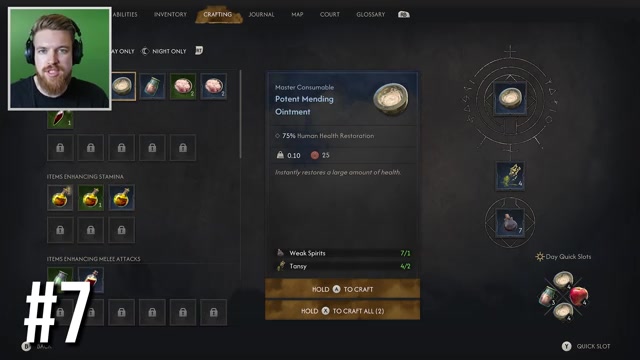
What to do: Craft minor mending ointments as soon as you can using ribwort (found all over the map with focus sight) and a canteen of water (buy from general stores). These restore 30% health instantly, even during combat. Unlock stronger versions as you find recipes. Crucially, put these healing items in your quick slot before combat—you can’t use inventory items while fighting.
Mistake 9: Equipping Heavy Armor Without Perks#
Medium and heavy armor come with movement and stamina penalties. If you equip heavy armor without the right perks, you’ll be slower and weaker than if you’d stuck with lighter gear.
What to do: If you want to use medium or heavy armor, invest in Second Skin perks from the sword mastery tree to reduce penalties and get the full armor benefit. That said, these perks aren’t essential—if you’re learning combat, you’ll rarely get hit with lighter armor, making the investment unnecessary.
Mistake 10: Spending Perk Points on Pointless Perks#
The Blood of Dawnwalker has no respec system, and perk points are limited. Spreading yourself too thin across every skill tree delays powerful late-game abilities. Both witchcraft and sword mastery require 35 perk points just to unlock their ultimate abilities—that’s over a full day of in-game time for a single tree.
What to do: Prioritize perks that benefit any build early: health and stamina improvements. Don’t try to master everything. Plan your perk path before spending points. If you’ve points to spend but no good abilities to invest in yet, save the points until you do. You don’t have to spend them all at once.
Mistake 11: Talking to NPCs While Starving for Blood#
When Cohen is in vampire form with critically low health (final health segment), he loses control during conversations and may bite NPCs, potentially killing them and ending their questlines. This is easy to trigger accidentally, especially when dialogue swaps the feed option for other choices.
What to do: If you’re playing as a vampire at night and your health is dangerously low, heal up before talking to any NPC, especially one you’re about to interact with for a quest. This prevents accidental bites and questline breaks.
Mistake 12: Skipping Scouting Towers#
Scouting towers can only be climbed at night and don’t cost any time segments. Climbing them reveals nearby activities, collectibles, and map details, turning exploration from a guessing game into a manageable checklist. You also earn experience for climbing.
What to do: Climb scouting towers early and often at night. They’re free and provide crucial map information that lets you plan your route and know exactly what’s available in each area.
Mistake 13: Not Quick-Slotting Your Torch#
In dark areas, you’ll constantly need light. Without quick-slotting your torch, you’ll spam your inventory every few steps.
What to do: Go to your inventory, find your torch, and click the option to quick-slot it. Now you can toggle it on and off instantly without opening your inventory.
Mistake 14: Forgetting to Read Manuals and Recipes#
Manuals unlock the ability to purchase perks and abilities, but you must read them from your inventory first. Books and notes can also activate additional quests. If you carry unread manuals and skip this step, you’ll miss perks at level-up shrines.
What to do: After exploring, open your inventory and read any manuals, recipes, books, or notes you’ve picked up. Then, when you reach a shrine to level up, you’ll have many more perk options available. If you’ve perk points but no perks you want yet, hold the points until you do.

Troubleshooting & Common Mistakes#
- I looted all legendary gear early and now I’m broke. You’ll need to be selective about which legendaries to upgrade. Focus on one weapon and hold off on full armor sets until mid-game when your income is higher.
- I raised infamy too high and now the world is locked and hostile. These changes are permanent, but you can still complete the game. Plan fights carefully and use stealth where possible.
- I spent perks on abilities I don’t use. There’s no respec. Plan your next perk path carefully and save points if you’re unsure.
- I accidentally killed an important NPC by biting them at night. Their questline is over, but you can usually continue the game. Be more careful about health before nighttime conversations.
- I’m carrying too much and didn’t know about shrine storage. Use any shrine as a storage point and fast-travel to dump items. You don’t need to buy carry weight perks.
- I have manuals I haven’t read. Open your inventory and read them now—they unlock perks you’ll want at your next level-up.
- I’m spending all my time on shrine repairs and ancient circles. Skip these unless they fit your build. Focus on main quests, companion quests, and scouting towers instead.
- I don’t know which merchants are worth visiting. Check every merchant as you level—they refresh stock and carry manuals and recipes you’ll need later.
Advanced Tips & Time Saves#
Fence in Sprata: Most merchants won’t buy silver, so you’ll need to find the fence in the city of Sprata. He exchanges silver for coins and sells powerful legendary equipment. Don’t waste carry weight holding silver—convert it immediately.
Instant Junk Selling: At shrines, there’s a button to sell all junk instantly. Use it. Don’t manually sell items one by one.
Inventory Organization: Shrines also have a button to auto-organize your inventory. Use this to quickly sort gear and see what you’ve got.
Unique and Legendary Retention: Keep all unique and legendary gear you find, even if you’re not using it. You can upgrade it later and it’ll scale with your level. Sell non-unique common and rare gear instead.
Trade Items vs. Junk: Silver and gold are trade items, not junk—you must sell them manually. Don’t hold onto them; they take up carry weight and are only worth money.
Risky Strategy: Deliberately raising infamy to hunt head hunters for legendary gear is viable, but it makes exploration harder for the rest of your playthrough. Only do this if you’re confident in your combat ability and have a clear goal.

FAQ#
Should I loot legendary gear as soon as I find it?#
No—legendary gear scales to your level when found, so looting it at level 10 means it stays level 10 until you upgrade it, which is expensive. Pick one legendary weapon early and upgrade it consistently, but wait until mid-to-late game to grab full legendary armor sets when you’ve more money.
How do I avoid wasting time segments on worthless activities?#
Evaluate each activity before starting: Does the reward fit your build? Is there a faster way to get it? Shrine repairs and every ancient circle are usually skips unless you’re building witchcraft. Main quests, companion quests, and scouting towers are always worth your time.
What’s the best healing method in The Blood of Dawnwalker?#
Craft minor mending ointments using ribwort and canteen of water—they restore 30% health instantly, even in combat. Food heals slowly over time and is nearly useless in fights. Always quick-slot your healing items before combat so you can use them without opening your inventory.
Can I respec my perks if I make a mistake?#
No—there’s no respec system. Plan your perk path carefully and prioritize health, stamina, and perks that fit your build. If you’ve points but no perks you want, save them until you do. Don’t spread yourself too thin across multiple skill trees.
What should I do with my inventory when it’s full?#
Use any shrine as a storage point—you don’t need to buy carry weight perks. Fast-travel to a nearby shrine, dump items, and use the instant junk-sell button. Sell all non-unique, non-legendary gear. Keep unique and legendary items because you can upgrade them later. Convert silver to coins at the fence in Sprata instead of carrying it.
How do I prevent accidentally biting NPCs at night?#
If you’re playing as a vampire and your health is critically low (final health segment), heal up before talking to any NPC. Cohen loses control when starving for blood and may bite them, ending their questline permanently.
Checklist#
- Pick one legendary weapon early and upgrade it as you level; save legendary armor for mid-to-late game.
- Leave one item in chests to avoid time segment costs while claiming good loot.
- Skip shrine repairs and ancient circles unless they fit your build.
- Check NPC merchant inventories regularly—they refresh as you level.
- Don’t sabotage every core objective; stop once the core member is fully angered.
- Avoid raising infamy early; focus on exploration and side quests first.
- Craft minor mending ointments (ribwort + water) for instant healing and quick-slot them before combat.
- Only equip heavy armor if you’ve Second Skin perks from the sword mastery tree.
- Plan your perk path before spending points; prioritize health, stamina, and build-specific perks.
- Heal before talking to NPCs at night when your health is critically low.
- Climb scouting towers at night to reveal nearby activities and plan your route.
- Quick-slot your torch to avoid inventory spam in dark areas.
- Read manuals and recipes from your inventory to unlock perks before level-up.
- Use shrine storage and instant junk-sell buttons; sell non-unique gear and convert silver at the fence in Sprata.
Source & credit#
This guide draws on the excellent video walkthrough by ESO — watch it for the full visual run-through, and give the creator your view:
https://www.youtube.com/watch?v=NQ6mKWYt3nUFollowing The Blood of Dawnwalker? Get an email when we publish a new guide — or update one after a patch.