


Over the course of reviewing Security 51, I logged around six hours behind the security desk. I spent that time verifying security badges, scanning questionable organs, testing blood samples, and making sure cosmic horrors didn’t casually ride the elevator up to the surface.
I’m a big fan of the checkpoint and inspection sim genre. From the absolute classic Papers, Please to more recent hits like Contraband Police and That’s Not My Neighbor, there’s just something strangely satisfying about spotting a tiny discrepancy on a forged document and slamming the deny button. Combine that bureaucratic gameplay loop with an Area 51 and SCP-style containment aesthetic, and Security 51 was immediately right up my alley.
It’s easy to recommend Security 51 on premise alone if you already enjoy this niche. It has a level of visual and mechanical polish that a lot of indie entries in the genre lack. However, while I genuinely enjoyed my time working the checkpoint, Security 51 plays it way too safe. It hits all the expected beats without ever really taking a swing at something new.
Welcome to the Underground
Your shift in Security 51 puts you right at the bottleneck of a secret underground research facility. Instead of guarding a border crossing between two fictional countries, you’re stationed at the elevator checkpoint separating deep-facility personnel, and whatever they’re experimenting on down there, from the outside world.
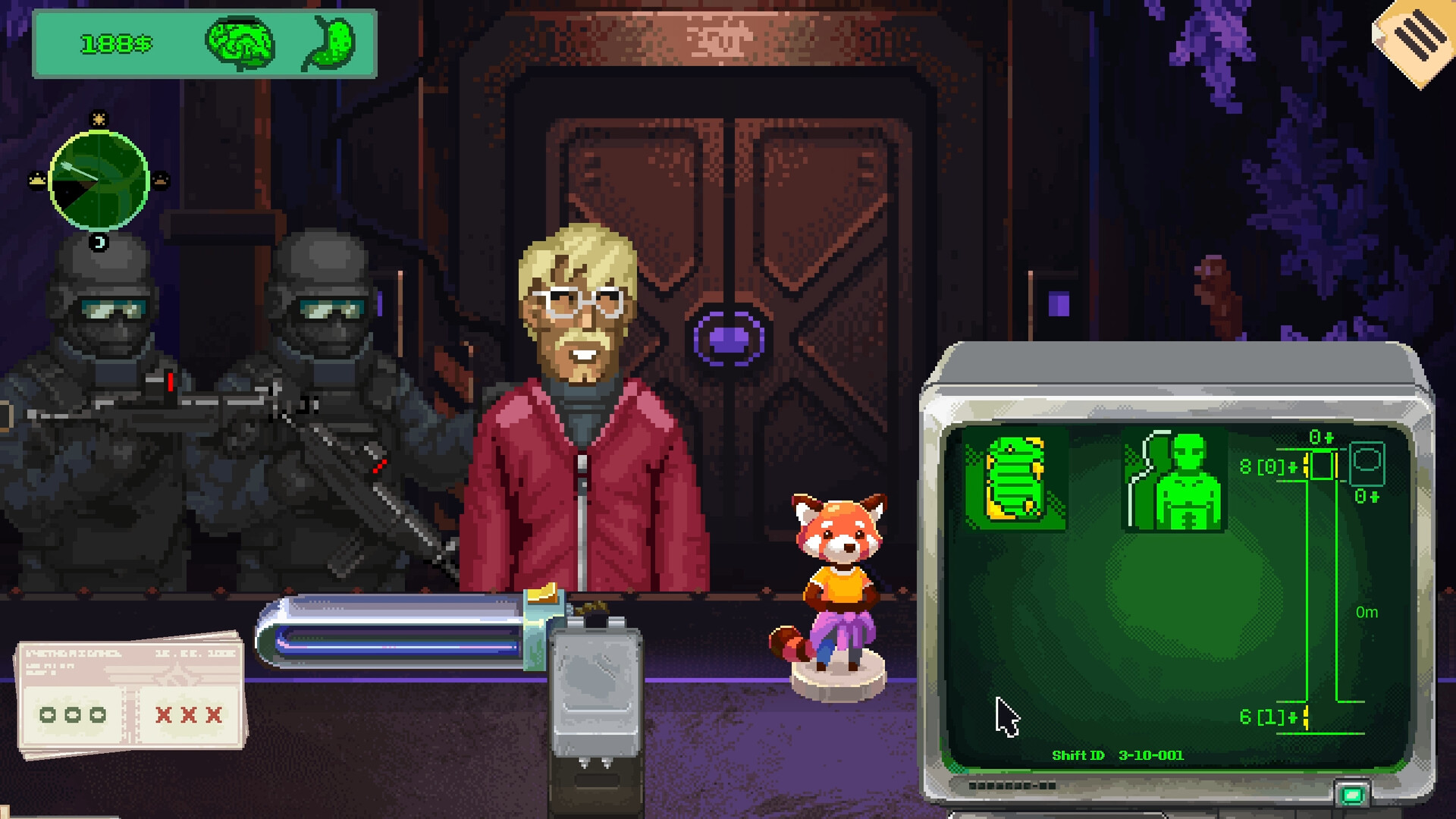
Every day, scientists, janitors, guards, and subjects step up to your window looking for clearance to head up the elevator. Your job starts out straightforward enough: check their ID, verify their clearance level, and make sure their face actually matches their paperwork. If everything checks out, you send them on their way. If something is off (and in a secret bunker full of anomalies, things are frequently off), you have to quarantine them in isolation cells or take more permanent measures to keep the city above safe.
Where the daily routine really comes alive is during the game’s scripted events. Throughout your shifts, you’ll run into specific, handcrafted encounters and oddball characters that break up the standard randomized visitors. All of these scripted moments are pretty interesting and inject a lot of personality into the facility. They easily ended up being the highlights of my six-hour run, giving you a cool glimpse into the weird lore going on behind the scenes.
More Tools, Same Problems
Fans of previous inspection games will feel right at home with how the desk operates, though Security 51 stumbles a bit with how it handles progression. As the days go by, the facility constantly hands you new tools and procedures to work into your routine. You’ll move from basic visual checks and badge verification to x-raying organs, running blood tests, monitoring camera feeds for static anomalies, and managing your isolation cells.
On paper, expanding your toolkit should steadily ramp up the pressure. In a game like Papers, Please, every new rule feels like another plate you have to keep spinning while the clock ticks down. In Security 51, however, the progression feels awkward. Even as my desk filled up with more gadgets and testing steps, the game never actually got more difficult.
Outside of those neat scripted events, the standard inspections rarely push your deduction skills to the limit. Because the difficulty stays pretty flat from start to finish, all those extra tools don’t make you feel like a sharper investigator. Instead, they just add more busywork to each visitor. By the end of my playthrough, cycling through every scanner and test on each person started to feel tedious rather than tense. You’re doing more clicks per shift, not making harder decisions.
Top-Notch Bunker Vibes
If there’s one area where Security 51 knocks it out of the park, it’s the presentation. The vibe, art style, and sound design are all top-notch. The game looks great in motion, featuring detailed pixel art that gives the sterile underground bunker and its questionable inhabitants a ton of character. Even the grotesque anomaly indicators and scanner interfaces look clean and fit seamlessly into the monitor-heavy workspace.
The audio design does a lot of heavy lifting here, too. From the hum of the fluorescent lights and the mechanical clunk of the checkpoint doors to the eerie ambient tracks, everything works together to create a super cohesive style. It also ran without a hitch. Throughout my six hours, I never encountered any bugs or performance hiccups, making it one of the most polished games of its type I’ve played recently.
Playing It a Little Too Safe
While that polish goes a long way, I couldn’t shake the feeling as the credits rolled that Security 51 left a lot of potential on the table. When you set an inspection game inside an Area 51-style containment facility, the door is wide open for wild new mechanics or genre-bending systems.
Instead, Security 51 sticks rigidly to the established blueprint. I really wish the developers had taken some more chances on new features or deeper systems for the genre rather than playing it so safe. If the quarantine management had deeper strategy, or if the late-game tools actually forced you to cross-reference clues under real pressure instead of just going through a checklist, this could have been an all-timer in the genre.
In the end, Security 51 is a rock-solid, highly polished entry in the inspection sim genre that looks and sounds fantastic. Even when the late-game tool juggling gets a little repetitive and the difficulty fails to ramp up, the cool setting and scripted encounters easily carried me through my six hours at the desk. It won’t dethrone the classics that inspired it, but if you’re itching for another shift behind the glass, this is a job worth taking.