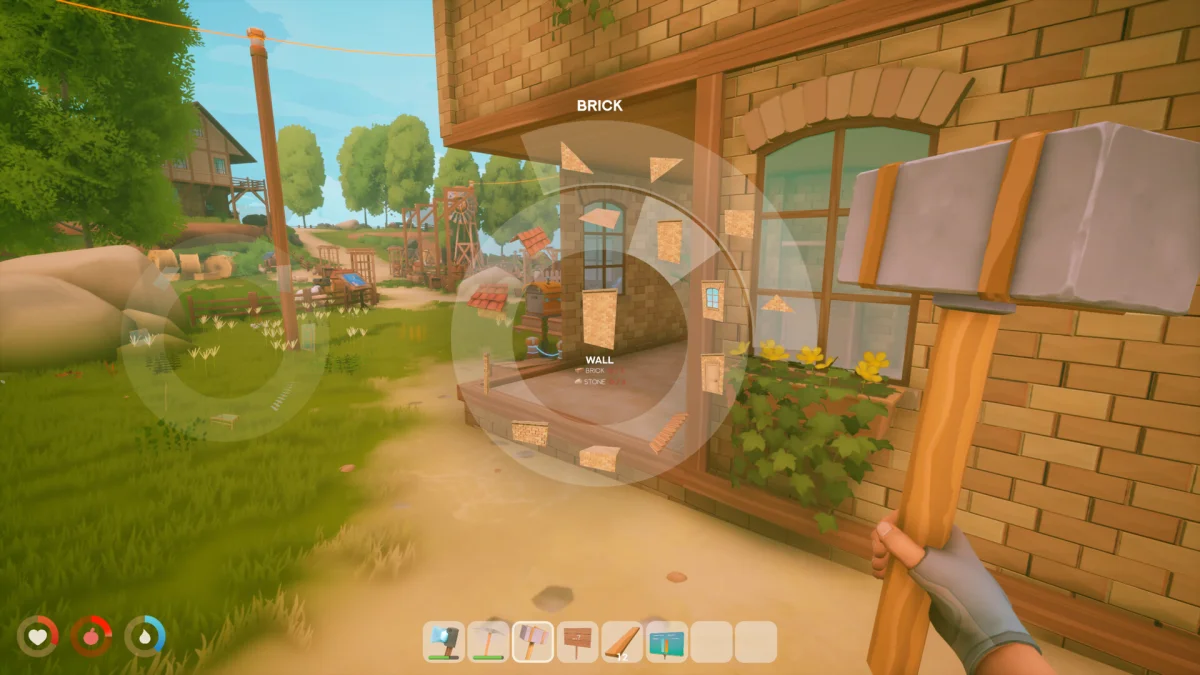
Survival games usually aren’t particularly optimistic about the future.
You’re starving, freezing, being hunted, desperately trying to keep a roof over your head, or some combination of all four.
Solarpunk has a different idea.
Instead of surviving because the world wants you dead, you’re building because the world gives you the space to create something better.
Set across a collection of floating islands, Solarpunk trades oppressive survival mechanics for farming, renewable energy, automation, base building, and exploration. You gather resources, construct increasingly sophisticated machinery, grow food, and eventually take to the skies aboard your own airship in search of new islands and whatever materials are waiting there. The developers themselves describe it as a relaxed survival-crafting game focused on creativity and slow progression rather than pressure.
After roughly 16 hours, I’d seen essentially everything that main progression had to offer.
And for most of those 16 hours, I had a really good time.
Solarpunk Makes Progress Feel Worthwhile
The biggest thing Solarpunk gets right is its progression loop.
Gathering resources leads to new crafting options. New technology lets you improve your base. Those improvements give you access to better production, which eventually opens up new possibilities elsewhere.
It’s a familiar structure for anyone who has spent much time with survival crafting games, but it’s executed well enough here that I almost always felt like I was working toward something meaningful.
Early on, there’s considerably more manual labor involved.
You’re gathering materials yourself, handling basic production, moving things around, and generally doing the kind of repetitive work expected when you’re starting from very little.
Eventually, though, the technology begins taking more of that burden away.
That’s where Solarpunk started clicking for me.
Automation Is Where Everything Comes Together
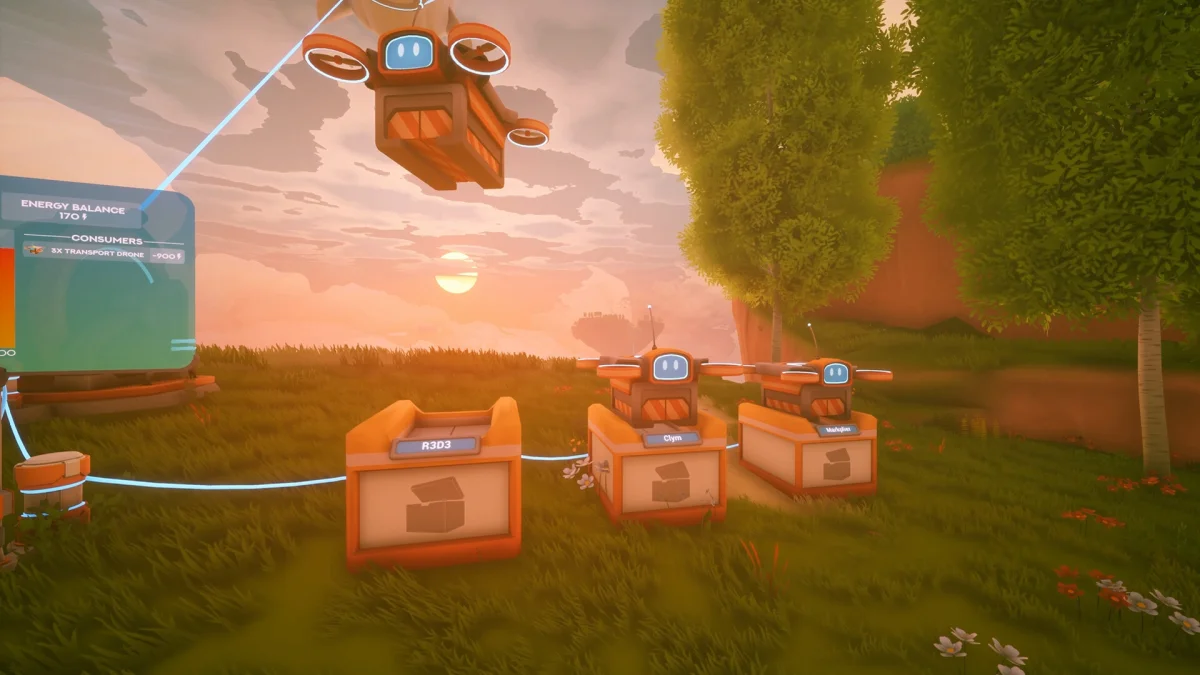
The eventual automation chain is one of the game’s strongest systems.
Solarpunk’s entire aesthetic revolves around the idea of technology existing alongside nature rather than replacing it, so watching my increasingly sophisticated base come together felt thematically appropriate instead of simply becoming another industrial factory.
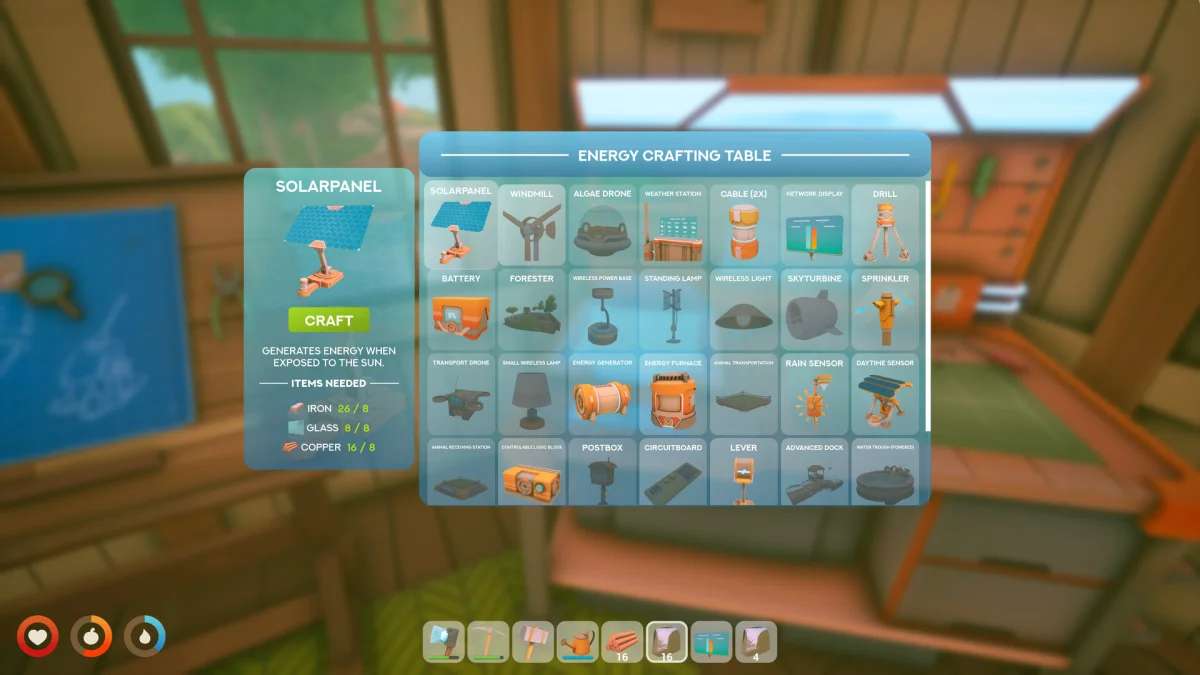
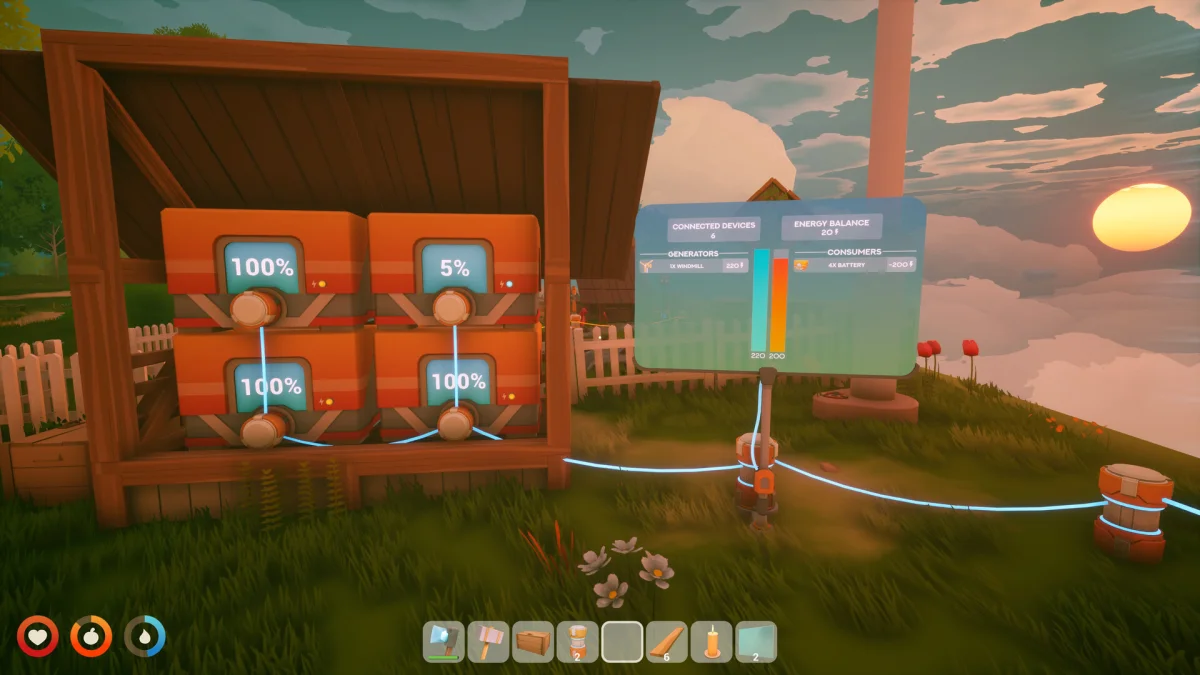
Solar panels, wind power, machinery, farming, and automated systems gradually transform a relatively humble island settlement into something considerably more capable.
It takes time to reach that point.
The beginning is much more hands-on, and there were stretches where I was handling considerably more manual resource gathering than I ultimately wanted to.
But that also makes the eventual transition satisfying.
When systems that previously required my constant attention started working together, I could feel how much my little floating home had evolved.
That sense of progression carries a significant portion of the game.
Building in the Clouds
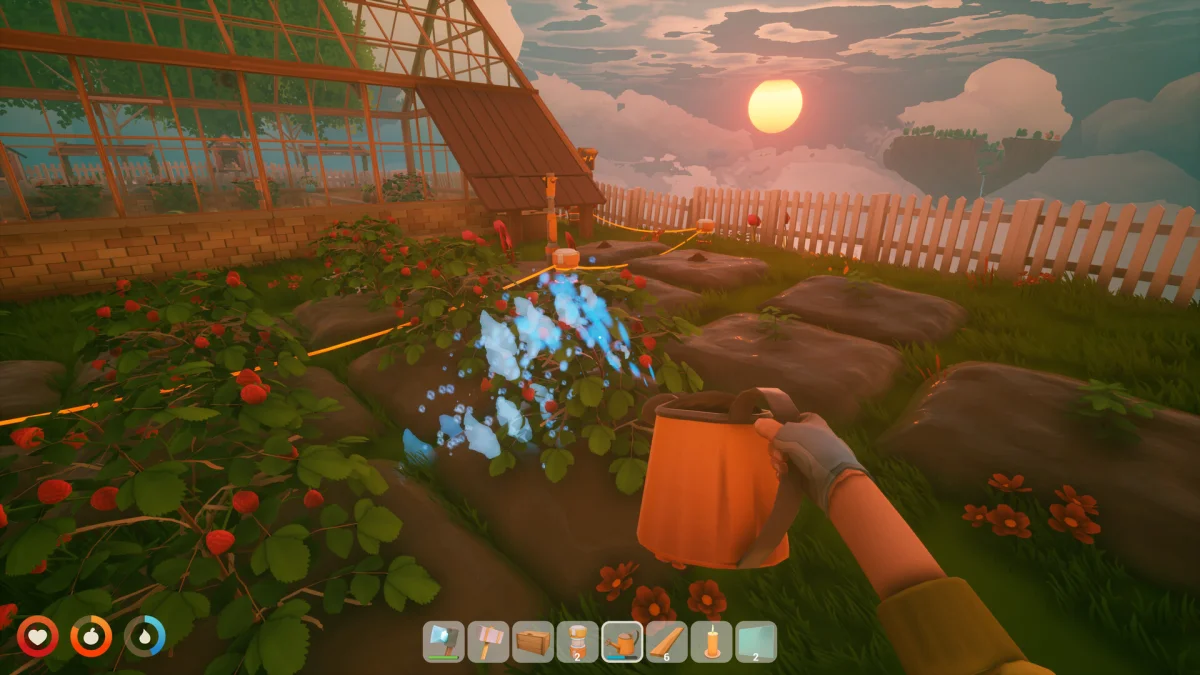
Base building follows a similar philosophy.
It’s straightforward.
I never felt like I was wrestling with the building system, fighting awkward placement rules, or spending half my time trying to convince a wall that it should attach to the floor directly beside it.
Everything generally worked the way I expected.
There’s enough flexibility to build something that feels like your own space, and the clean visual design helps even relatively simple structures fit naturally within the world.
The real star, though, is the solarpunk aesthetic itself.
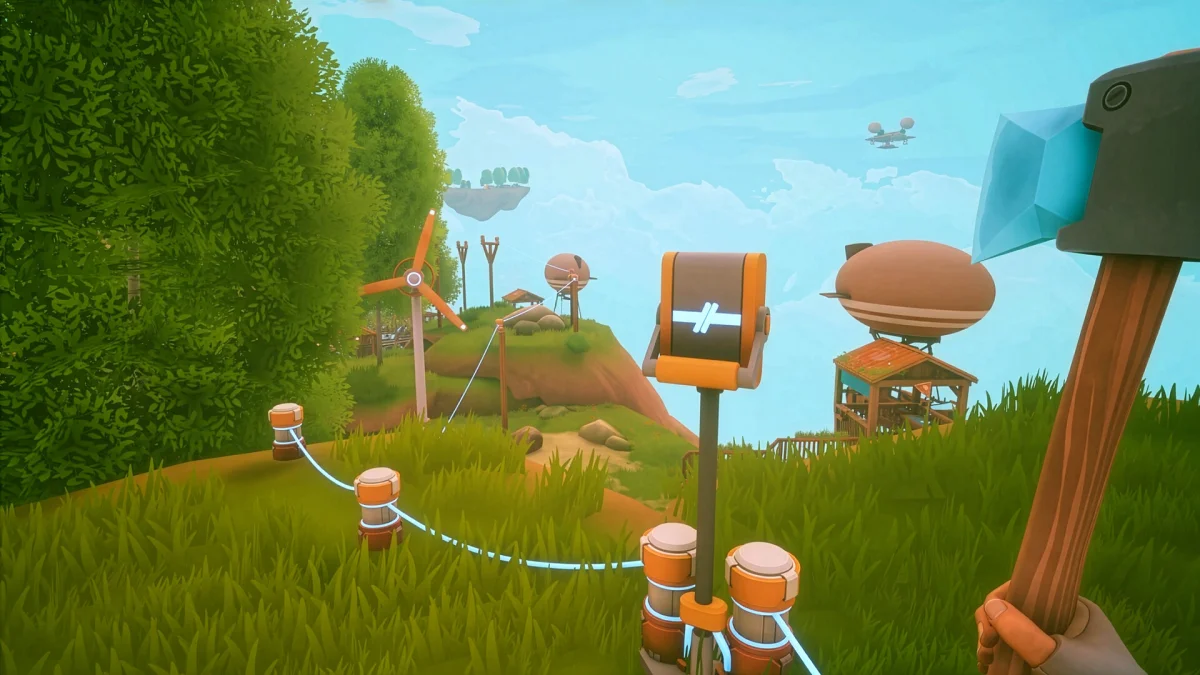
The bright vegetation, clean renewable technology, floating landscapes, wind turbines, solar infrastructure, and generally optimistic visual direction give the game a distinctive personality.
Plenty of survival games let me construct a base.
Solarpunk made me want to build one that actually belonged in its world.
That difference matters.
Taking the Airship Out for a Spin
Eventually, your little island isn’t enough.
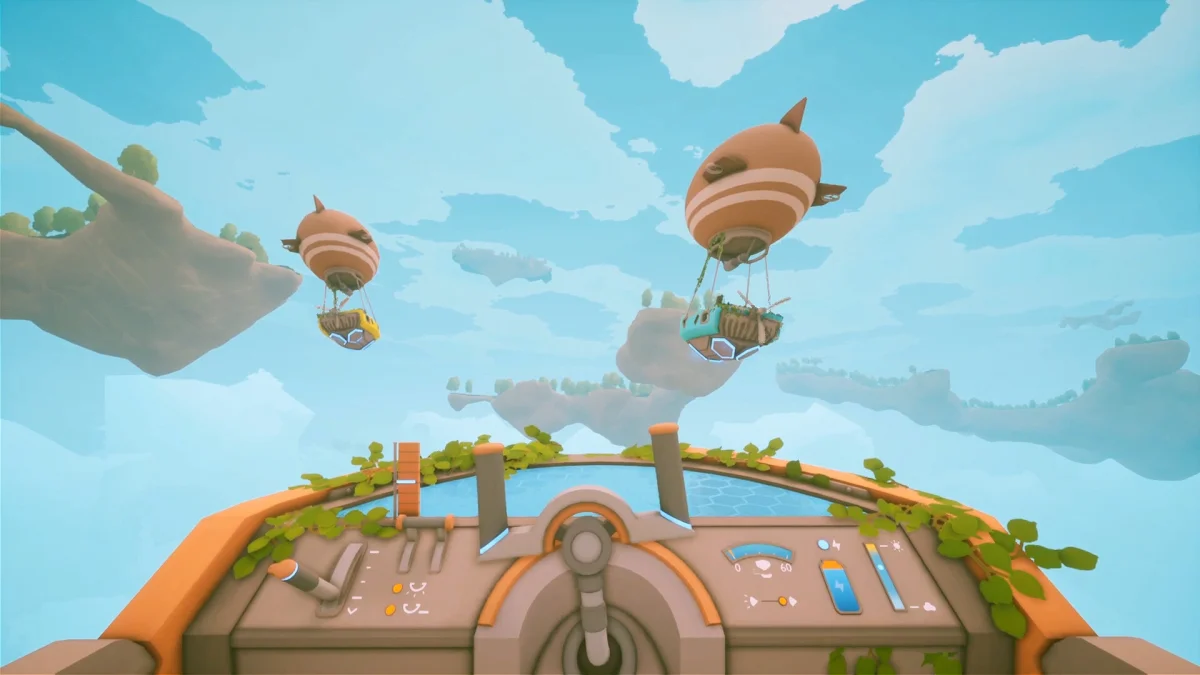
That’s where the airship comes in.
Flying between the floating islands sounds like it could easily become unnecessarily complicated, but the controls are refreshingly simple. Getting around never became a struggle, and piloting the ship remained effective without requiring me to learn an entire flight simulator.
Reaching a new island for the first time was consistently one of the more enjoyable parts of my playthrough.
There’s a simple excitement to leaving the familiarity of home, crossing the open sky, landing somewhere new, and immediately beginning to figure out what resources or opportunities might be waiting there.
Unfortunately, that excitement doesn’t always last.
Some islands begin feeling redundant once you’ve explored enough of them.
Solarpunk’s world is handcrafted rather than procedurally generated, and even the developers describe exploration as something that supports the sandbox rather than remaining its primary focus indefinitely.
That’s accurate to my experience.
Discovering islands is enjoyable.
Discovering another island that doesn’t offer much I haven’t already seen is considerably less so.
A Beautiful World That Feels Strangely Empty
That leads into my biggest criticism.
The world is pretty empty.
I don’t mean that it lacks resources or things required for progression. There’s plenty to gather, build, research, and automate.
I mean it lacks life.
There were plenty of times where I would land somewhere beautiful and immediately wish there were more happening there.
More characters. More discoveries. More environmental storytelling. More reasons for an island to feel like a place rather than another source of materials.
That emptiness fits the game’s peaceful tone to an extent.
There’s something relaxing about being alone in the clouds without enemies constantly threatening to tear down everything you’ve built.
But peaceful and empty aren’t necessarily the same thing.
The developers appear aware of the desire for more activity as well. Following the September 30 Update 1.3.0, they said they’re working toward additional content and more things to do, including a planned Farmers’ Market hub intended to support future quests, characters, and adventures.
That sounds like exactly the kind of addition this world could use.
Survival Without Much Surviving
Calling Solarpunk a survival game also requires setting expectations appropriately.
The survival elements never posed much of a threat during my playthrough.
I was managing resources and maintaining my ability to function, but I never felt like the environment was genuinely trying to kill me.
That’s intentional.
The Steam page goes out of its way to describe Solarpunk as a calm survival-crafting experience without much pressure.
Whether that’s a positive probably depends entirely on what you want from the genre.
If you need predators, dangerous weather, brutal resource shortages, or the constant possibility of losing everything, this probably isn’t going to scratch that itch.
I didn’t need those things here.
The progression itself gave me enough reason to keep going.
What can I build next?
What can I automate?
What’s on the next island?
How much more capable can I make this base?
Those questions largely replace survival as the motivating force.
For me, they worked.
Inventory Space Is the Real Enemy
If anything caused more frustration than the environment, it was probably my inventory.
Space can become restrictive, especially while exploring and gathering multiple types of resources.
I frequently found myself deciding what was worth carrying, what could be left behind, and whether I really wanted to make another trip.
Some of that is simply part of the genre.
Unlimited inventory would remove an entire layer of planning, and managing what you can realistically transport is a legitimate part of the challenge.
That doesn’t stop it from occasionally being annoying.
Fortunately, it never reached the point where inventory management actively damaged the larger progression loop.
It was more of a recurring irritation than a serious flaw.
Solarpunk Review Verdict
Solarpunk isn’t a survival game about barely making it through another day.
It’s about building something better than what you started with.
That’s ultimately why it works.
The building is simple and polished. The progression consistently gives you worthwhile goals. Automation eventually transforms all that early manual labor into an interconnected collection of systems that feels genuinely satisfying to watch operate.
And the solarpunk aesthetic isn’t merely a name slapped onto another crafting game.
It’s present throughout the architecture, technology, energy production, vegetation, and overall philosophy of the experience.
The biggest thing holding it back is the world surrounding all of that.
Exploring a new floating island is exciting the first time you arrive, but not every island gives you enough reason to remember it afterward. The lack of meaningful inhabitants or activity makes some areas feel emptier than they should, while repetition eventually starts creeping into exploration.
After around 16 hours, I reached the end of the primary progression and felt satisfied with what I’d gotten for the $22.99 asking price. Steam itself suggests that players can explore most of the main content in roughly 20 hours before shifting toward sandbox goals like farming, decorating, and base building.
My experience landed slightly under that estimate, but I never felt shortchanged.
Solarpunk has room to grow, and the developers are already signaling that additional content is coming.
But what’s here right now isn’t merely a foundation waiting to become a game.
It’s already a very good one.
I just hope its beautiful floating world eventually gets a little more life in it