- Medium
- Difficulty
- 12 min
- Read time
- 9
- Steps
The best hard mode opening in Probably Stolen is a lean, food-and-materials shop that scavenges early, buys low from wholesale sellers, and only adds Joe Wild specializations (chemistry, then water or fish) once rent is covered. This guide covers how to survive the 200-credit weekly rent that climbs 10% each week, how to handle augs and scammers, and what to buy first so you can work toward the 24,000-credit property price. It’s written for players who finished the demo on normal and want a safer plan for hard mode.
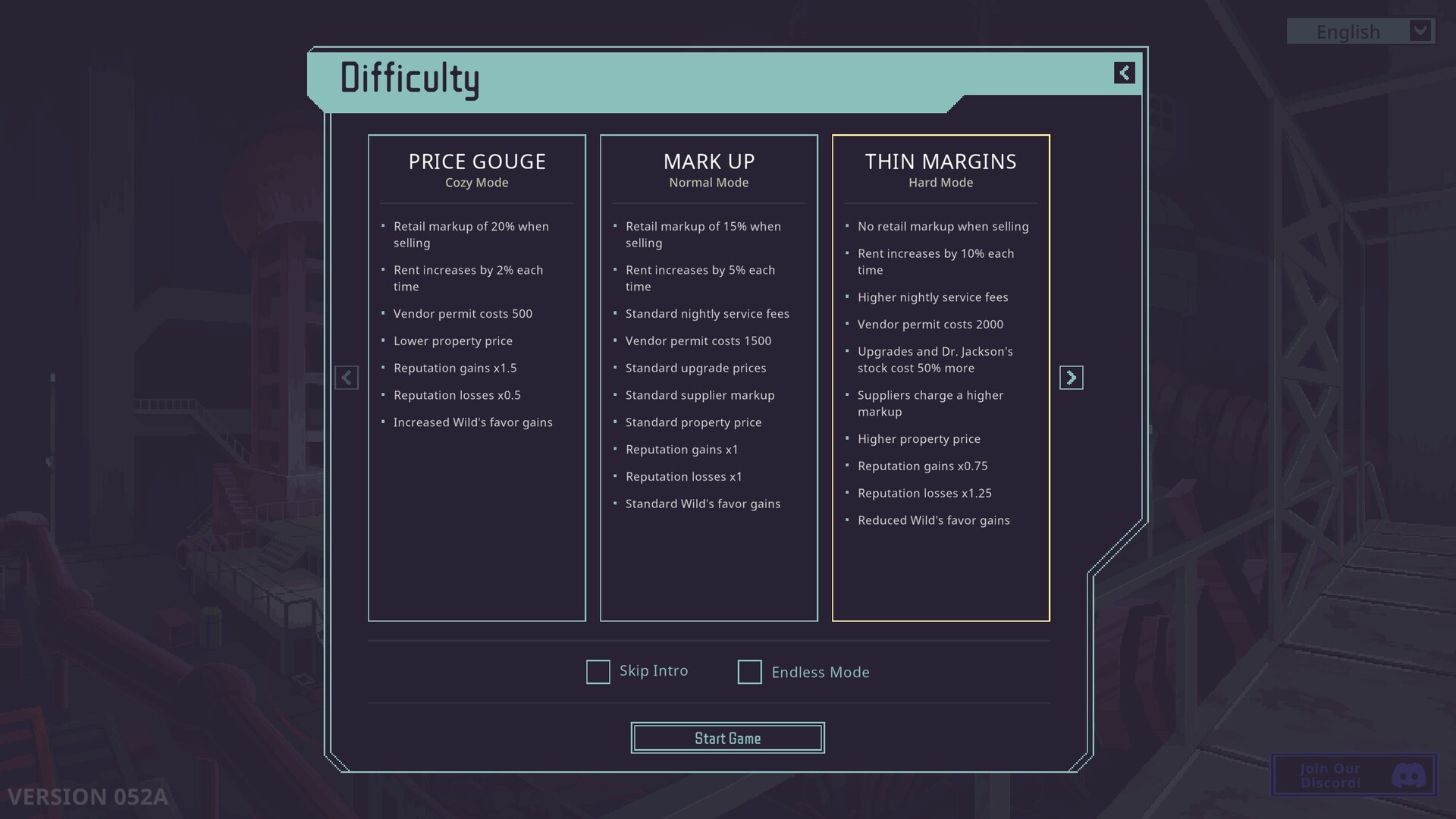
Hard mode is Thin Margins on the difficulty screen. It removes the 15% retail markup on selling, raises rent 10% each week, and bumps nightly service fees, vendor permits, Dr. Jackson’s stock upgrades, vendor markups and property price. Reputation swings are worse and Wild favor gains are reduced. Every credit matters, and that changes how you buy and sell.
Quick start: survive hard mode week one in 7 steps
- Put out buy signs first. Open with signs that buy what you can resell, stockpile cheap, and only sell when a shortage lets you raise the price.
- Scavenge the first few nights. Take a fanny pack to the dumping grounds, grab anything better than junk, then sleep.
- Skip insurance during the three nights of burglar grace. New shops are left alone at first, so don’t pay for it yet.
- Run janitorial service every other night. It’s cheap (about 3 credits early) and you can skip it when the shop is clean.
- Buy a bigger bag early. A satchel from Dr. Jackson lets you haul more from the dumping grounds, but his markup is steep, so buy only what you need.
- Keep your rent money untouched. Stay above 200 credits going into rent day, or have things you can panic-sell.
- Take the appraiser license and the Wild chemistry referral. Both are paid unlocks that open new income, covered below.
What you need before starting hard mode in Probably Stolen
You need three things going in: a plan to avoid overpaying vendors, a way to move stock quickly, and a small cash buffer for rent. Hard mode punishes impulse buying.
- Wholesale offers: Accept wholesale from sellers whenever you can. Around 24% off was available on household goods, and wholesale buys are what make flipping profitable without the retail markup.
- Buyer and seller signs: Signs for materials, household goods, food and a thief type (petty thief, thief, food thief) steer who walks in.
- Fanny pack to satchel to backpack: Pockets fill fast. A backpack can’t go inside a pack, so sell or swap the smaller bag when you upgrade.
- Optional but helpful: A fridge (chilled drinks sell for more) and a flashlight for scavenging. Both cost real money early, so only buy them with spare cash.
- Optional but helpful: A magnifying glass and the appraisal guide if you plan to inspect goods for sale.
How the first two weeks flow on hard mode
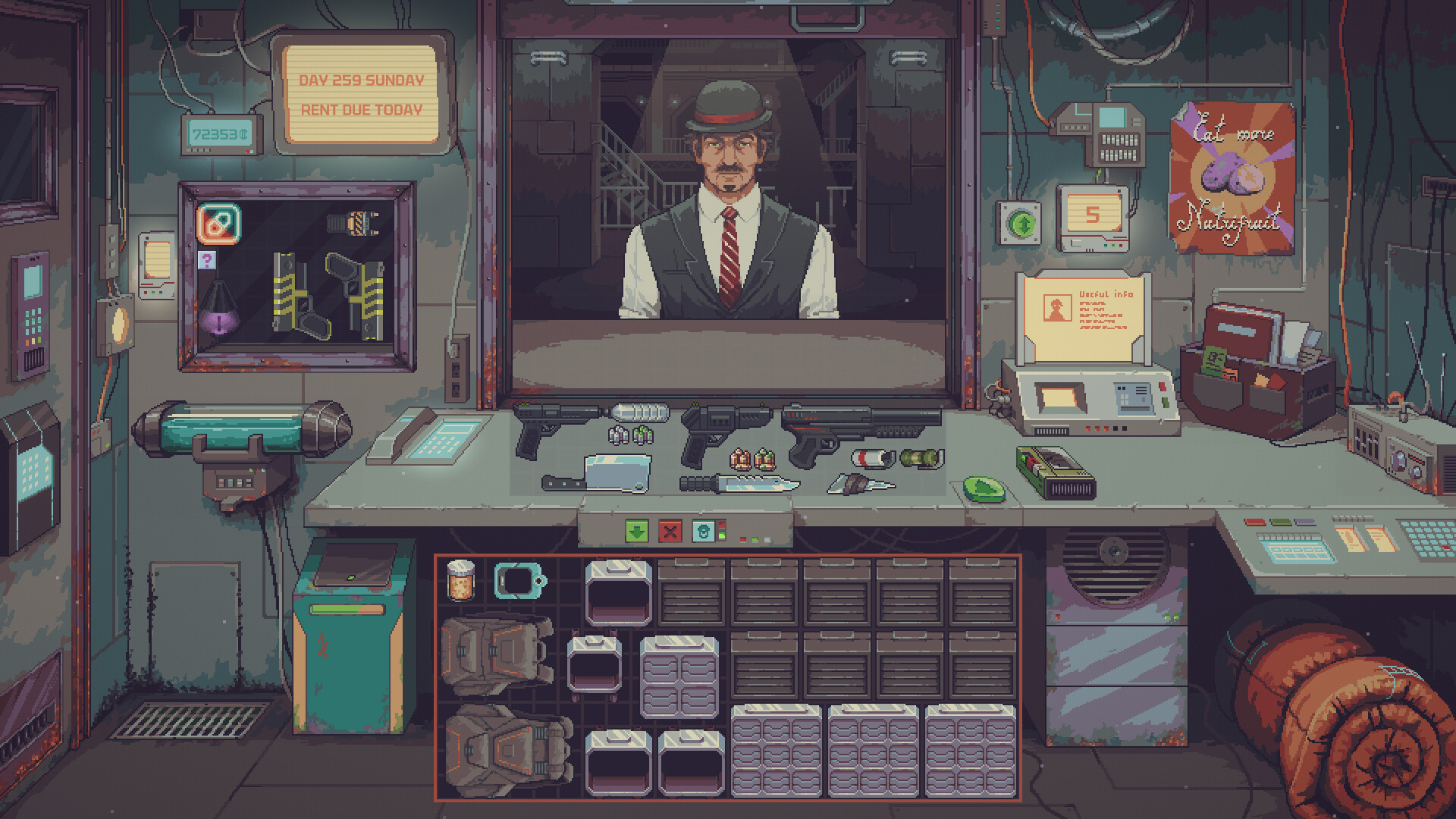
The loop is: scavenge at night, sell stock to targeted buyers by day, and reinvest in one upgrade at a time while keeping rent safe. In week one you stockpile and sell into shortages. By the end of week one you’re scraping together 200 credits, sometimes by selling spare tools, junk and a spare backpack at the last second. In week two, rent rises to 220, then 242, and new systems appear: augs show up and you get access to Wild specializations.
The 24,000-credit property purchase is the long-term goal, double the demo, so treat early weeks as building a repeatable income engine rather than chasing quick wins.
How to run your first days: step by step
Set buy signs and open the shop
Put up signs for items you can flip, open, and expect only 3 to 4 customers early. Buy what’s offered wholesale and store it, because without a retail markup your edge comes from buying cheap.
Only sell when there’s a shortage
Wait for events or shortages (for example a water shortage) and raise your price then. Selling at base price on hard mode barely covers costs.
Use the variety-buyer rule
Some customers won’t buy the same item twice. Put several different item types on display so variety buyers pay a premium instead of walking out.
Scavenge the dumping grounds the first nights
Take a fanny pack, grab wire, cotton fabric, screws, scrap metal and anything electronic, and leave junk behind when you run out of space. A single cotton fabric haul was worth about 65 credits, and a scrap metal or module haul can be your best income of the week.
Skip insurance, then judge it again
You get three nights where burglars leave a new shop alone. After that, theft is real: a night without insurance cost a piece of scrap metal, which was close to the price of insurance itself. Pay insurance once the grace period ends if you carry valuables.
Shop at Dr. Jackson selectively
Dr. Jackson buys materials, so bring some to offset costs, but his stock carries up to a 50% markup. He was cheaper on Sundays and closed on Mondays. Buy the satchel, then wait until you’ve got surplus cash for flashlights, fridges and energy cells.
Pay the appraiser board fee and take the license
The appraiser board charges a 170-credit entry fee to become a junior appraiser. You get training material, a certificate and a free second magnifying glass you can resell. Appraisal customers are slow to arrive, so treat it as a long-term investment.
Spend on a fridge once energy is solved
Chilled pilk and soda sell for more. You can upgrade fridge storage with relics from Giorgio and lower its energy use with electronic parts (it dropped from 6 to 4 to 2 energy per day with two upgrades). Note that unsealed water wasn’t affected by chilling, so only sealed drinks benefit.
Stock your first Wild specialization
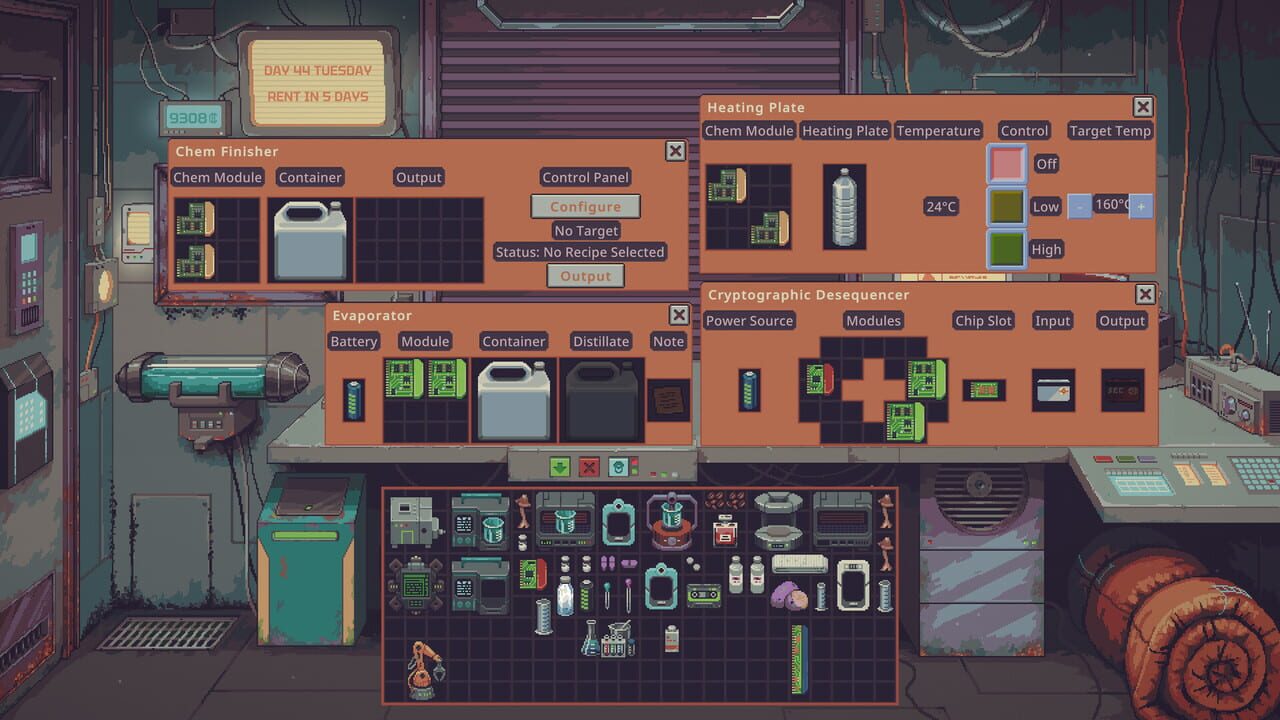
Once rent is safe, open Joe Wild’s service. Chemistry (Jamie’s chems) gives you a supplier who sends free samples and next-day drugs like dream dust. Aquaculture, pharmacy and water trading (450 credits, too expensive early) are other options. Material surplus and household goods signs also unlocked through the upgrade.
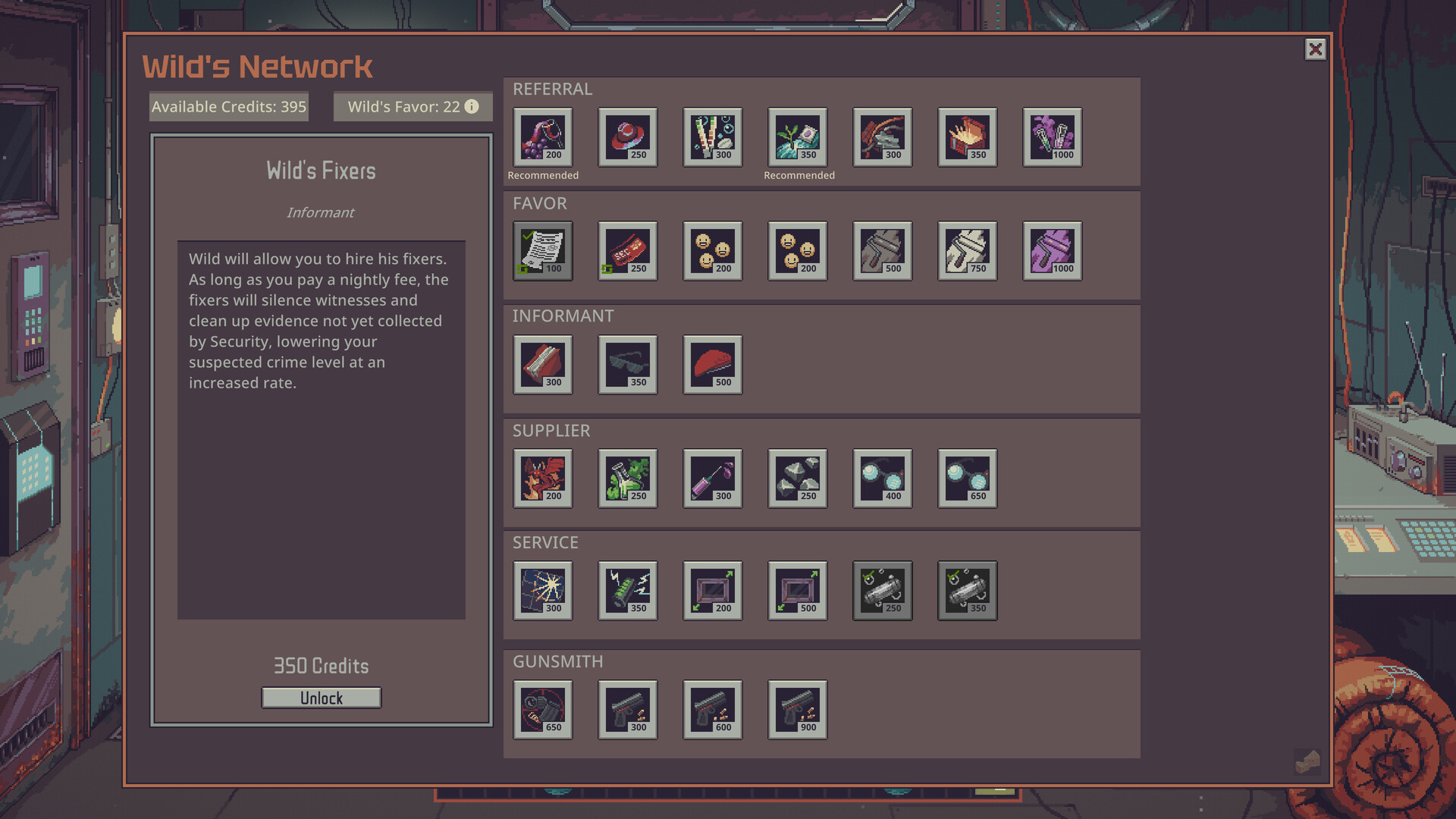
Wild’s Network, where specializations unlock. Official screenshot from Questing Goose Studio and tinyBuild.
Best specialization and upgrades to buy on hard mode
The best early picks were chemistry for a new product line, a fridge for chilled-drink margins, and household goods or material signs for steady turnover. Water trading was out of reach early at 450 credits.
- Chemistry via Wild’s referral: Adds Jamie’s chems. You tell the supplier what you need and get it next day. Dream dust can sell to Odin’s revolution or to buyers who want substances.
- Fridge plus relics plus electronic parts: Expands capacity and cuts energy use. Worth it once you’ve got chilled goods that sell.
- Material surplus and household goods signs: Let you attract buyers of the two items you tend to hold the most of.
- Cryptographic sequencer: Offered by a thief and from Dr. Jackson. It enables a repeatable product to sell to Odin, but it was too expensive to afford immediately.
- Information buyers (market timing): A shady informant sells market tips for 50 credits. Useful later, since timing the market is how you make bank, but skip it while you’re cash-poor.
- Aquaculture (fish): Available through Wild. Skipped early in favor of chemistry.
The contraband route with Odin and the revolution
Odin Haraldson, a resistance contact, buys guns, ammo, armor, poison, supply crates and access, and contraband is no issue for him, but he pays less than other buyers. You can call him anytime to sell, which makes contraband a dependable outlet. Odin takes a roughly 17% discount, but because contraband carries a 35% markup you still profit, barely. He wanted food, drink and household items too.
When buying contraband from thieves, check weapon prices first. Weapons cost more during a weapons-demand event, so wait, or buy only ammo (mid-level contraband). Weapons in fair condition sell for about 12% less. Call the phone number the contact gives you, and he returned two days later to collect.
Handling augs, scammers and shady customers on hard mode
The safest way to handle augs is to shoot only when you’re certain, because a wrong shot costs reputation and letting enough augs through ends the run. Augs begin appearing in week two, and on hard mode too many of them taking over causes a loss.
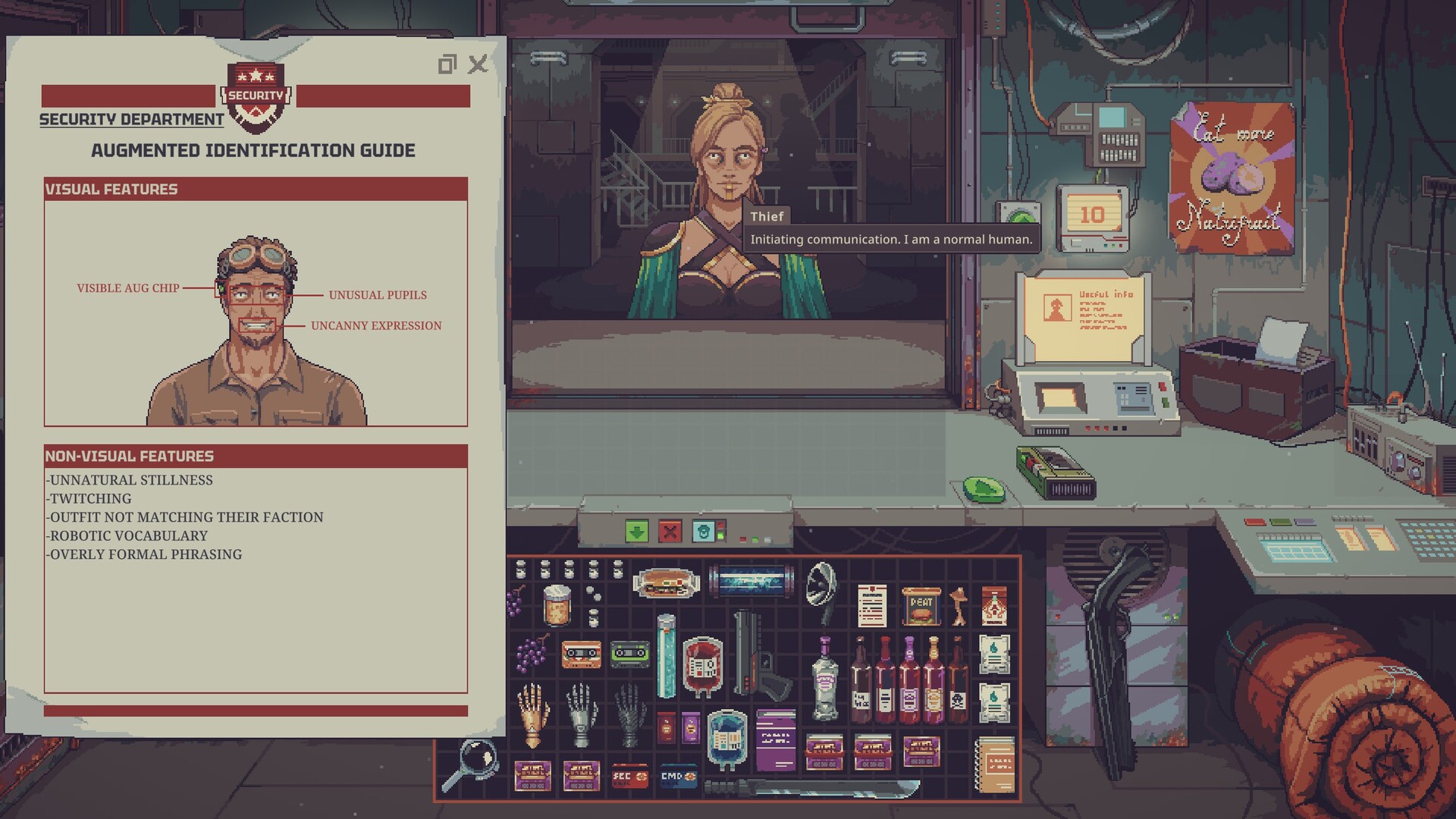
Spotting an aug before you shoot
- Visible aug chip
- Uncanny pupils or expression, or unnatural stillness
- Clothes that don’t match their faction (for example upper-level pink text with lower-level clothes)
- Robotic vocabulary or overly informal phrasing
Faction means the five main factions, so an ice miner and a construction worker can both be genuine lower-level people. The hardest tell is outfit mismatch, because you’ve got to memorize how each faction dresses. Augs only want materials and medical supplies, so selling one food can scare them off. If you’re not sure, hold fire.
Giorgio’s stock and the scammy seller
Giorgio shows up with deals that vary a lot. His dehydrated water was a fair buy, but another visit brought fake cigarettes. With a magnifying glass and the guide you can spot flaws (a cut seal, wrong details) and confront him to lower the price, then buy at wholesale and inspection discounts and still flip them at around 50 each. He also left behind items you forgot at the dumping grounds, which then sold back to you. The scammy supplier marks up 100% on hard mode, so decline him.
Water, ghost water and chilled drinks
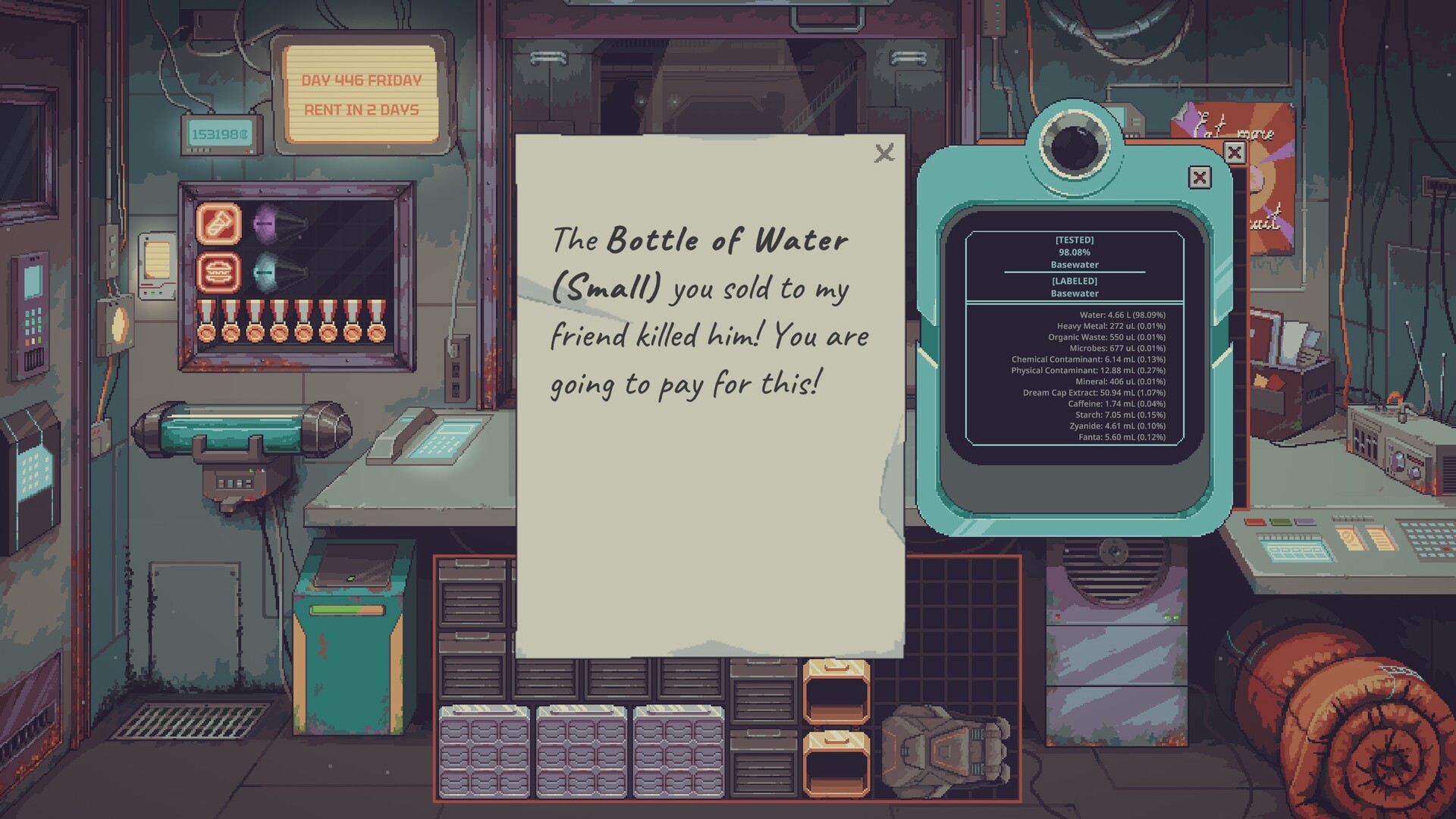
Ghost water sells poorly, and base or high-quality water sells reliably, so avoid stockpiling ghost water unless you can purify it. Customers with water testing kits (lower-level people tend to carry them) will catch ghost water passed off as base, and you lose reputation. Mixing ghost water into base water on the counter in front of a customer gets you caught too.
Chilling only helps sealed goods like pilk and soda, not water. When the water treatment plant breaks down (an informant gave three days’ warning), water gets scarce and you can sell it for more, so stock up on water before that event. Buy water cheaply when events are in your favor, and sell during shortages.
6 mistakes that cost money on Probably Stolen hard mode
- Paying for insurance during the grace period. Fix: skip it for the first three nights, then buy it when you carry valuables.
- Buying from Dr. Jackson at a 50% markup. Fix: buy only the satchel, and shop on cheaper days.
- Selling ghost water as base water. Fix: keep it separate, since testers catch it and reputation drops.
- Giving a big discount to someone you could have sold to at full price. Fix: offer 10% discounts only when you want to clear a lot of stock or boost reputation.
- Selling food to a suspected aug. Fix: remember augs want materials and medical, so food can drive them off; verify before shooting.
- Forgetting to dump nuclear waste. Fix: carry barrels to the dumping grounds and leave them there, because the disposal buyer wouldn’t take them.
Radioactive waste and appraisal jobs for extra income
A disposal contact offered 100 credits per barrel, and you can take five barrels for 500 credits, but he didn’t end up buying them in this run. The fix is to drop the barrels at the dumping grounds when you’ve got bag space. Appraisal work was slow to start, so don’t count on it for rent in week one.
Probably Stolen hard mode FAQ
What is the best specialization in Probably Stolen hard mode?
Chemistry through Joe Wild’s referral is the strongest early pick because it adds a reliable supplier and products like dream dust. It requires spending credits only after your rent is safe, and it pairs well with selling to Odin.
How much does rent increase in Probably Stolen hard mode?
Rent starts at 200 credits per 6 days and rises 10% each week. In the run, it went from 200 to 220 and then 242.
How much is the property in Probably Stolen hard mode?
The long-term goal is 24,000 credits to buy the property, which is double the demo price.
Should I buy insurance on the first nights in Probably Stolen?
No, skip it for the first three nights because burglars leave a new shop alone during that grace period. After that, theft happens, so consider insurance.
How do I spot augs in Probably Stolen?
Look for a visible chip, uncanny pupils or expression, unnatural stillness, clothes that don’t match their faction, robotic vocabulary, or overly informal phrasing. Augs also tend to want materials and medical supplies only.
Is the fridge worth buying in Probably Stolen hard mode?
It’s worth it once you’ve got energy to run it, because chilled pilk and soda sell for more. It doesn’t chill unsealed water, and bigger fridges use more energy unless you add electronic parts.
Probably Stolen hard mode checklist
0 of 12
Source & credit
This guide draws on the excellent video walkthrough by Aliensrock. Watch it for the full visual run-through, and give the creator your view: