- Easy
- Difficulty
- 12 min
- Read time
- 8
- Steps
You make money in Probably Stolen by buying goods from scavengers and scrappers at a discount, then selling them to shoppers who want exactly that category, while keeping enough credits aside for the weekly rent. This guide covers the first week of a pawn shop run: the daily routine, what to buy wholesale, how to sell for the highest price, how to catch counterfeit cigarettes, when to scavenge the dump, and how to avoid getting fined. It’s written for new players working out how to turn a bare counter into a steady stream of credits.

Quick start: build your first credits in 8 steps
- Pick the Apprentice profession so a mentor walks you through the early game.
- Open the roller shutter, then press the green button to call each customer.
- Buy food from scavengers on day one. Food is the most valuable early stock.
- Resell to customers who ask for that category, aiming to match their credit budget as closely as you can without going over.
- Accept wholesale deals (buy the whole lot) for a 15% to 40% discount.
- Sell a variety of different items when a customer asks for variety, because they pay more.
- Check cigarette packs with the magnifying glass, confront the seller over any flaw, and buy at the lowered price.
- Set aside rent (200 credits on day seven, 210 the following week) before spending on extras.
What you need before opening your first day in Probably Stolen
You need nothing but the shop itself: the Apprentice profession, the roller shutter, the counter, your backpack, and the green customer button. The game starts you with the basics and the mentor supplies tools as the days go on.
Here’s what each part of the screen does:
- Backpack (inventory): where your stock lives. Items must be placed here by hand when you bring them back from scavenging.
- Counter: where you lay out items for a customer to buy or where they set out items for you to purchase.
- Phone and green button: the green button opens the roller shutter and calls the next customer.
- Sleeping bag: click it to end the day once the shutter is down.
- Recorder: replays any conversation, so you can re-hear the mentor’s tips if you skipped them.
- Alarm button (under the counter): calls the police. Use it only on a confirmed wanted suspect.
- Display case (on your left): holds an item that decides which kind of buyers show up the next day.
Optional but helpful: Keep the mentor’s notes. You can file them in the folder or bin them, but the recorder lets you re-listen to anything you missed. Pick up the waist pouch before leaving to scavenge, since it adds carrying space.
The daily loop that turns $0 into 777 credits in four days
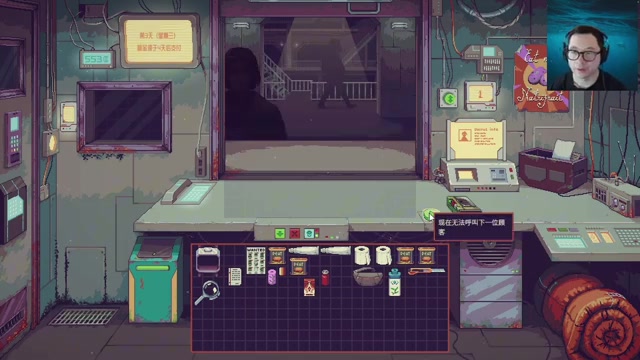
The core loop is: open the shutter, buy stock from sellers, resell it to buyers, close up, optionally scavenge the dump, then sleep to see your end-of-day summary. Following it, the first four days took a balance from the 95-credit food purchase on day one to 596 credits at the end of day one and 777 credits by the end of day four.
Customers fall into a few types. Scavengers and scrappers bring goods to sell you. Offworlders, repairmen and Upper District visitors want to buy a category such as food, materials, household supplies or cigarettes. Your job is to buy low from the first group and sell high to the second, always matching what the buyer asked for and how many credits they have.
How to run your first days in Probably Stolen, step by step
Open the shutter and take the mentor’s first customer
Open the roller shutter, then press the green button. Your mentor arrives first with two notes: one reminds you to stock up on food, the other explains how to negotiate. Re-listen to either on the recorder if you skip them.
Buy all the food from the first scavenger
Buy everything the scavenger offers when he asks whether you buy food. On day one that meant a soda, a chocolate bar and fruit paste for 95 credits total. Food is valuable, so it’s the safest first investment.
Sell it right back to match a buyer’s budget
Resell the same food to the next customer who asks for it, adding items until you land on or just under their stated budget. One offworlder had 62 credits: juice at 16, fruit paste at 45 and a soda came to exactly 62. Items are priced individually, so the trick is combining them to hit the total.
Offer variety when the buyer asks for it
When a customer says they want more variety, give them different items instead of duplicates, because they won’t buy two of the same thing but will pay extra. One buyer with 85 credits received synthetic meat, a chocolate bar and fruit paste for 84. In another case a buyer had 86 credits and three synthetic meats came to 87, a small loss that was still worth the sale.
Watch your balance and close the day
Your credit balance is your money. When the queue ends, pull down the roller shutter and click the sleeping bag. The end-of-day summary shows your remaining credits and confirms the electricity bill’s been paid.
Accept wholesale deals for a discount
Say yes when a scrapper or scavenger offers a wholesale deal. Buying the entire lot earned discounts of 30 to 40 percent from a scrapper and 15 percent from a scavenger with a crate of synthetic meat (the game’s “peat”). Press the green button to confirm and the goods move into your inventory.
Match materials, energy cells and tools to repairmen
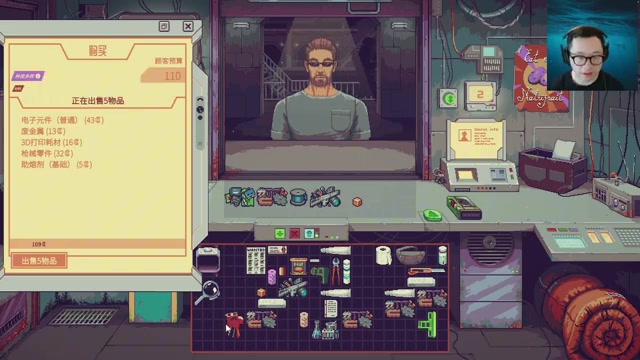
Sell scrap metal, electronic components, filament, gun parts and flux to buyers asking for materials. A repairman with 122 credits bought a mixed set of materials. Only items carrying the Materials tag can be sold to a materials buyer, and selling five different types fetched a higher price because they were all distinct.
Sell household supplies and food as separate categories
Sell toilet paper, toothpaste, detergent and water-purification tablets to household-supply buyers. A buyer who wanted household goods took two rolls of toilet paper and a detergent. If you’ve no stock in the category requested, such as water on a day it was out, you can only send that customer away.
How to scavenge the dump without losing customers
Scavenge the dump after closing by taking your waist pouch and heading out, but know it costs time: you open late the next day and miss one customer. Your mentor warns you don’t have to go out every night.
At the dump you dig through trash and can scavenge up to five times per trip. Finds included detergent, flux, a utility knife, a bandage, cloth, a gun part and electronic components. Some items are junk you can leave behind.
Weigh the trade: scavenging gave free stock, while skipping it kept every customer. On the nights run here, the free items were worth it, but don’t scavenge when you’re short on queue time or already have plenty to sell.

How to spot fake Hemingway cigarettes and profit from them
Inspect every Hemingway cigarette pack with the magnifying glass and compare it to the authentication guide; if you find a single flaw, confront the seller and the price drops. Your mentor supplies the magnifying glass, a colour chart and the guide after counterfeit cigarettes hit the docks.
Check these tells:
- Colour: the fake uses the wrong colours compared with the chart.
- Font and spelling: the genuine pack uses the correct font; the fake has a spelling mistake and a different font.
- Security seal: a cracked seal marks a fake; an intact one is genuine.
One flaw is enough to confront. Once you expose it, the seller lowers the price, and you can still buy the pack. A cracked seal and a spelling error each produced a discount, one pack dropping to 42 credits.
Turn fake packs genuine with the label printer
Use the label printer, which the mentor delivers later, to convert a counterfeit pack into a genuine one. Select the fake pack and apply the label, and it becomes a genuine pack you can sell. A pack bought for 42 credits sold to an Upper District visitor for 115 credits, a large margin.
How to report wanted suspects and earn bounties safely
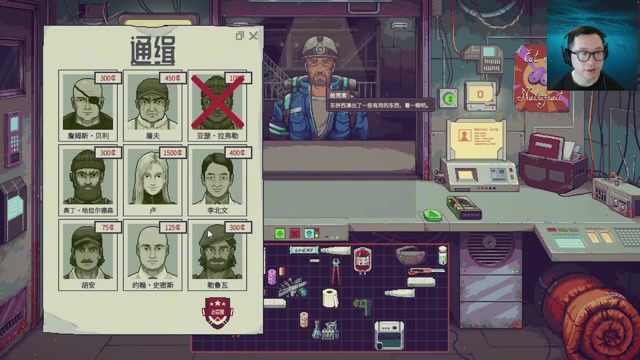
Report a suspect with the alarm button under the counter only when you’re certain they match the wanted list, since a correct report pays a bounty and a false one gets you fined. Officer Lun explains this on day one and gives you the list.
Study each wanted face. The list described includes One-Eye (one eye covered by an eyepatch), the Butcher, Arthur (a bearded man in a knit cap), Lu (long white or blond hair, a 1,500-credit bounty) and Li Beiwen (noticeable nasolabial folds), along with Huan, a bald man and a soldier-like figure. All wanted suspects shown were men.
How to use the display case and neon signs to draw the right buyers
Put an item in the display case before opening to control which buyers show up that day, and hang a neon sign to attract a category. The mentor gives you neon signs, and hanging the food sign brings shoppers who want food when you’re stocked with it.
Match the sign to your inventory. Check the day’s news event too: a water supply crisis and a household supplies relief drive on day six pushed food prices up. Higher prices mean better margins on the stock you already hold.
How to refine scrap metal into ingots with the furnace
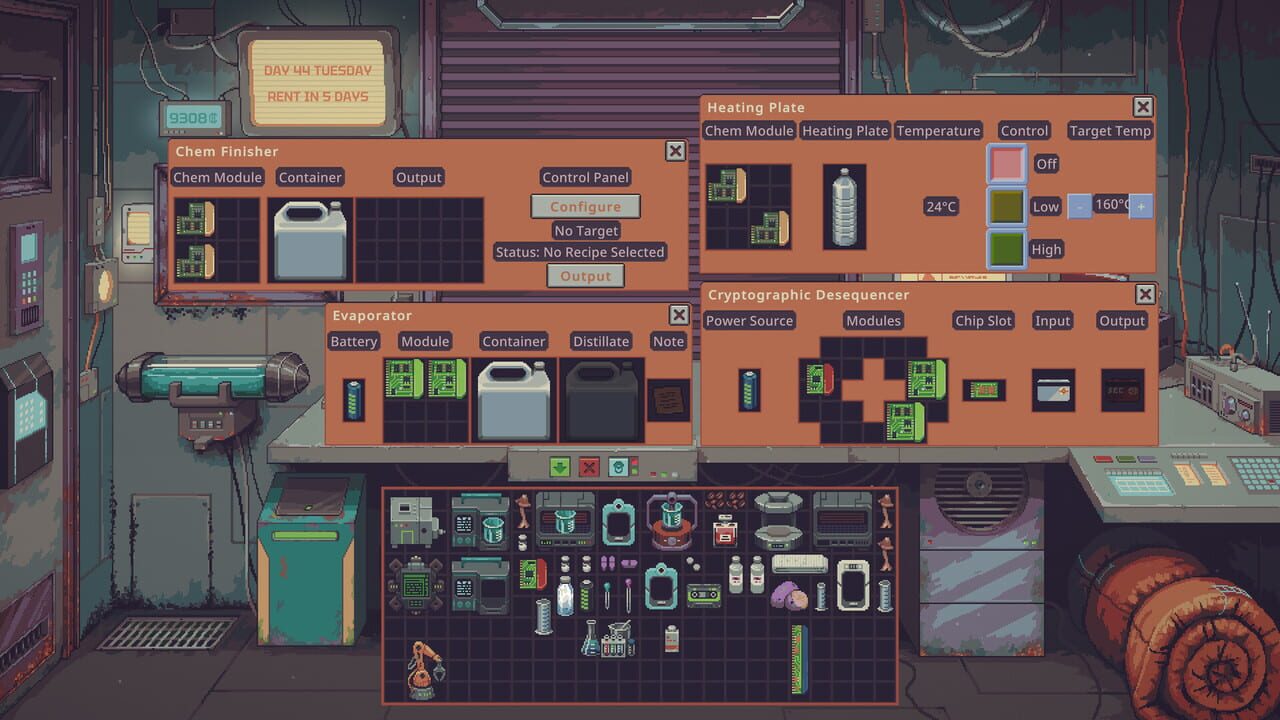
Pay the doctor 50 credits to use his furnace, then feed in scrap metal or ore to produce ingots. The furnace has an input and an output slot, and you power it with energy cells, so you need batteries to smelt anything.
- Buy energy cells from Dr. Jackson. Two were bought and placed in the backpack.
- Install a module in the furnace to improve efficiency.
- Collect finished ingots from the output.
The doctor also sells modules, and buying the whole lot let you install one to speed up smelting.
How to pay rent so you never fall behind
Pay the landlord 200 credits on day seven, then 210 the following week, since rent is due once a week. Plan for it ahead of time. On day seven the balance sat at 250, so spending on extras like a bottle of water wasn’t affordable.
Contraband bought from a thief or insurance purchases can help, but they carry risk. After buying contraband, a police catch brings only a warning. An insurance seller also offers a daily service that compensates you if you’re robbed.
5 money mistakes that stall your first week in Probably Stolen
- Selling duplicates to a variety buyer: offer different items instead, since they pay more for variety.
- Forgetting to move scavenged items into the backpack: transfer them by hand before sleeping.
- Scavenging every night: you open late and lose a customer, so go only when it’s worth it.
- Accusing a customer without proof: check the seal, colour and font first, since false accusations lose reputation.
- Reporting a suspect too early: wait until you’re sure, since false reports are fined.
- Spending down before rent: hold 200 credits by day seven.
Probably Stolen How to make money and start from $0 in Probably Stolen FAQ
How do I make money at the start of Probably Stolen?
Buy food and goods from scavengers at a discount, then sell them to customers who request that category. Wholesale deals and variety sales raise your margin.
What should I buy first in Probably Stolen?
Buy food first, because it’s the most valuable early stock and sells quickly to offworlders. Later, add materials and household supplies.
Is a wholesale deal worth accepting in Probably Stolen?
Yes, accepting a wholesale deal gave discounts of roughly 15 to 40 percent in the early days. It means buying the entire lot, so make sure you can resell the goods.
How do I tell fake cigarettes from real ones in Probably Stolen?
Use the magnifying glass and the authentication guide to compare colour, font, spelling and the security seal. A cracked seal or spelling error marks a fake.
How often do I pay rent in Probably Stolen?
Rent is paid once a week. It was 200 credits on day seven and 210 the week after.
Does scavenging the dump hurt my shop in Probably Stolen?
Yes, going out at night makes you open late the next day and miss a customer. You don’t have to go every night.
How to make money and start from $0 in Probably Stolen checklist
0 of 12
Source & credit
This guide draws on the excellent video walkthrough by Chocolate Chinese Gaming — watch it for the full visual run-through, and give the creator your view: