- Easy
- Difficulty
- 8 min
- Read time
- 5
- Steps
- 1.0
- Checked on
The best early-game way to make money in Loftia is cooking Fruit Smoothies: gather 40 Wild Berries, buy 20 Sugar, cook 20 smoothies, and sell them for 300 dews of profit per batch. This guide covers that loop, a hands-off cotton trick, and the delivery bin where you sell what you make. It’s written for new Loftia players hitting their first dew shortage.
Gap Note: There’s no step-by-step fish-selling method for Loftia that I can confirm. What is confirmed is that fishing is a progression skill and that your main way to sell items is the delivery bin near your house. Fish selling is covered below with that limit stated clearly. Dew-making methods can also change between builds, so treat the numbers here as accurate for the demo-era version.

Quick start: make your first 300 dews in Loftia
- Head to the hills in Loftia City and harvest Wild Berries until you hold about 40.
- Go to the Global Village and buy 20 Sugar at 5 dews each (100 dews total).
- Return to your housing plot and cook the ingredients into 20 Fruit Smoothies.
- Make sure your battery is charged first, because cooking costs energy.
- Sell the smoothies at the delivery bin near your house for 20 dews each (400 dews).
- Subtract the 100-dew Sugar cost and you keep 300 dews of profit.
- Plant cotton while you do all this for a small passive income on the side.
What you need before you start earning dews in Loftia
Dews are Loftia’s main currency, the equivalent of gold in other games, and you need a few basics in place before the smoothie loop works smoothly.
- A house and housing plot: You receive your house within the first few minutes, and you use it for most crafting, farming, and cooking.
- Battery charge: Cooking and crafting spend battery charges. Build solar panels and other energy-producing stations on your island to refill them. You can speak with Amani to raise how many you can place, and you can upgrade your battery to hold more charges.
- Starting dews: About 100 dews to buy 20 Sugar. The cotton trick needs only 5 dews per seed.
- Access to Loftia City: This is where the berry hills and the Global Village are.
- Optional but helpful: A rain collector on your island to refill your watering can. There’s also one in Loftia City, so running there works fine too.
- Optional but helpful: Early points in the salvaging and foraging skills, such as double materials and carrying more materials. These make stocking up on berries faster.
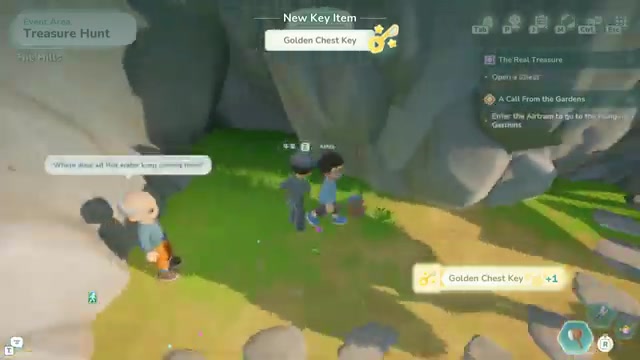
The fastest dew-making loop: Loftia City hills, Global Village, then home
The loop is three stops: harvest berries in the Loftia City hills, buy Sugar at the Global Village, then cook and sell at your house.
Berries are the slow part, since you wait for them to respawn or gather them while you wander between other materials. One efficient habit is to stock up on 40 Wild Berries at once while you harvest a mix of other materials around the area. Then you make a single trip to buy Sugar, a single trip home to cook, and a single trip to the delivery bin. The investment is modest in cost, time, and effort, and the return is steady.
How to cook and sell 20 Fruit Smoothies, step by step
Harvest 40 Wild Berries in the Loftia City hills
Wild Berries grow in the hills of Loftia City. Gather around 40 in one go. If the nodes run out, wait for respawns or collect other materials in different places and loop back.
Buy 20 Sugar at the Global Village
Sugar costs 5 dews each, so 20 Sugar is 100 dews. This is your only upfront spend for the batch.
Charge your battery before you cook
Cooking uses energy. Check that your battery has charge, and refill it with solar panels if needed so the batch doesn’t stall halfway.
Cook 20 Fruit Smoothies at your house
Head back to your housing plot and cook the berries and Sugar into 20 Fruit Smoothies. Housing is where most of your cooking happens.
Sell the smoothies at the delivery bin
The delivery bin near your house is the primary place to sell the items you get. Each smoothie sells for 20 dews, which is 4x the Sugar cost per unit. Twenty smoothies bring in 400 dews, minus the 100 dews you spent, for 300 dews of profit.
Loftia
How to earn dews while you do other things: plant cotton
Planting cotton is the lowest-effort income in Loftia: a seed costs 5 dews, it sells for 10 dews, and you can harvest it 10 minutes later.
That’s only 5 dews of profit per plant, so it won’t make you rich. The value is that you plant it, walk away to cook or explore, and come back to a small payout. You also pick up early farming experience. Keep planting cotton until you can afford more profitable crops.
How to sell fish and other items in Loftia
The only confirmed way to sell items in Loftia is the delivery bin near your house, which is the primary place you sell what you gather and make.
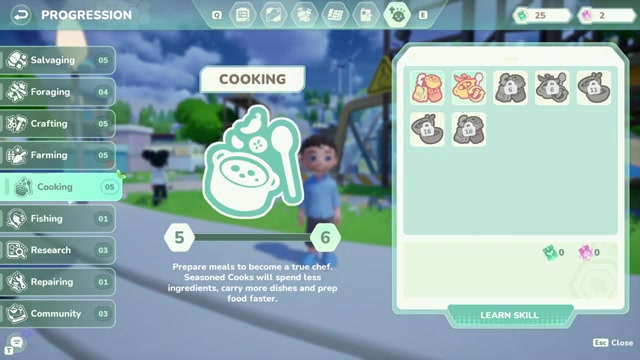
Fishing is one of the progression skills (alongside salvaging, foraging, crafting, farming, cooking, research, repairing, and community activities). You gain fishing experience as you catch fish, and you’re introduced to fishing through the Hanging Gardens, the second district. Fish counts also feed into the Memories achievement system, which rewards you for fishing up a certain number of fish. No specific fish prices or best fishing spots were given, so I can’t say which fish earn the most.
Likely based on context: Fish you catch can be sold the same way as other goods, through the delivery bin. Check the Loftia Codex for item details before selling anything you might need for a collection.

Skills worth upgrading first to earn dews faster
Upgrade salvaging and foraging first, because double materials and a larger carry capacity help the most early on.
Each skill levels as you perform its activity, and leveling gives you points to spend on upgrades. If you don’t enjoy fishing, hold off on upgrading it for now. After the early picks, invest in skills tied to what you enjoy. Nothing is irreversible, and you can’t really make a mistake with these choices.
5 mistakes that slow your dew income in Loftia
- Cooking on an empty battery: The batch stalls. Charge up first with solar panels and upgrade your battery over time.
- Making tiny berry trips: Stock about 40 Wild Berries per run, not a handful.
- Ignoring passive income: Plant cotton and leave it. Ten minutes later it pays out while you do something else.
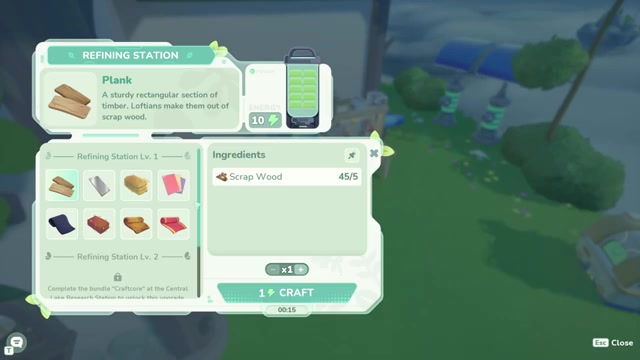
- Forgetting to combine errands: Pair your Sugar run with the nearby Construction Site for Scrap Wood and other needs.
- Not checking where items come from: Look items up in the Loftia Codex database or hover over map areas to see which materials spawn there.
- Treating the smoothie loop as permanent: Dew-making methods have changed between versions, so recheck prices if profits look off.
Loftia Best Way to Make Money and How to Sell Fish FAQ
What is the best way to make money in Loftia early on?
Cooking Fruit Smoothies is the best early dew-maker in Loftia, netting about 300 dews of profit per batch of 20. It balances upfront cost, time, and effort, and it’s available at the very start of the game.
How do I sell items in Loftia?
You sell items at the delivery bin near your house. This is the primary way to turn materials, crops, and cooked goods into dews.
How much do Fruit Smoothies sell for in Loftia?
Each Fruit Smoothie sells for 20 dews. That’s 4x the cost of the Sugar per unit, so a batch of 20 brings in 400 dews.
How do I get Wild Berries and Sugar in Loftia?
Harvest Wild Berries in the hills of Loftia City, and buy Sugar at the Global Village for 5 dews each. About 40 berries and 20 Sugar make one full batch.
Is planting cotton worth it in Loftia?
Cotton is worth it as a hands-off starter income. A seed costs 5 dews, it sells for 10 dews, and it’s ready in 10 minutes, so you profit 5 dews per plant while earning early farming experience.
Where can I find more info on a specific Loftia item?
Use the Loftia Codex, a database and wiki for everything in the game. Search an item, such as Portobello Mushrooms, to see where to find it. You can also hover over map areas in game to see which materials spawn there.
Loftia Best Way to Make Money and How to Sell Fish Checklist
0 of 11
Source & credit
This guide draws on the excellent video walkthrough by Athis — watch it for the full visual run-through, and give the creator your view: