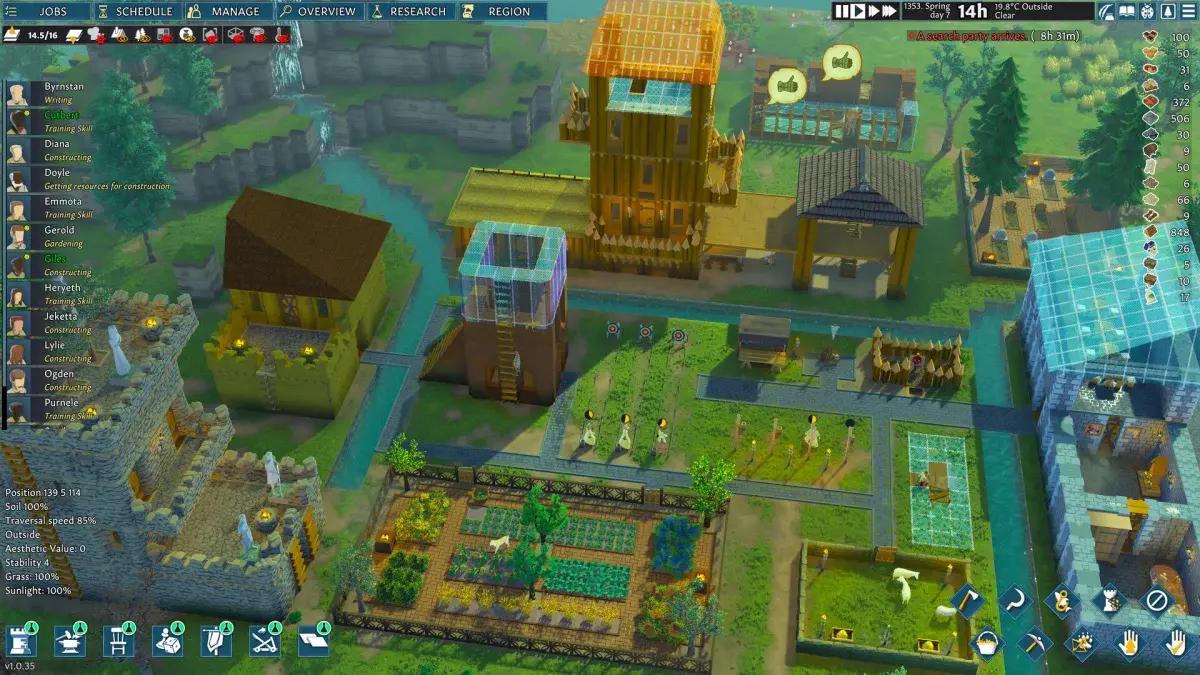
Watching my best archer bleed out in the mud because I’d forgotten to build a second door felt like my world had ended. Twenty hours into my settlement, walls three stories high, a functioning brewery, crops rotating through the seasons, and raiders poured through the single entrance I’d carved into the hillside. My fortress had become a tomb. I quit to the main menu, stared at the screen for a full minute, then started a new colony. That’s Going Medieval in a nutshell: meticulous planning rewarded, careless oversights punished, and an inexplicable urge to try again.
Building Upward from the Ashes
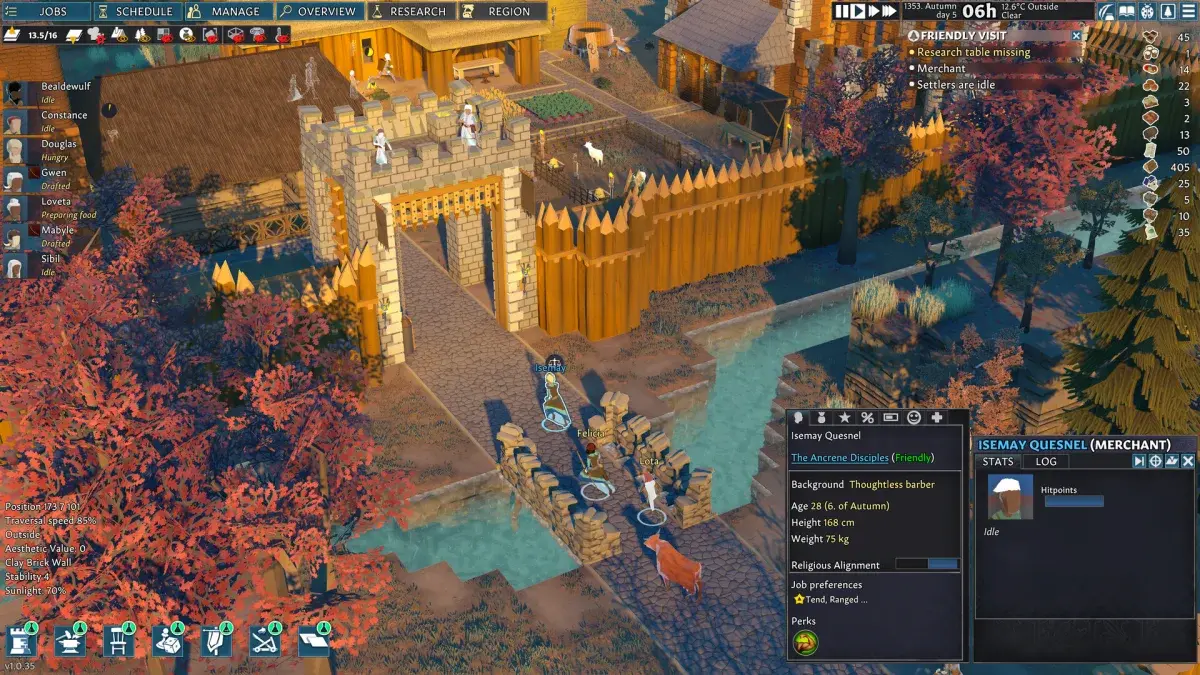
Foxy Voxel’s colony sim distinguishes itself through verticality. Where similar games trap you on a flat plane, Going Medieval hands you a shovel and says “dig.” The voxel-based terrain system lets you carve into hillsides, excavate underground storerooms, and stack your settlement skyward. My second colony began inside a mountain, rooms hollowed out of solid rock, a hidden entrance masked by natural terrain. When I finally built upward, adding watchtowers that overlooked the valley below, I felt like I’d constructed something genuinely mine.
Going Medieval’s building tools take time to master but reward patience. Placing individual blocks feels tedious at first, especially when you’re just trying to throw together shelter before winter. But once you understand the system, possibilities multiply. I built a great hall with a vaulted ceiling, bedrooms stacked above the kitchen to benefit from rising heat, and a kill corridor lined with arrow slits. Each structure emerged from necessity, then evolved into something I was proud to defend.
Terrain deformation adds tactical layers that surprised me. Digging a moat around my walls wasn’t just aesthetic; it funneled enemies toward my prepared defenses. Carving switchback paths up a hillside meant attackers arrived exhausted and exposed. The landscape becomes a tool, and learning to read it transforms how you approach each new map.
Souls in the Settlement
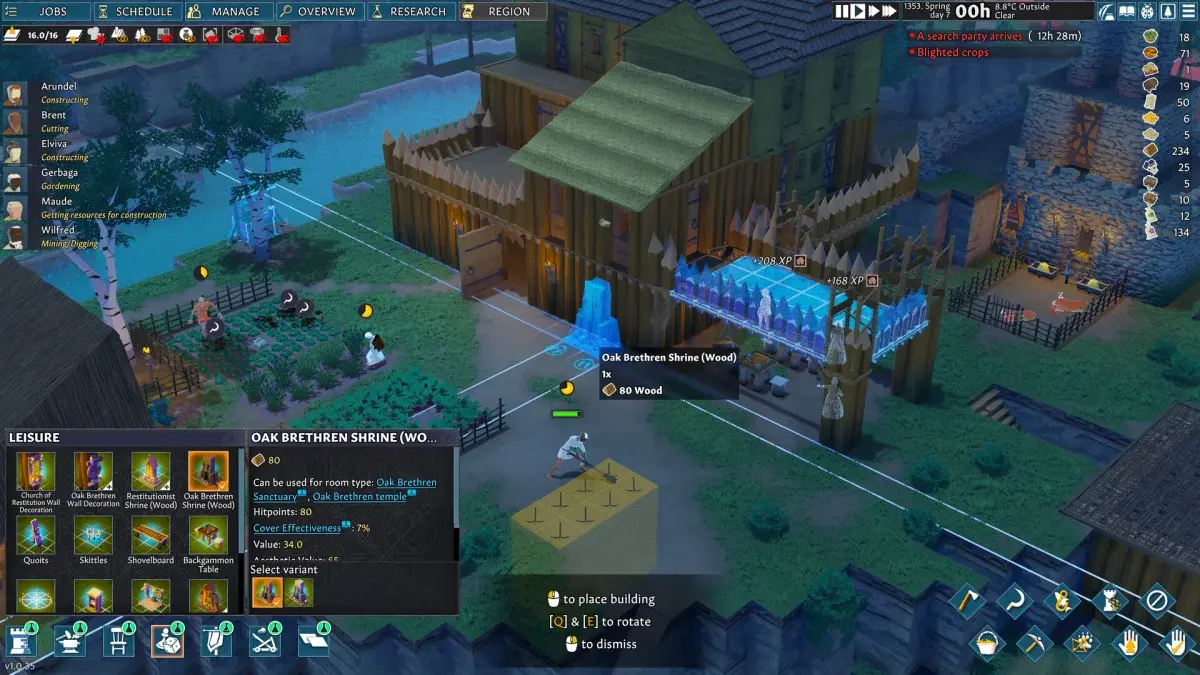
Your settlers arrive as refugees from a plague-ravaged world, each carrying skills, personality traits, and emotional baggage. One of my colonists, a former noble, refused to haul materials and constantly complained about sleeping arrangements. Another had a passion for cooking that bordered on obsessive; she’d abandon guard duty to perfect a stew. These quirks aren’t just flavor text. They shape your colony’s capabilities and generate stories you didn’t plan.
Managing their needs creates a rhythm of small decisions. Food quality matters for morale. Sleeping in the cold breeds resentment. Witnessing death leaves psychological scars that take seasons to heal. I lost a colony not to raiders but to cascading mental breakdowns after a harsh winter killed our livestock. The survivor’s guilt spiraled into fights, which led to injuries, which led to more despair. It felt earned, a consequence of my failure to stockpile enough food.
Relationships form without your input, for better and worse. Two settlers fell in love during my third playthrough, which boosted their moods until they had a bitter argument about room assignments. The resulting cold war tanked productivity for an entire season. I’ve never been so invested in fictional couples therapy.
This Shadow of RimWorld
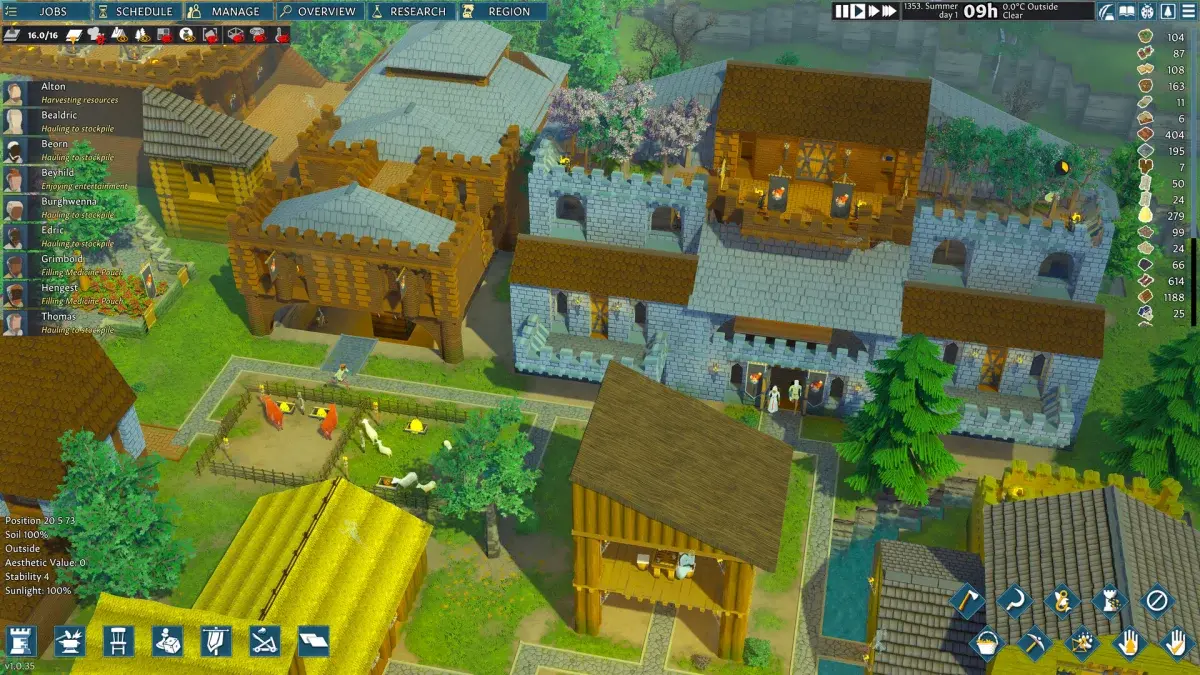
Let’s address the elephant: Going Medieval owes an obvious debt to RimWorld. The settler management, the mood systems, the raid escalation, the research tree structure—veterans of Tynan Sylvester’s masterpiece will recognize the DNA immediately. This familiarity cuts both ways. I slipped into Going Medieval’s rhythms quickly, understanding intuitively how to prioritize tasks and manage crises. But I also kept waiting for systems that weren’t there, depth that hadn’t been implemented.
The medieval setting and 3D building provide genuine differentiation, but moment-to-moment gameplay often feels like comfortable repetition rather than innovation. Research unlocks feel predictable. The tech tree lacks the weird surprises that make colony sims memorable. You’re building toward better materials and stronger defenses, which satisfies without exciting.
New players face a steeper climb. The tutorial covers basics but abandons you before explaining crucial systems. I learned about structural integrity by watching a roof collapse. I discovered food spoilage by losing a winter’s worth of meat. These lessons stick, but gentler onboarding would help the game reach beyond its niche audience.
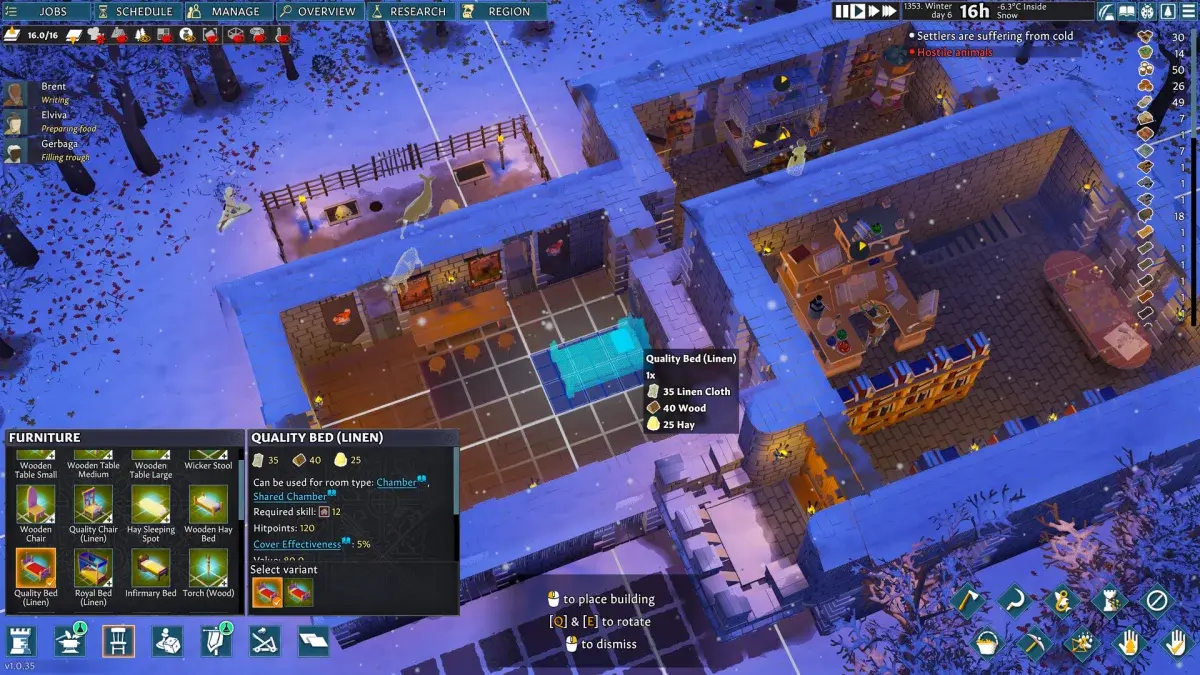
When the Raiders Come
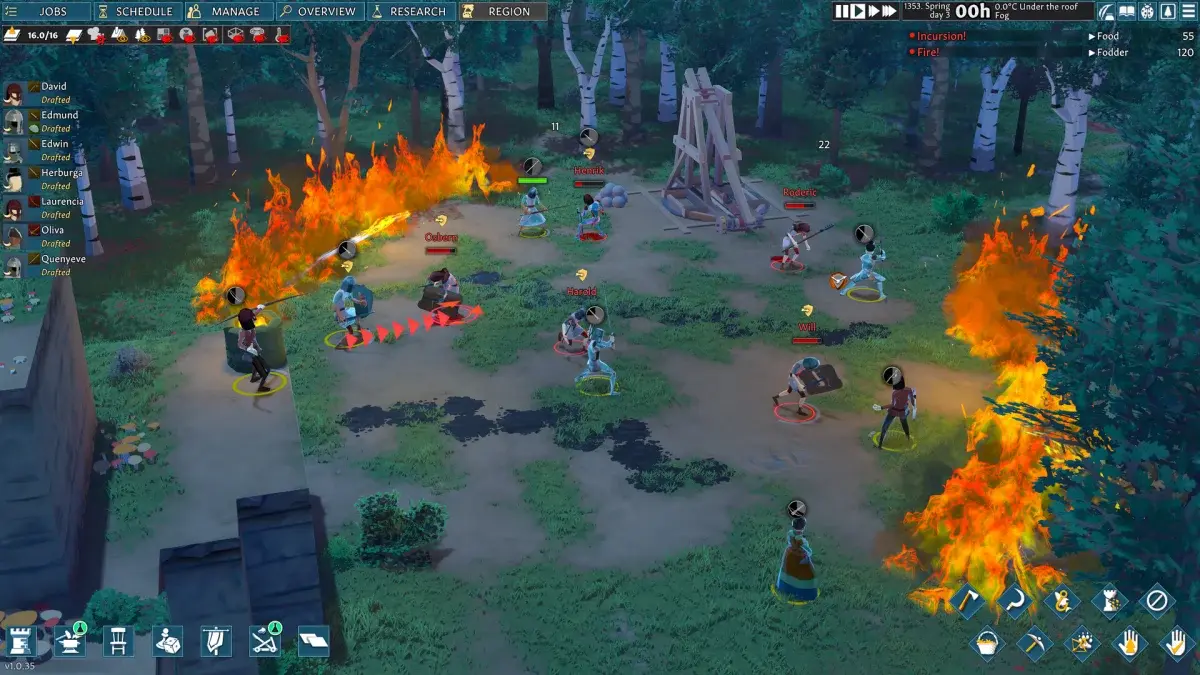
Combat exists to test your architecture. That sounds dismissive, but it’s actually the game’s smartest design choice. Battles themselves play out simply: position your settlers, watch them swing swords or loose arrows, hope your numbers and equipment advantage holds. The real engagement happens before the fight, when you’re placing spike traps in chokepoints and ensuring your archers have clear sightlines.
The tension of watching raiders approach never dulled across my 40-plus hours. You see them coming from a distance, a cluster of red icons moving across the map, and you have time to prepare. That preparation is everything. Did I reinforce the eastern wall? Are my fighters rested? Is the gate actually closed this time? The dread builds not from combat difficulty but from knowing how much you stand to lose.
When defense fails, it fails spectacularly. A breach means enemies in your storerooms, flames spreading through wooden structures, settlers dying in hallways they thought were safe. Rebuilding after a successful defense feels triumphant. Rebuilding after a disaster feels necessary, a refusal to let the work disappear.
A Kingdom Worth Defending
Going Medieval succeeds as a meditative building game punctuated by moments of genuine crisis. The 3D construction system elevates it above derivative, offering creative possibilities that justify the familiar framework. Settler management generates stories worth telling, even when those stories end in tragedy. At $29.99, with Steam Workshop mod support extending its lifespan, there’s substantial value here for players willing to climb the learning curve.
This isn’t the game that will convert skeptics of the genre. If colony sims have bounced off you before, Going Medieval won’t change that. But if you’ve ever wanted to build a medieval fortress block by block, populate it with flawed humans, and defend it against increasingly desperate odds, this delivers. My current colony has a great hall, a functioning chapel, and walls that have held through three major raids. Somewhere in those walls is a lesson I learned from watching my best archer die. I built two doors this time.