
Idle Keep builds eight professions that genuinely feed one another, the kind of interlocking economy that usually costs twenty dollars and a decade of live-service updates, and then it stops dead the moment you look away from it. That’s the whole review in one sentence, but the details are worth your time, because the gap between what this game is called and what this game does is the widest thing about it.
Eight Skills and a Kingdom Without Its Light
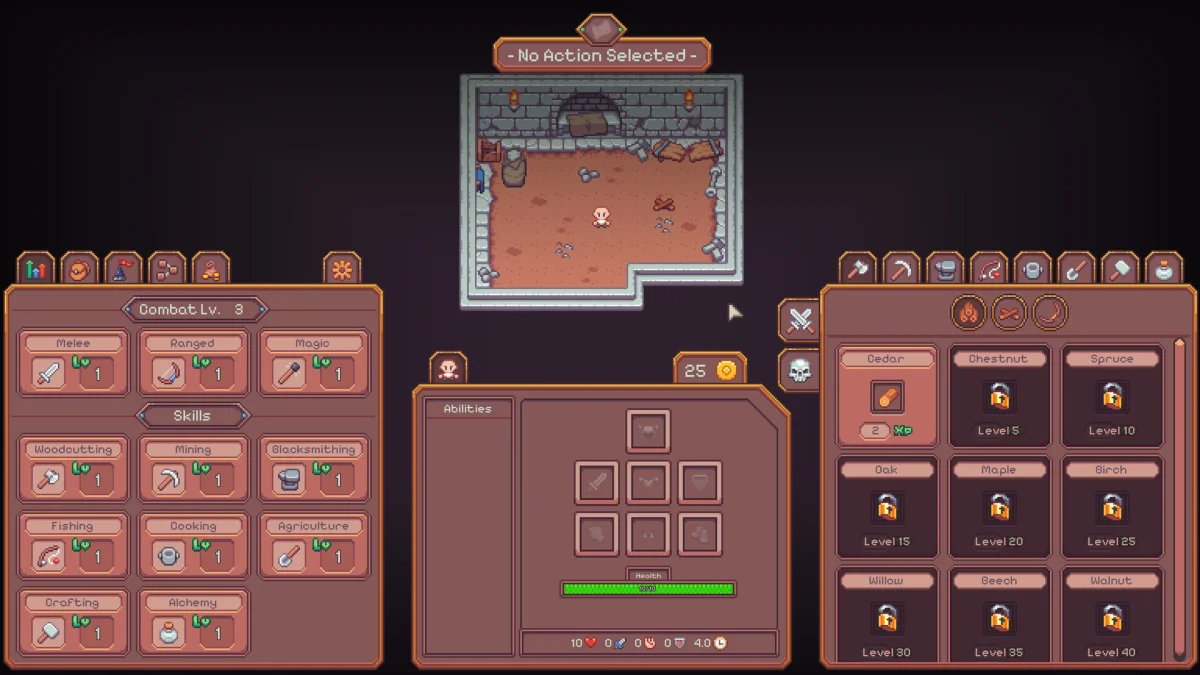
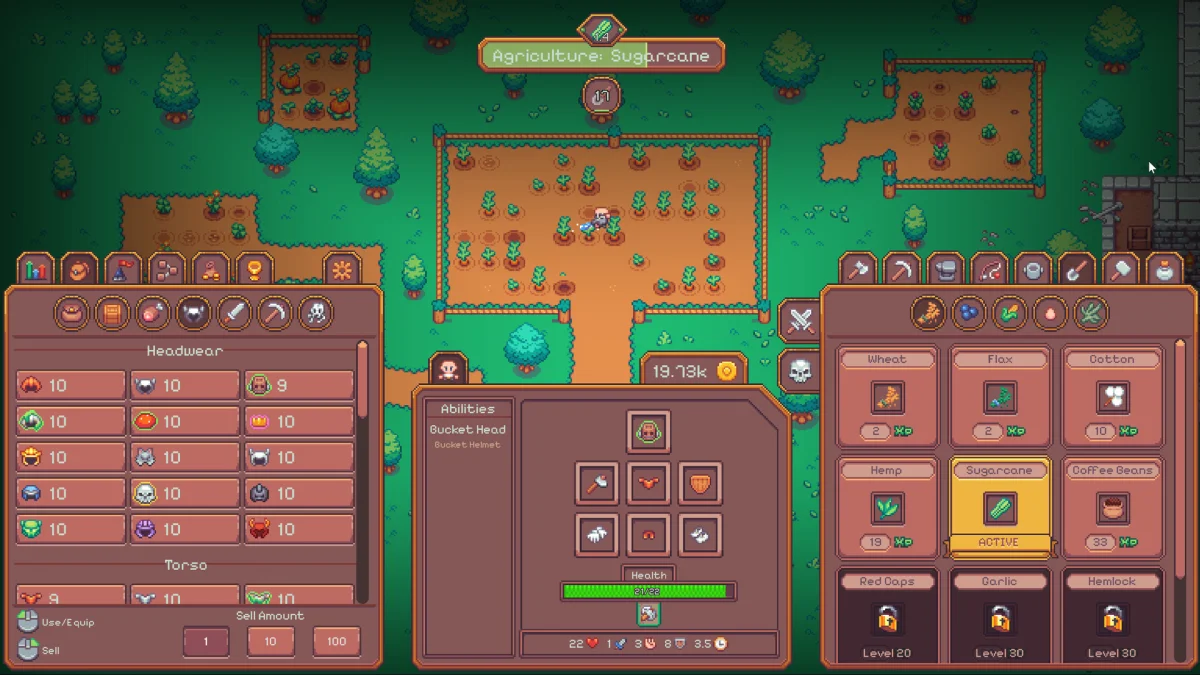
The premise is that wyverns came and drained the Kingdom’s mana, and the Keep you’re standing in is what’s left. You rebuild it. Woodcutting, mining, blacksmithing, fishing, cooking, agriculture, crafting and alchemy all hang off that reconstruction, and the design follows the old RuneScape logic where nothing advances alone. Ore you pull out of the ground becomes bars becomes gear. Crops feed into meals, and herbs into potions you’ll need later, in a fight, at the worst moment.
That interdependence is the best thing PixelBitGames did here, and it’s what won me over. It means leveling isn’t eight parallel bars you nudge in rotation, it’s a supply chain where a shortfall in one place shows up two steps down the line. And the Keep’s repair milestones give the numbers somewhere to land. Most idle skillers ask you to climb for the sake of climbing; this one hands you a ruin and a reason.
Recipe unlocks keep arriving too, at a pace that outstrips what $4.25 buys. Players who stuck with it describe finding more to dig into than they expected, and that tracks with how the crafting trees widen as skills rise. For pocket change, the content-per-dollar math is not close.
The Idle Game That Won’t Let You Idle
Then there’s the part where it isn’t an idle game.
Your character works until the input materials run out, and then he stands there. No fallback task, no reversion to gathering generic stock, no queue you set before you tab away. If you assign him to smith and the bars run dry twenty minutes into your work call, you come back to twenty minutes of nothing. Players have described the optimal cadence as returning every fifteen to thirty minutes to reassign him, which is not idling, that’s shift supervision.
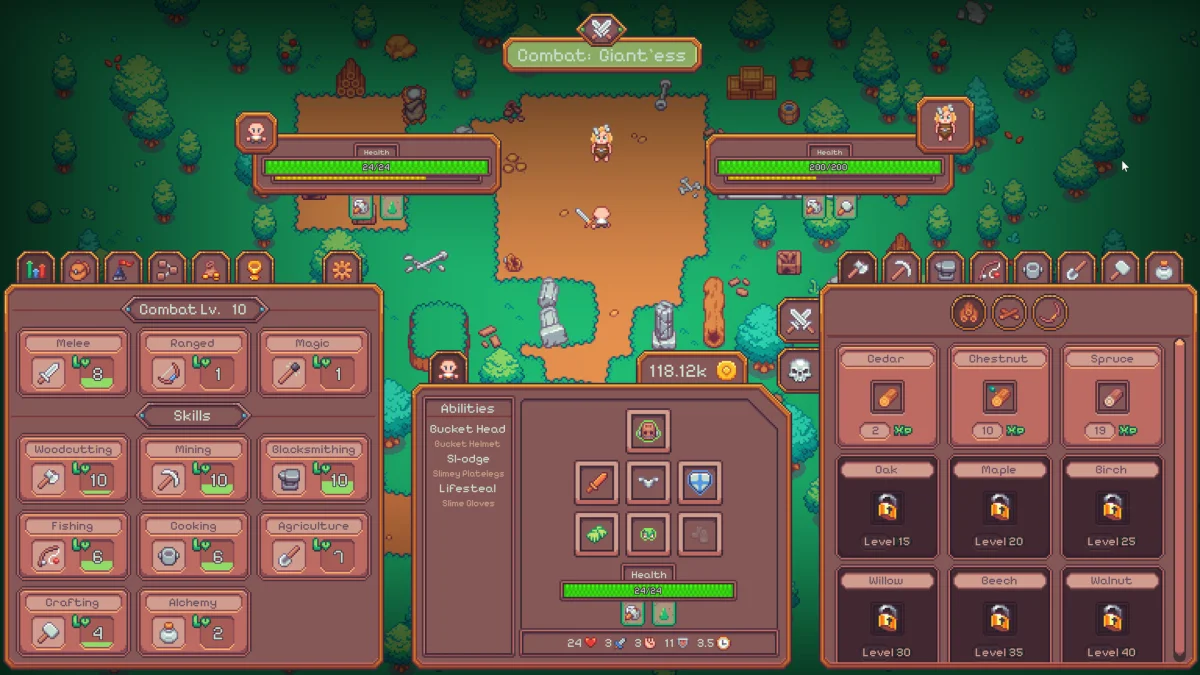
Combat is worse for this. Fights require you to be present and healing manually, because your character will not eat food or drink potions on his own. So the exact moment the game gets tense, it also demands your full attention, and the pitch about running it on your second monitor while you work collapses. One player with thousands of hours in Melvor Idle came away calling this a screensaver, which is harsh but points at the real problem: it’s demanding without being engaging, and it automates nothing at all.
What’s missing is boring infrastructure that would fix nearly all of it. Bulk crafting. A build-X-of-this instruction instead of build-until-empty. Let the character auto-swap to a new task the moment his inputs deplete, and give offline progress a cushion, so closing the game doesn’t mean closing the tap. None of that is glamorous, and all of it is the difference between an idle game and a game you have to babysit.
Defending the Keep and Hunting the Wyvern Queen
Combat earns its place despite the healing chore, mostly because enemies drop equipment. That gear loops straight back into the skilling ladder, so gathering stops being pure number inflation and becomes a way to survive the next encounter, which drops the thing that lets you survive the one after. It’s a tighter feedback circuit than most idle skillers manage.
And the whole ladder points at the Wyvern Queen. A finite endgame in an idle skiller is genuinely uncommon, and it changes how the grind reads. You are not prestiging into infinity for a 1.4x multiplier, you are stockpiling for a fight that ends the story. One player finished it and immediately wanted a New Game Plus, which is about the best thing you can say about a finale.
Collectible pets round out the completionist track alongside Steam Achievements and Cloud saves. The pets are charming to hunt and, by most accounts, barely matter mechanically, which is a shame given how much material the climb to the Queen consumes.
Menus Without a Manual
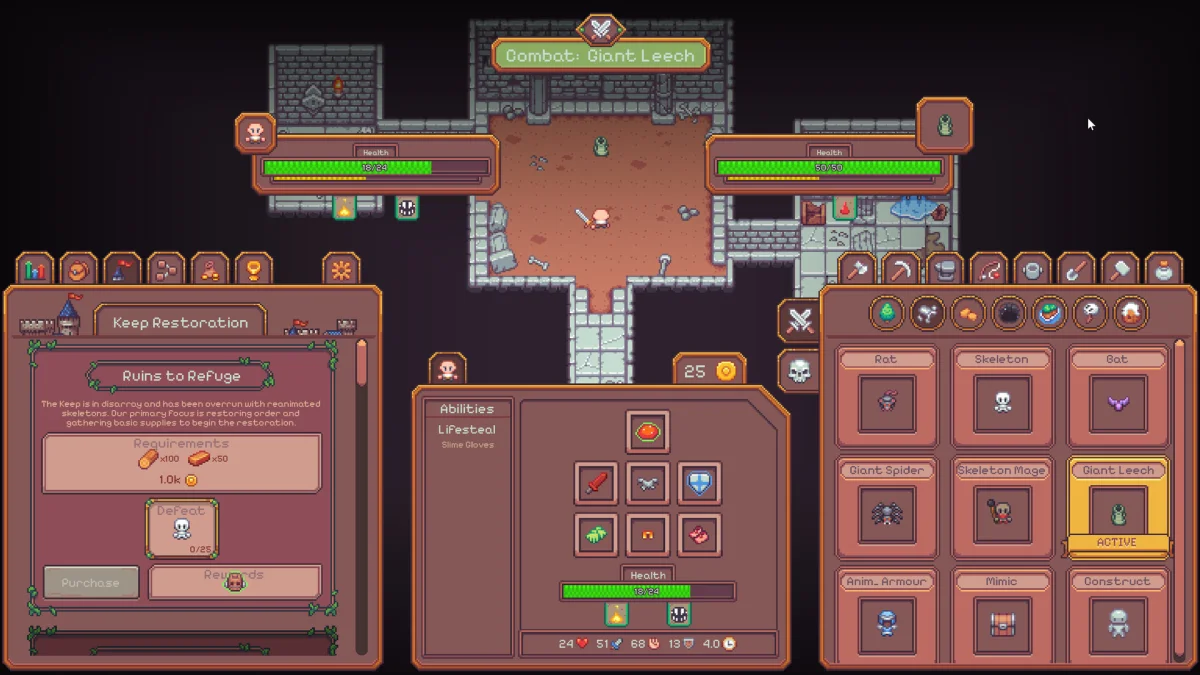
You will learn this game by clicking things and finding out. There’s no in-game manual, and the icons don’t explain themselves, so systems that should take thirty seconds to grasp take a session of trial and error instead. Menu design is the weakest presentation element by a distance.
The technical issues are more damaging, because they attack the use case. Fullscreen has been reported to work only at 1920×1080, which is a rough constraint in 2026. Worse, players have hit an audio conflict where other applications playing sound start putting out static, and a game whose selling point is background play cannot afford to break the audio of whatever else you have running. Bugs persist elsewhere too, and the developer has been quiet since launch: the game is completable start to finish, but nobody currently playing seems to expect a patch.
Worth the Coin, Not Yet Worth the Crown
Buy this if you like skilling economies specifically, enjoy hands-on resource juggling, and want a finite fantasy grind you can actually finish. At the price of a coffee, the eight-skill web and the Wyvern Queen finale are more game than you have any right to expect, and I don’t blame the people who love it.
Skip it if you came for automation. If your ideal session is setting a plan, closing the laptop and returning to compounded progress, Idle Keep will frustrate you every single time your smith runs out of iron. And if the fullscreen or audio behavior would wreck your setup, I’d wait for patches that may not arrive.
The Keep is worth rebuilding. It just insists on handing you the hammer every fifteen minutes.