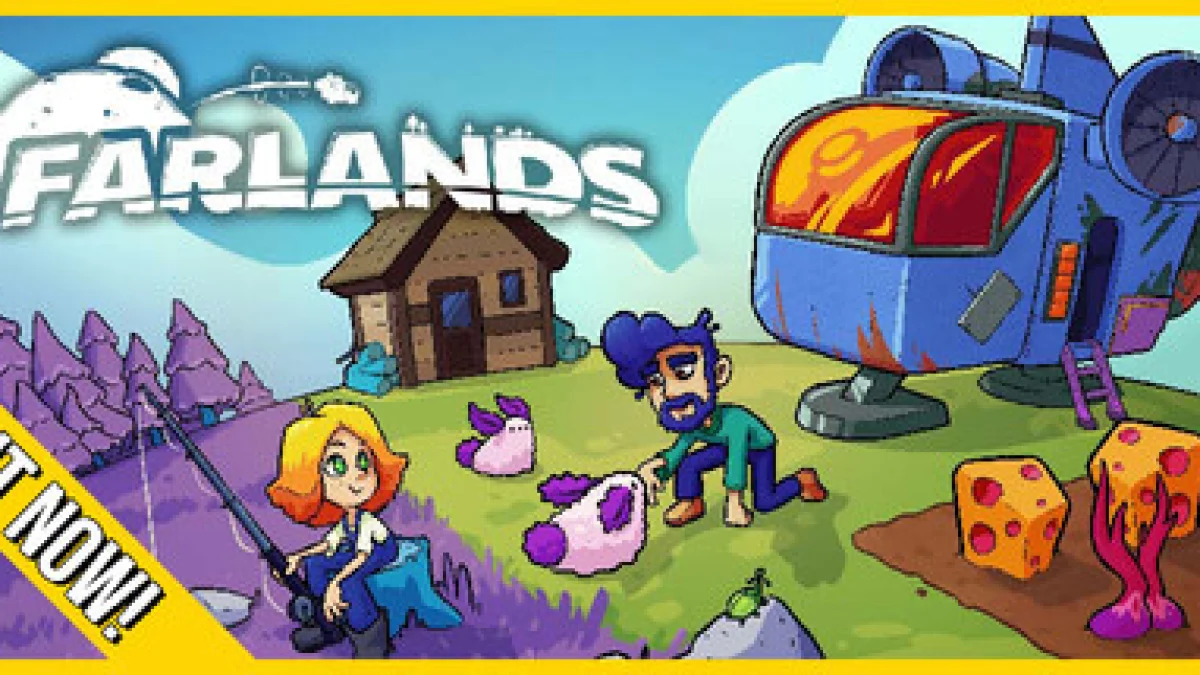
Farlands is for the player who has already reclaimed every last square of Stardew Valley’s farm and wants the same rhythm with a fuel gauge attached, someone who finds it genuinely exciting that mining a rock on one planet unlocks a better hoe for another. If your tolerance for jank is low, if you need a manual save before you close a session, if you expect a tooltip when you hover over an item in a shop, this 1.0 will grind against you within the first few hours. That’s the dividing line, and after two years in Early Access it’s still a wide one.
The Bargain Planet Nobody Warned You About
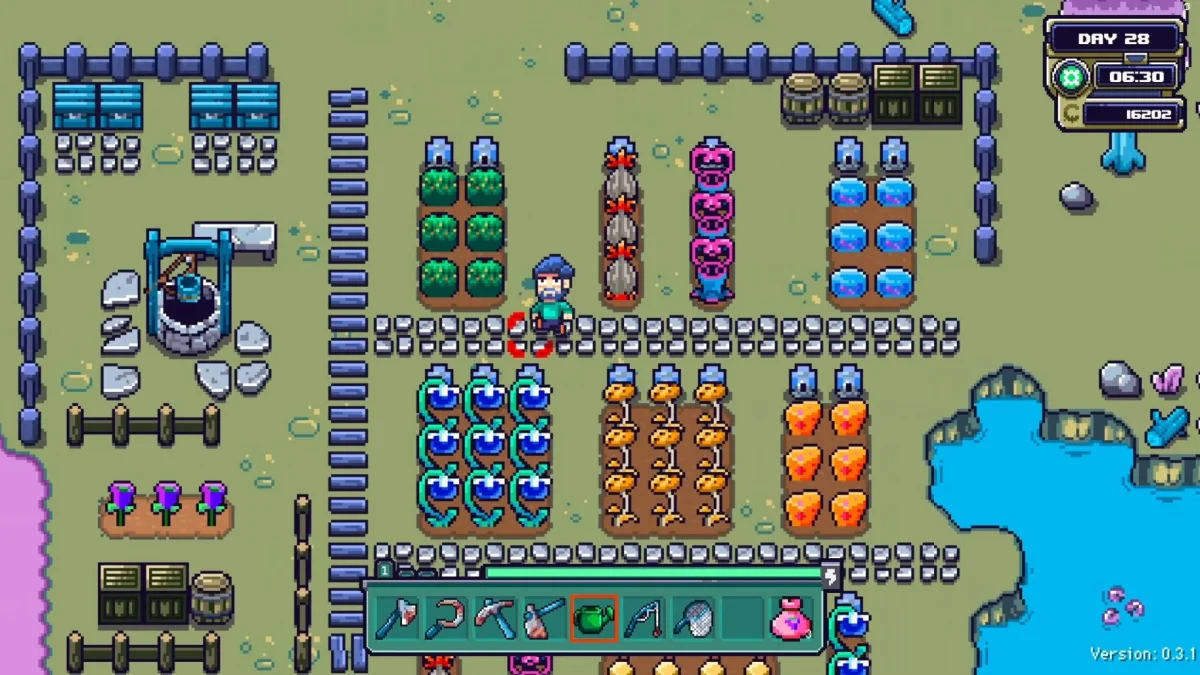
You don’t inherit anything here. You buy a rundown agrarian planet at the edge of the galaxy for a price that should have set off alarms, and the game is smart enough to treat that as a plot point rather than a setup line. The opening hours are pure reclamation: weeds off the fields, fences and buildings back into working order, first seeds in the dirt, a fishing rod pointed at water that mostly gives back garbage. The bones of this are Stardew Valley’s, copied close enough that you’ll recognize the beat count.
What Farlands adds is a reason to keep asking questions. Somebody sold this world cheap, and the answer to why is threaded through the whole game as an actual mystery with a stated stake: the solar system needs saving. That’s a better engine for a farming loop than a grandfather’s letter, because it gives every upgrade a direction to point in.
The catch is patience. The mystery takes a long while to assert itself, and in the meantime you’re doing chores on a planet whose early offerings are thin. Some players never get past that stretch. The complaint I find hardest to argue with is that the home planet doesn’t reward exploration on its own terms: the fish are mostly junk, and the first hours read as supply-gathering to fund a trip somewhere more interesting.
A Patched-Up Ship and the Solar System Next Door
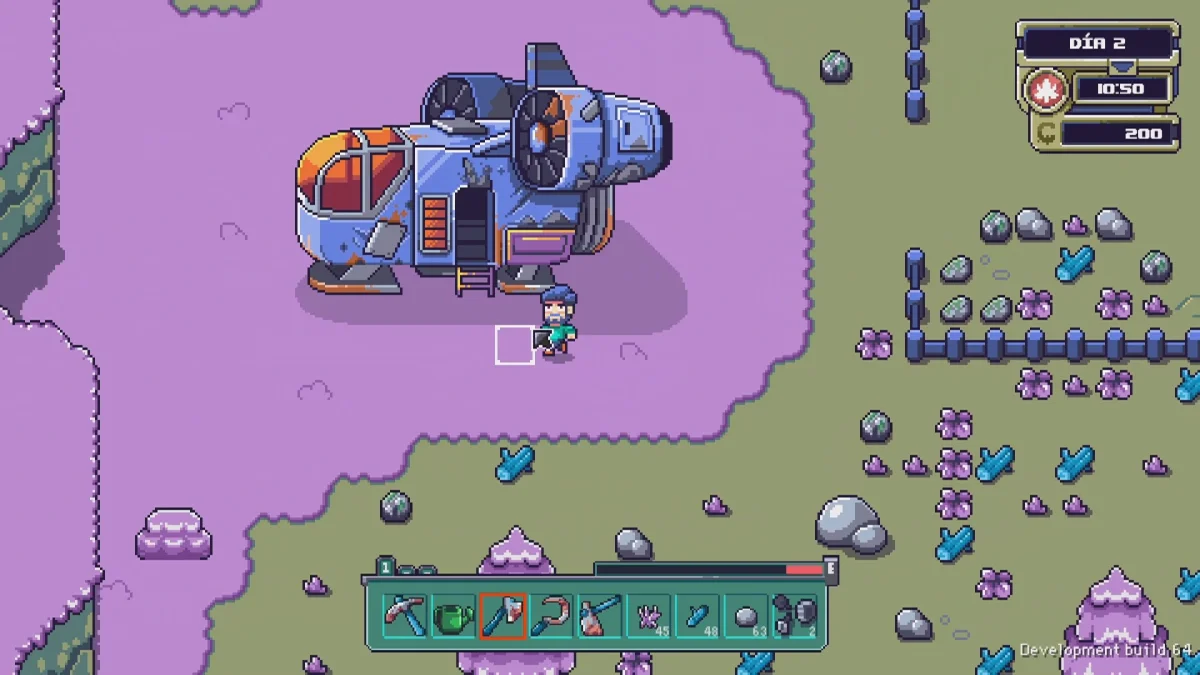
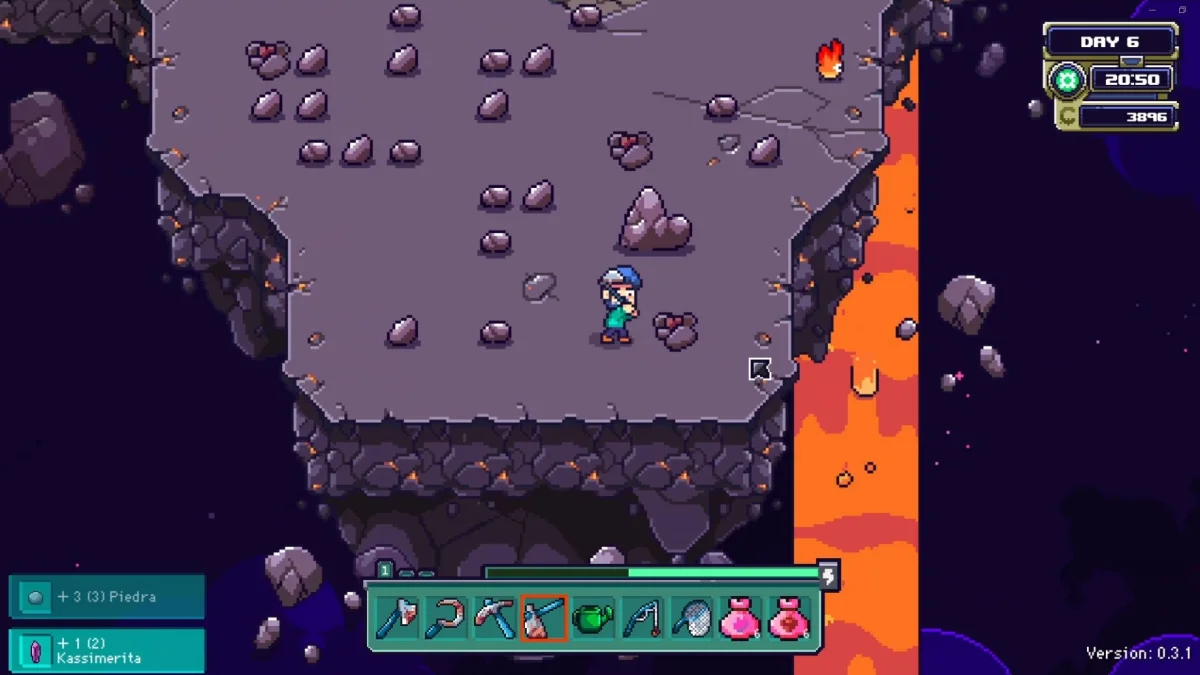
The ship is the whole pitch. Once it’s flying, Farlands stops being a farm sim with a sci-fi skin and becomes something with its own shape: you leave your fields to harvest resources you can only get elsewhere, then bring them home to upgrade tools, buildings, and the vessel that got you there. Better gear opens further worlds, and those worlds fund the next round of gear. It’s a clean, legible loop, and it’s the reason I’d stop short of calling this a clone, because Stardew never asked you to budget fuel against planting season.
Where it wobbles is the destinations themselves. Each planet has its own resource identity, but identity is not the same as density, and the gap between the two is where opinions split hardest. Players who enjoy the collecting for its own sake report the loop holding up; players who want each new world to surprise them run dry faster. My read is that the structure is stronger than the content poured into it. The system-hopping is a genuinely good idea executed at indie scale, and you can feel the ceiling of that scale by the time you’re outfitting your third or fourth expedition.
The Last Residents of a Dying System
The cast is small, and the game turns that into a mood instead of apologizing for it. These are the people who didn’t leave a depopulating solar system, which means every conversation carries a low hum of “why are you still here” underneath the pleasantries. It gives the friendship grind a melancholy that most cozy games can’t reach, because most cozy games are set in towns that are doing fine.
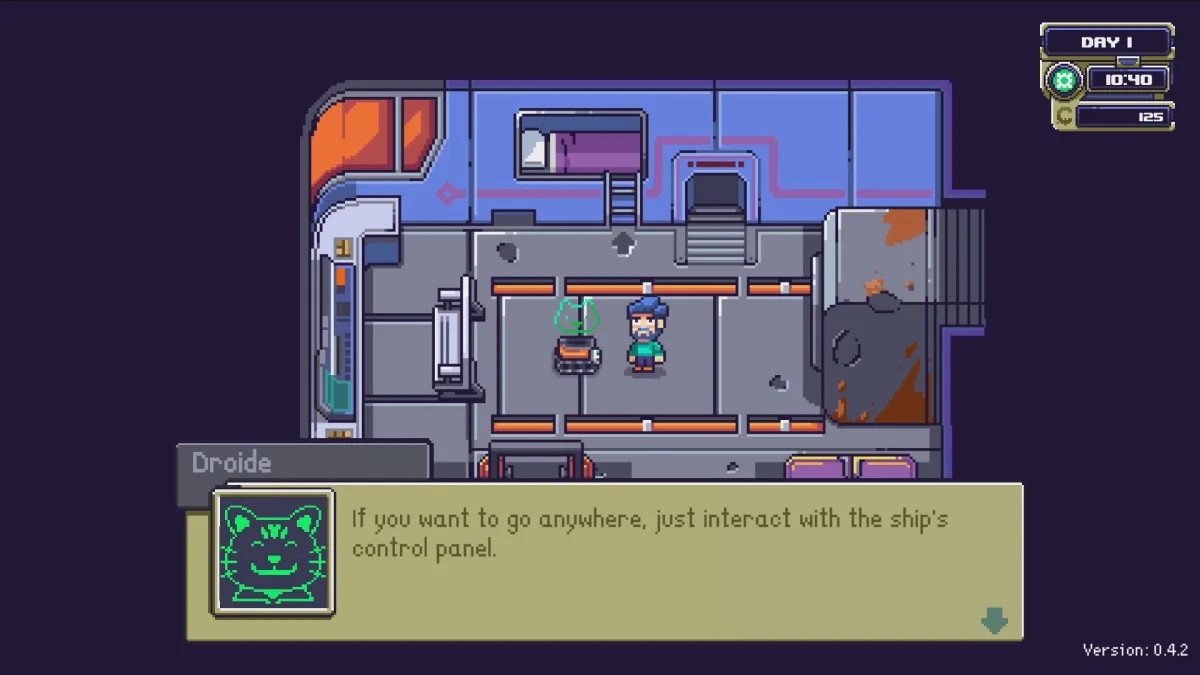
Eddy, your assistant droid, is the best character in the game and does more work than anyone. He’s your tutorial voice, your running commentary, and the thing that keeps the early hours warm while the mystery is still asleep. That’s not a small achievement: at least one player who wrote off the launch build as unplayably buggy stuck with it anyway because they didn’t want to leave Eddy behind. When your onboarding NPC is retaining people through crash-level frustration, the writing is working.
The romances are warm and worth pursuing, with most of the marriage candidates landing well. They’re also lighter than what the genre leaders offer, with less branching to dig into once you’ve cleared a character’s storyline. Sweet, finite, done.
Rust in the Machinery
Two years in Early Access should have bought this game a stable release, and it didn’t. The reported launch bugs are not cosmetic. Dismount the hover bike and your tools stop responding, leaving you holding an axe and nothing else. In-game time freezes after you sleep aboard the ship, and furniture vanishes from the farm you spent hours decorating. Losing your placed objects in a game about building a home is not a bug you can shrug at.
The quality-of-life gaps sting almost as much because they’re so cheap to fix. There’s no manual save and no pause, which in a genre built on stopping whenever life demands it is a baffling omission. Shops and production units go untagged, so you’re guessing at what things do. Holding shift doesn’t make your character run. Every one of these is a small paper cut, and cozy games live or die on the absence of paper cuts.
Steam sentiment reflects it honestly: Mostly Positive, with roughly 139 of 196 reviews on the good side of the line, and the negatives clustering almost entirely around polish rather than design.
Worth the Down Payment, Not Yet the Mortgage
At $17.99, Farlands is priced like the modest, personal thing it is, and I’d rather have this than another safe valley with a river through it. If you’re the sort who patches around a game’s problems, keeps a mental list of workarounds, and gets a real charge out of a new planet appearing on the nav screen, buy it now and accept that some sessions will end badly. If you want a game to relax into without vigilance, wait two or three patches and check back, because the fixes are obvious and the developers have every reason to make them.
It’s a game about restoring something that was sold to you broken, which is the funniest thing about it right up until the morning your furniture isn’t there.