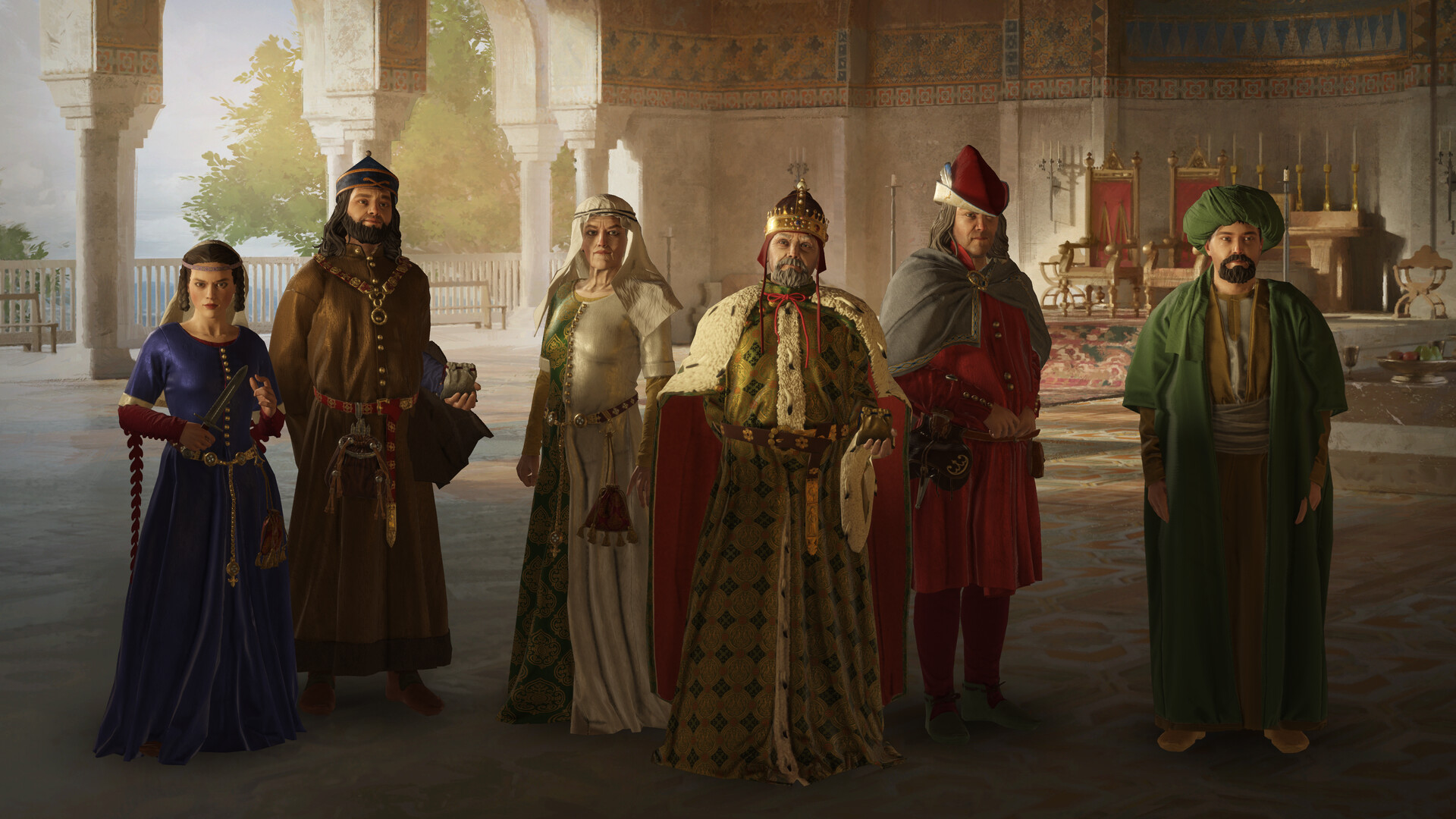



Crusader Kings III has always been at its best when you’re chasing something other than painting the map your color. Some of my favorite moments in Paradox’s grand strategy RPG came from pushing one oddly specific goal for my dynasty and seeing where it led. Silk & Silver, the newest major expansion, adds a whole new road to power: commerce, economic influence, and good old-fashioned greed.
It’s a direction that makes a lot of sense after Roads to Power proved that landless play could work. Between running a merchant company, fighting for control of a republic, and a much deeper economy underneath both, there’s a lot to like here. But as much fun as I had poking at these new systems, the amount of babysitting they need kept making me ask whether the payoff was worth it.
The free Florin update gives every county an economy worth planning
The biggest change in this release isn’t actually the part you pay for. Silk & Silver launched alongside the free 1.21 “Florin” update, and that’s where the economy and building overhaul lives: trade goods, building needs, roads, and a new district system. Everyone gets it, though it’s clearly built to work hand in hand with the expansion.
Holdings no longer give you a handful of slots to fill with whatever pays the most tax. Instead, they’re split into districts that hold different kinds of buildings. Settlement size decides how many districts a holding can support, prosperity drives how much it earns, and the trade goods a county produces or needs now matter when you decide what to build.
I’m a big fan of this. Once you knew which buildings were best for your playstyle, developing holdings in Crusader Kings III used to be a checklist. In my Venice campaign, the screen that sold me was the Trade Post District. Upgrading it to Trade Office III cost 200 gold and three months, and in return it added four district building slots to the city, raised commerce taxes across the county by 15%, and gave my family six points of trade competitiveness. That one upgrade changed what I built next. I stopped asking which building paid the most and started asking which goods Venice should be good at.
It also ties the map together in a way the old economy never did. A good produced in one region can be the thing another region is short on, so commerce finally has a reason to exist in the wider world. Even if you never touch the new merchant government, a traditional campaign gets more interesting because of it.
It’s one of the bigger changes Paradox has made to Crusader Kings III’s underlying systems, and I’m glad it went to everyone instead of sitting behind the expansion.
A merchant company starts with 50 gold and a lot of homework
The centerpiece of Silk & Silver is the new merchant government. You play a landless family at the head of a trading company and chase wealth instead of land. It’s a real departure from the usual Crusader Kings experience, mostly because your relationship with the world’s rulers flips. You care a lot more about what’s in their markets than about the land they sit on.
Merchant companies pick one of three purposes. Caravaneers move goods, Creditors make their fortune lending money to rulers, and Artisans produce valuable artifacts. As the company grows, you can chase exclusive trading rights, lock down monopolies, and court powerful patrons who can open doors for you.
My merchant run started in Exeter with a custom-made trader and 50 gold to his name. Upgrading that Townhouse to unlock a second trade route cost 100 gold and 250 prestige, so the first couple of hours were all about one salt route. I bought salt in Cornwall at 0.066 gold a unit and sold it in Valois for 0.088 and Orleans for 0.084, and the Route Planner promised me +0.82 gold a month for the trouble. The early merchant game is played in fractions of a coin, and you feel every one of them.
Conceptually, I really enjoy what Paradox has done here. There’s something satisfying about starting with almost nothing and slowly building a trading network that reaches across several realms. My best moment came when I finally talked my patron, the Petty King of Cornwall, into a salt monopoly in the Cornish Market. It cost 40 of my 114 gold and 20 points of his opinion of me, and suddenly my company was the only one allowed to buy and sell salt there. That’s Crusader Kings at its best: a deal with a character, paid for in favors as much as coin. The three purposes help too, so a Creditor campaign doesn’t play like a Caravaneer one.
The problem is that running all of this isn’t as fun as the pitch. Profitable trade routes need constant attention, and the bigger your business gets, the more there is to look after. Within two months of that monopoly I’d reinvested my way back down to 15 gold, and a monopoly in a French market cost 255 gold that I simply didn’t have.
Don’t get me wrong, I’m not against micromanagement in a grand strategy game, especially when it leads to real decisions. But building a strategy and repeating the chores needed to carry it out are two different things. Silk & Silver doesn’t always know the difference.
There are some interesting economic systems underneath it all, which makes it all the more frustrating when using them starts to feel like a chore. Building a successful merchant company is satisfying. Keeping one running could use a lot more streamlining.
Republics are where the new systems click
Of the new ways to play, I like the playable trade republics the most. Taking over a patrician family in Venice or Genoa is a refreshing change from the hereditary monarchies that have always dominated Crusader Kings III.
You can’t lean on dynastic succession here. You have to deal with rival families, win political support, and keep enough influence to hold on to positions of power. Wealth stops being something you spend on armies and buildings and becomes the thing that keeps your family in charge.
The Assembly is where that comes alive. Early in my Venice campaign, a vote came up to replace the Patrician Assembly with a General Assembly that also seats the republic’s lesser vassals, in exchange for a boost to popular opinion in the capital. The voting screen shows every member’s opinion of the law and of you, from +18 down to -57, and the motion carried 13 to 3, with 9 votes needed. Seeing exactly who is on your side, and by how much, turns every vote into a negotiation with people you can name.
There’s also a fun push and pull between the republic’s prosperity and your own family’s ambitions, especially when rival houses get rich off the same trade you built. I lost the seat of Doge partway through my campaign and dropped to an ordinary patrician. Because trade posts belong to the family and not the city, every gold I’d poured into them kept paying out while someone else ran Venice. After that I put my money into trade posts and the family seat and barely touched the city’s own buildings, which is exactly the kind of selfish, sensible decision this setting should push you toward. A few years later the Assembly voted me back in.
This is where Silk & Silver plays best to Crusader Kings III’s existing strengths. The character-driven politics, the scheming, and the opportunistic relationships that make the game so entertaining are all still here. They’re just aimed at a different set of goals and different ways of getting power.
The new Italian flavor helps sell it. The 1178 start drops you into the fight between the Guelphs and the Ghibellines in Northern Italy, with papal and imperial ambitions pulling the region apart, and it’s a great backdrop for republican politics.
Unfortunately, republics aren’t immune to the tedious side of the new economy either. I love the political layer that comes with commercial success, but getting to the point where that influence matters takes more hands-on economic management than I’d like. In one five-week stretch the alert stack in the corner showed four separate “Trade Route Income Decreased” warnings, each one a small job waiting for me in the Route Planner.
More work for the same reward
My biggest issue with Silk & Silver comes down to effort versus reward. At this point in its life, Crusader Kings III has plenty of ways to grow your dynasty, make money, and become someone important. The merchant and republic governments add more options, but they don’t always feel efficient next to the ones that were already there.
That wouldn’t be a problem if the extra work always made the game more fun. Sometimes it doesn’t. Routes drift out of balance on their own: a rival company muscled into one of my incense markets and that route’s profit fell from +0.81 to +0.12 gold a month, so back into the planner I went. Orleans only wanted 30 salt, so a route that looked fine on paper kept leaving goods unsold. Editing a route to fix one of those problems could also break a trade contract I was in the middle of. None of these are hard to fix. There are just a lot of them, and they never stop coming.
The worst one was a road ambush that killed my caravan master. The game wouldn’t let me name a replacement for nine months, so my main route limped along for most of a year while I waited. That’s the merchant game in a nutshell: one bad roll and the machine you built stalls, and the only fix is patience and more clicks.
A big part of what makes Crusader Kings III so enjoyable is how freely you can shift your attention around your dynasty. You might spend a few years building up your holdings, then jump on a political opening, a succession crisis, or a military campaign. All of those systems sit side by side and let you move between them.
The more demanding parts of Silk & Silver’s commerce eat into that freedom. When just keeping what you’ve built takes this much attention, it’s harder to enjoy everything else the game offers. By the time my merchant company was a decade old, I’d earned plenty of prestige, going from 552 to 944, but I had 16 gold in the bank because every coin went straight back into the next building.
I’d love to see Paradox add more ways to delegate or automate the routine commerce as your wealth and influence grow. Your traders drive the caravans, but I never found an option that lets the company keep its own routes balanced. A successful trading company should let you graduate to bigger economic and political decisions, not just pile on more small tasks.
The foundation is there. It’s the execution that needs work. To Paradox’s credit, they’re already on it: two hotfixes in the first week fixed trade routes that sometimes sold goods at the stop where they should have been buying, traders who traveled forever after losing their route, and a Market Share readout that always said 100%.
A worthwhile investment, with diminishing returns
Crusader Kings III: Silk & Silver is an ambitious expansion that makes wealth and commerce a far more interesting part of the medieval sandbox. The new building system is excellent, playable republics are a great addition, and a merchant dynasty is another distinct way to play a game that already has a huge amount of variety.
What holds it back is that some of its headline features are more fun in theory than in practice. The thrill of building a commercial empire gets buried under the upkeep needed to keep it running, especially when other playstyles reward you just as well without asking for nearly as much attention.
At $29.99, Silk & Silver is worth a look if you’ve been waiting for playable republics or a more economy-focused Crusader Kings. If you’re mostly here for the new economy and construction, though, the free Florin update already gives you some of the best changes tied to this expansion, and waiting for a sale is a perfectly reasonable call.
There’s a lot of potential in what Paradox has built, and with some smoothing of the clunkier parts of its commerce, I could see Silk & Silver becoming one of the more interesting expansions in Crusader Kings III’s growing lineup.
For now, though, making a fortune in medieval Europe feels a little too much like having a second job.