


One of the biggest challenges facing modern real-time strategy games is figuring out where to draw the line between strategic depth and the player’s ability to click fast enough to keep everything running. Some of the genre’s most popular games reward players who can juggle dozens of individual actions every minute, while others put more emphasis on planning, positioning, and managing an entire battlefield. Ashes of the Singularity II firmly embraces the latter approach, and it’s all the better for it.
Nearly a decade after the original Ashes of the Singularity, Oxide Games has returned with a sequel that builds on its predecessor’s defining feature: enormous, sprawling battles with hundreds or even thousands of units fighting simultaneously. However, what’s most impressive about Ashes of the Singularity II isn’t necessarily the size of its armies. It’s how the game gives you the tools to manage them without making the experience feel like an exhausting exercise in micromanagement.
After spending time with the single-player campaign, I came away impressed by how well its various systems work together. From capturing and connecting regions to establishing supply lines and automatically reinforcing armies, Ashes of the Singularity II consistently encourages you to approach warfare like a general rather than an individual squad commander. It’s not without some frustrations, but it’s a refreshing and thoroughly enjoyable take on large-scale RTS gameplay.
This review is based exclusively on the single-player campaign. Multiplayer, including competitive and cooperative modes, was not played or evaluated for this review.
Bigger Armies, Bigger Decisions
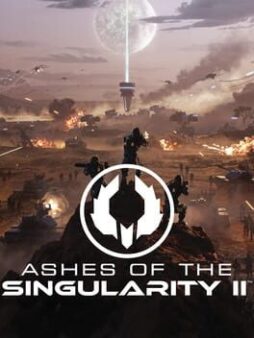
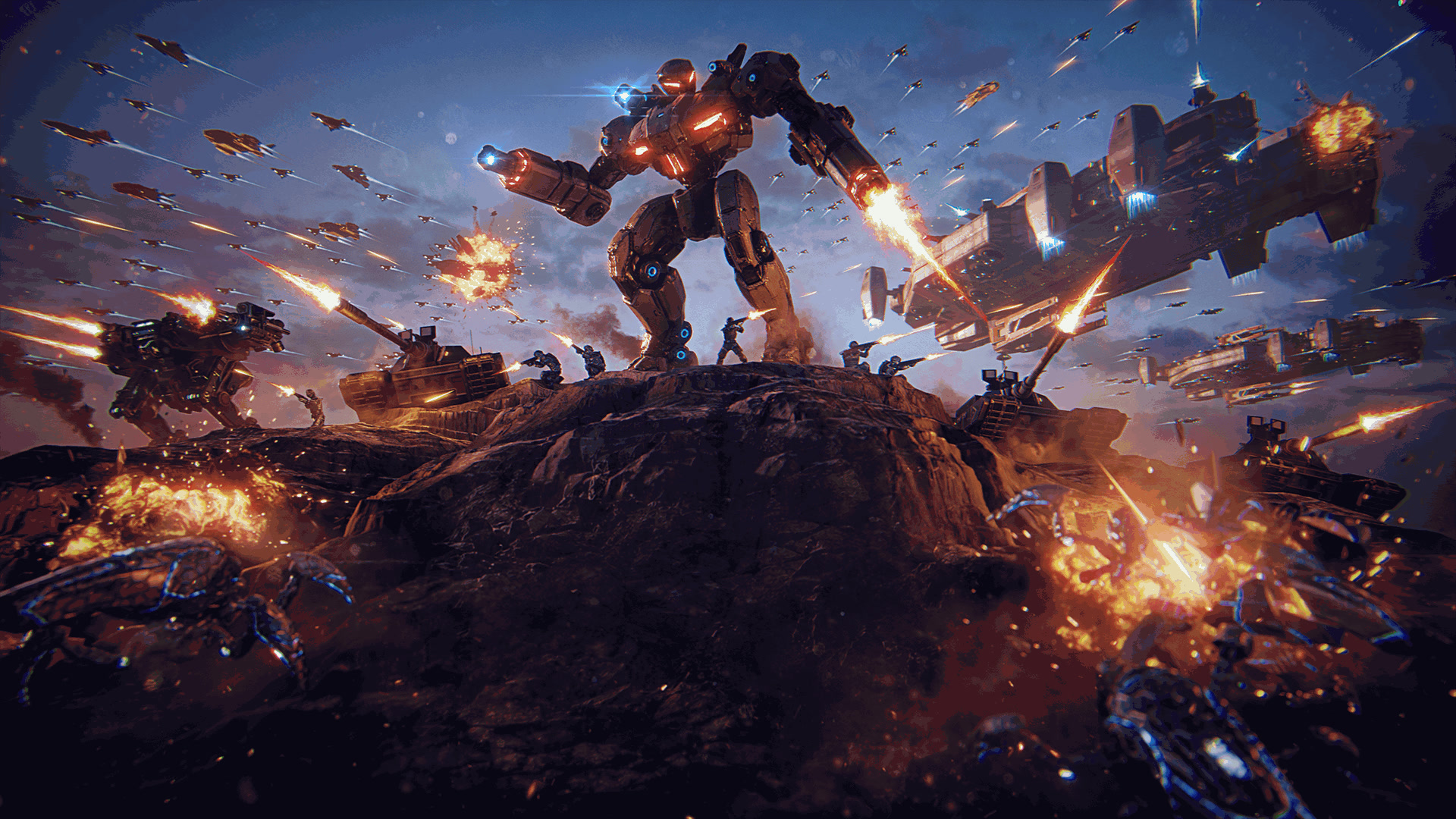
If you’ve spent much time playing RTS games like Supreme Commander or Total Annihilation, the sheer scale of Ashes of the Singularity II will immediately feel familiar. Battles aren’t decided by a handful of units carefully maneuvering around each other. Instead, massive formations of infantry, vehicles, and towering war machines clash across sprawling maps, often with several different engagements taking place simultaneously.
What makes these battles so enjoyable is that the game rarely expects you to individually manage every unit involved. Instead, you assemble armies consisting of different unit types, assign their objectives, and focus on the broader strategic situation. Units automatically organize themselves into sensible combat formations, keeping tougher frontline forces ahead of more vulnerable ranged units. You still have opportunities to influence individual engagements, but the emphasis is on managing the overall war rather than constantly babysitting individual soldiers.
This distinction is important because Ashes of the Singularity II isn’t simply attempting to make RTS gameplay easier. It’s shifting where the challenge comes from. Deciding which territory to attack, when to commit additional forces, and whether your economy can sustain a prolonged offensive are all much more important than squeezing out a few extra attacks through perfectly timed commands.
I particularly enjoyed being able to zoom out and assess the entire battlefield before deciding where to commit my forces. At that scale, the game almost resembles a grand strategy experience, with territories and connecting routes providing a clear picture of the ongoing conflict. Zooming back in reveals the chaos of the actual fighting, with enormous armies exchanging fire and the battlefield visibly suffering the consequences.
It’s a satisfying contrast that helps make the scale feel like an actual gameplay feature rather than just a technical showcase. You’re not simply watching more units fight. You’re making decisions that affect an entire war.
Territorial Control Gives Every Battle Purpose
One of my favorite systems in Ashes of the Singularity II is its approach to capturing and controlling territory. Rather than allowing players to freely construct sprawling bases wherever they please, maps are divided into individual regions that must be captured and developed. Each region offers limited building space, turning expansion into a meaningful decision rather than something you do simply because you need more room.
Capturing a region gives you opportunities to expand your economy, establish additional production facilities, or strengthen your defenses. However, the real strategic depth comes from how those regions connect to one another.
Territories need to maintain a connection to your primary network to remain powered and operational. If an enemy manages to capture a crucial region connecting two sections of your territory, everything beyond that connection can lose access to power. Suddenly, the factories and resource infrastructure you were relying on may no longer be contributing to your war effort.
I really like the additional strategic possibilities this creates. Instead of simply throwing a massive army against the strongest enemy position, you can look for opportunities to disrupt their infrastructure and weaken their ability to maintain the frontline. Capturing a relatively small, poorly defended region can sometimes be more valuable than winning a much larger battle somewhere else.
The limited construction space also means you have to think carefully about what each region contributes to your overall strategy. Building additional production facilities closer to the frontline can make reinforcements arrive much faster, but doing so might leave those facilities exposed to an enemy counterattack. Alternatively, investing heavily in defensive structures can help secure an important connection, though that comes at the expense of resources that could be used elsewhere.
This constant push and pull makes the territory system much more engaging than a traditional collection of capture points. Your empire feels like an interconnected network that needs to be protected, expanded, and occasionally reorganized as the battle develops.
Automatic Reinforcements Are a Game Changer
As much as I enjoyed the territorial mechanics, perhaps my favorite feature in Ashes of the Singularity II is the ability to automatically replenish your armies. It’s an incredibly practical system that feels perfectly suited to the type of large-scale warfare the game is trying to deliver.
In many traditional RTS games, keeping your frontline supplied requires constantly returning to production buildings, queuing additional units, and assigning rally points to send those units into battle. It’s manageable when you’re controlling relatively small forces, but it can quickly become tedious when your armies consist of hundreds of units fighting across several fronts.
Ashes of the Singularity II largely eliminates that busywork. Once you’ve assembled an army, you can enable automatic replenishment, allowing your production facilities to replace losses and send those reinforcements directly to the army’s current location. You don’t have to constantly redirect fresh units or worry about manually rebuilding an army every time it takes casualties.
Better yet, the system ties directly into the game’s territorial and logistics mechanics. Production facilities closer to the frontline can supply nearby armies more efficiently, which makes establishing forward production infrastructure a genuinely important strategic consideration.
I found this particularly satisfying during extended offensives. Instead of constantly interrupting my plans to manage unit production, I could focus on capturing the next region, protecting supply connections, and positioning my armies for the next engagement. Reinforcements would continue making their way to the frontline, helping maintain pressure without requiring constant intervention.
There’s also an interesting element of army progression, with veteran formations becoming increasingly valuable as they gain experience. Maintaining a successful army over an extended campaign of battles can therefore feel more meaningful than simply replacing it with another disposable collection of units.
Of course, automatic replenishment isn’t an unlimited source of free soldiers. Your economy still needs to support the additional production, and allowing multiple armies to constantly replace their losses can quickly consume resources that might otherwise be needed for construction or defensive improvements.
That’s exactly why I appreciate the system so much. It reduces repetitive micromanagement without removing the strategic consequences of maintaining an enormous military force.
A War Between Humanity, Machines, and Posthumans
Ashes of the Singularity II also expands upon the original game’s science-fiction setting, introducing the United Earth Forces as a third major faction alongside the returning Post-Human Coalition and Substrate.
The conflict centers on humanity’s increasingly uncertain place in a solar system dominated by technological forces that have long since surpassed ordinary human capabilities. After the Post-Human Coalition transforms the moon’s surface into Turinium, the major nations of Earth unite in opposition, forming the United Earth Forces in an attempt to reclaim humanity’s independence.
It’s an interesting premise, particularly given how discussions about artificial intelligence and humanity’s relationship with emerging technology have evolved since the original game launched in 2016. The conflict between conventional humanity, technologically ascended posthumans, and an independent machine civilization provides a compelling backdrop for the enormous battles that follow.
The factions also bring different military philosophies to the conflict. The United Earth Forces rely heavily on conventional military organization and larger numbers of comparatively vulnerable units, while the Post-Human Coalition favors fewer but more powerful machines. The Substrate introduces an entirely different approach built around advanced artificial intelligence and overwhelming mechanized forces.
However, the single-player campaign is told from the perspective of the United Earth Forces, meaning you’ll primarily experience these differences through the enemies you’re fighting rather than by directly commanding all three factions. While the wider game includes opportunities to play as the other factions in separate modes, I can’t evaluate how enjoyable or balanced they are to command based on the campaign alone.
Fortunately, the campaign provides a solid introduction to the game’s systems while offering a narrative reason for its escalating conflicts. The ability to pause gameplay and issue orders also makes it easier to approach particularly complicated situations without feeling rushed, which fits nicely with the game’s broader emphasis on strategic decision-making.
When Scale Becomes a Double-Edged Sword
Despite how much I enjoyed Ashes of the Singularity II, its commitment to enormous battles isn’t without drawbacks.
For starters, managing multiple fronts can become difficult once the battlefield grows sufficiently large. Even with the strategic zoom and streamlined army management systems, there’s a lot happening at any given moment. Keeping track of vulnerable territories, enemy movements, production requirements, and several active armies can occasionally become overwhelming.
There’s also some unnecessary friction in the army creation and production systems. Assembling a new force involves steps that aren’t always immediately intuitive, and failing to properly finalize an army’s creation can leave you wondering why your production facilities aren’t doing what you expected. It’s the sort of interface quirk that becomes easier to work around with experience, but it feels somewhat at odds with the game’s otherwise excellent efforts to streamline military management.
The resource economy can present similar frustrations. Since resources flow into your economy over time and are consumed by ongoing production, it’s possible to commit to more construction and reinforcement than your income can comfortably support. I appreciate the strategic consequences of overextending your economy, but keeping track of competing production demands isn’t always as straightforward as it could be.
It’s also worth emphasizing that the heavy macro focus won’t appeal to everyone. Players who enjoy precise unit positioning, individual ability management, and rapid tactical engagements may find that Ashes of the Singularity II doesn’t give them the same level of direct control they’re accustomed to. Its strengths lie in managing armies, territory, and logistics, not in winning battles through individual unit micro.
Finally, the campaign’s exclusive focus on humanity means the single-player story doesn’t fully explore the playable possibilities of all three factions. While that makes sense narratively, it does leave some of the game’s broader strategic variety outside the scope of the campaign itself.
None of these issues fundamentally undermine the experience, but they do prevent an otherwise excellent RTS from feeling quite as polished and approachable as its best systems suggest it could be.
Ashes of the Singularity II Is a Great Return to Large-Scale RTS Warfare
What I appreciate most about Ashes of the Singularity II is how confidently it commits to its own identity. This isn’t an RTS trying to compete with StarCraft by demanding faster reactions or increasingly complicated unit management. Instead, Oxide Games has created an experience where understanding the battlefield, maintaining your economy, and making intelligent strategic decisions are consistently the most important factors in achieving victory.
The region-based territory system provides a satisfying foundation for expansion and conflict, while the logistics and automatic reinforcement mechanics do an excellent job of making gigantic armies genuinely manageable. Combined with the impressive scale of its battles, the result is an RTS that regularly delivers the feeling of commanding an entire military operation rather than simply directing a collection of individual units.
There’s still room for improvement, particularly with some of the interface quirks and the challenge of keeping track of increasingly complicated battlefronts. And with my experience limited to the single-player campaign, I can’t speak to how well the game’s systems translate into competitive or cooperative multiplayer.
Even so, Ashes of the Singularity II succeeds at something that many strategy games struggle with: making large-scale warfare strategically engaging without turning it into a tedious exercise in constant micromanagement. For fans of Supreme Commander, Total Annihilation, and other macro-focused RTS experiences, there’s a lot to love here.