30-Second Quick-Start (TL;DR)#
- The SWDP facility disaster in 1996 kills 95 people due to Richard Shaw’s negligence and cost-cutting; inspector Simon Ordell is the sole survivor.
- Richard bribes Simon with a heart transplant to lie during the tribunal, denying justice to the victims.
- Years later, Simon and Zoe (the nurse who saved him) are pulled back to a fog-shrouded version of St. Amelia to face their guilt.
- Richard attempts to manipulate Simon again; the town’s manifestations force Simon to relive the disaster and confront his complicity.
- Your ending depends on kills and discoveries: bad ending (kill Richard, deny justice), neutral (time resets), or good ending (refuse Richard, accept death, allow Zoe to leave).
- The town symbolizes the victims’ collective judgment, with creatures representing the dead and the pickline in Simon’s chest representing Richard’s corrupting control.
- Zoe’s presence suggests she, too, is trapped by guilt and her connection to Simon’s testimony.
- Time stops at 8:19 p.m. (the fire’s start) and January 1996 because the town never moved past the disaster.
What This Guide Helps You Do#
This guide explains the complete narrative of Silent Hill: Townfall, including the historical context of St. Amelia, the 1996 SWDP disaster, the moral compromise between Richard Shaw and Simon Ordell, and how the game’s three endings reflect different choices about guilt and accountability. You’ll understand why the town manifests as it does, what each creature represents, and what the game’s symbolism (the pickline, the scalpel, the number 96) means.
It’s best for players who’ve completed or are playing through Townfall and want to understand the story’s layers, the three main endings, and the thematic weight behind the fog-shrouded town and its supernatural encounters.
Requirements & Prep#
To fully grasp Townfall’s narrative, you should have progressed through the game far enough to encounter Simon, Zoe, and Richard’s chapters. The story unfolds across multiple playthroughs or a single playthrough with branching paths, so familiarity with at least one ending is helpful. No items or consumables are required to understand the story, but collecting in-game documents, emails, and notes (marked as “discoveries”) will deepen your comprehension of the disaster’s causes and the characters’ emotional states.
Optional but Helpful: Before reading this guide, gather the in-game emails and notes you’ve found. They provide firsthand accounts of the 1996 disaster, the hospital crisis, the protest, and the tribunal—all of which contextualize what you see in the fog-world.
Route Overview#
Silent Hill: Townfall’s story spans two time periods: the historical 1996 SWDP disaster and its immediate aftermath, and an undefined present-day moment when Simon is mysteriously called back to St. Amelia. The narrative begins with the island’s peaceful founding in the mid-1800s, then traces how Richard Shaw’s Chapman Energy Group (CEG) industrialized the island for profit, cutting corners on safety. A faulty reciprocal compressor unit (RCU) and a misaligned outlet line cause a catastrophic fire that kills 95 people, including workers and patients. Inspector Simon Ordell, the only survivor, is coerced by Richard into lying at the tribunal, denying the victims justice. Years later, Simon returns to find the town wrapped in fog, where he and Zoe (the nurse who saved him) are forced to relive and confront the disaster. Richard attempts to manipulate Simon once more, but the town—manifested as creatures and twisted versions of familiar locations—guides Simon through the SWDP’s destruction, forcing him to acknowledge his guilt. The ending hinges on whether Simon kills Richard (denying justice again), resets time, or refuses Richard and accepts his own death, allowing Zoe to escape.
Step-by-Step Walkthrough#
The Foundation: St. Amelia’s History and the Rise of CEG#
St. Amelia begins as an uninhabited Scottish island in the mid-1800s. Settlers plant a single tree as a symbol of life and perseverance; that tree still stands in the town’s public park today. Over generations, fishing becomes the island’s lifeblood. By 1842, stone harbor walls and piers are built. By 1902, the Evans dock house increases industry and population. The island’s identity is rooted in community, tradition, and self-reliance.
In 1971, Richard Shaw’s Chapman Energy Group (CEG) arrives, surveying the island for untapped fuel sources during a global energy crisis. Within five years, CEG establishes the Southwell Drilling Platform (SWDP), a pipeline complex, and a logistics hub. Over 3,000 people work for CEG, many of them islanders. The company provides jobs, infrastructure, and expanded health services through Richard’s donations. However, CEG bulldozes its way onto the island without regard for the existing community. While the people benefit materially, they’re forced to conform to CEG’s corporate culture. Plans for the Bridgeburn Estate, new gas facilities, and expanded housing signal CEG’s intent to reshape St. Amelia entirely in its image.
The Negligence: The Path to the 1996 Disaster#
By January 1996, the SWDP is operating under pressure. A staff member identifies a fault in the RCU (reciprocal compressor unit) and requests that CEG refit it. Richard denies approval because the rebuild would take the facility offline for weeks and cost millions of dollars. Staff are instructed to operate cautiously and avoid raising red flags during the upcoming inspection by Simon Ordell, a union-hired inspector from the northeastern United States—an outsider with no ties to CEG or the island.
On January 18th, as Simon conducts his inspection, worker Joe McKenzie notices a misaligned outlet line. His supervisor tells him to stay silent. Joe attempts to fix the problem himself but becomes trapped under rubble as the facility catastrophically fails. Fires spread, alarms sound, and evacuation becomes chaotic. Many workers jump from the burning structure into the water below. The fire spreads too far to contain, and rescue efforts are hampered by the facility’s remote location and the island’s limited resources. Bodies wash ashore over the following days.
The Crisis: Hospital Collapse and Community Breakdown#
The town’s small medical center is overwhelmed. The staff clinic for children is evacuated to help. Doctor Glenn suspends all annual leave. Nurses ration supplies from other wards. The hospital lacks records for most victims, making treatment impossible. Contaminated water, shortages of surgical masks, and limited pharmaceutical supplies compound the crisis. Patients overflow into the parking lot, streets, and hotel rooms. The medical center eventually closes to regular patients, and the community is asked for volunteers and supplies.
Zoe Ellis, a nurse and caregiver at the clinic, is forced to work beyond her skill set. She sees at least a dozen patients; only one survives: Simon Ordell. During his life-saving surgery, the head doctor, Dr. Glenn, ridicules her and demands speed. Simon shows severe trauma: impact injuries to the head, a collapsed left lung, something sharp lodged in his spine, and extensive burns. Despite the odds, he survives and is airlifted to the mainland after five days unconscious, where Richard Shaw pays for or provides him a heart transplant.
Within days, 95 people are confirmed dead, with others dying of stress, broken hearts, or missed prescription refills. Jane Schmers dies days after her son Ian perishes in the SWDP. The toll devastates Zoe, who blames herself for every death under her care. She resigns on February 10th, 1996, throws her medical equipment into the street, and plans to leave the island. She calls patients and staff to apologize, saying she was unfit for the job and shouldn’t have been there. Despite efforts by colleagues like Jess White and Dr. Stevenson to bring her back, she doesn’t return.
The Cover-Up: Richard’s Betrayal and Simon’s Compromise#
Grief turns to anger. The town demands answers. Richard Shaw remains silent, unwilling to be held accountable. On February 12th, the press asks for comment. Richard’s PR department drafts talking points, but he goes off-script and blames a single engineer—a loyal, long-serving staff member who had nothing to do with the decision to defer the RCU refit. The engineer is furious and publicly defends himself. PR director Mark Abbott scrambles to manage the fallout. At a staff meeting, even Richard’s receptionist, Audrey, expresses willingness to forbid him from the building so he can’t escape.
On March 10th, 1996, two months after the disaster, a full-scale protest marches to CEG headquarters. Protesters carry signs, flyers, and photos of loved ones. Some CEG employees join the march. The company locks down streets and erects a gate to keep protesters out. Families are told to stay home. Whistleblowers emerge; one investigates the RCU failure and is fired for asking questions.
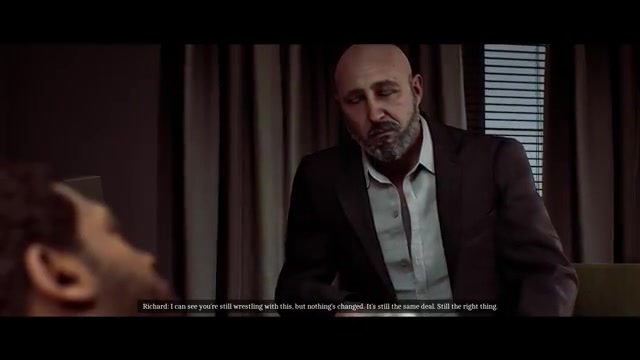
Before the tribunal, Richard visits Simon in the hospital. He reminds Simon that he paid for his heart transplant and saved his life. He makes clear that he expects Simon to repay this debt by lying under oath—by testifying that CEG and Richard couldn’t have prevented the disaster. When asked at the tribunal, Simon complies. He says no. The town is denied justice. Richard likely avoids arrest, paying only a fine. Simon returns to the United States.
The Return: Simon Called Back to St. Amelia#
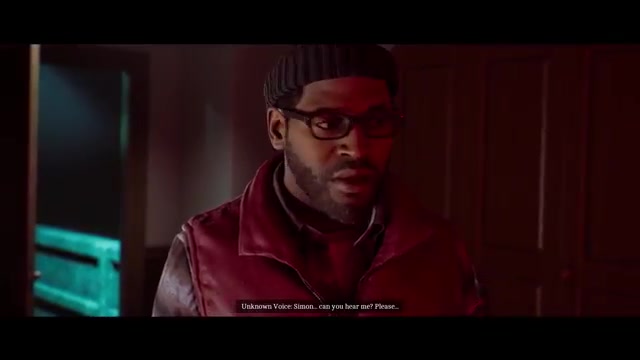
Time passes. The exact date is unclear—possibly May or October 1996, or later—but it’s after the protest and tribunal. Simon receives a call from Richard, who asks him to “put some things to rest.” Simon arrives in St. Amelia to find the town shrouded in thick fog. All clocks read 8:19 p.m. (the time the fire began). All calendars remain on January 1996. The town hasn’t moved on.
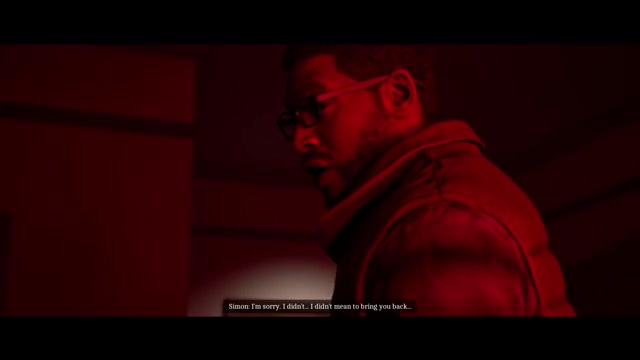
Richard tells Simon that they’re here to be judged for something they did, though neither admits what. Richard asks Simon for help. Simon believes he’s here to help Zoe, but Zoe implies that Richard brought Simon back. Or perhaps Simon’s own guilt summoned him. The town itself—manifested through fog and creatures—seems to have brought them here as judges.
Symbolism: The Pickline and the Town’s Manifestations#
Simon is depicted with a pickline and IV bag pumping black fluid directly into his heart—the heart Richard gave him. This black fluid likely represents corruption; Richard’s gift comes with strings attached. When the pickline is pulled out, Simon dies, suggesting he can’t survive without Richard’s control. The scalpel Simon uses to cut open flesh locks is the same instrument used to transplant the heart into his chest, linking his survival to his complicity.
The number 96 appears throughout the game as tally marks on doors and maps, referring both to the year 1996 and to the fact that 95 people died and Simon was meant to be the 96th victim. Notably, one tally always stands alone while others are grouped in fives, symbolizing Simon as an outsider among the tight-knit community of St. Amelia.
The creatures Simon encounters represent the victims. Some are armless workers with sharp objects through their heads—likely those crushed in the facility. Others have butterfly IVs, representing patients who underwent surgery during the crisis. Still others are deformed, broken-legged figures falling from the sky—manifestations of workers who jumped from the SWDP. Richard encounters “widows”: women whose husbands died, wrapped in bed sheets from the protest, carrying family photos, driving knives into him as they chase him through the CEG building.
The final boss, a creature named “Weight,” bears Simon’s face beneath its flesh and has a hunched back laden with bulbous growths—heads of the dead. This creature embodies the guilt Simon carries. Its faceless victims suggest that Simon never knew these people, never saw their humanity, and yet decided their fate.
The Otherworld: A Twisted Mirror of Disaster#
When fog descends, an “otherworld” version of St. Amelia emerges (called “CEG HQ different” in-game). The visual identity centers on the SWDP’s piping—metal tubes cover the entire town, blocking routes and restricting movement. The otherworld sections include narrow hallways flooded with water, crushed bodies under rubble, and the sounds of alarms and screaming workers trying to escape.
Simon finds himself in room 204 of the hotel—the room where he recovered under Zoe’s care. He receives a signal from Zoe on a CRT TV. He believes she’s asking for help, but these are actually the words she spoke to him while he was unconscious: pleas for him to wake up and survive. Zoe says she wanted to leave when Simon woke, but she stayed by his side. Later, she tells him she can no longer stay and wants to leave. When Simon arrives in the present, Zoe is confused and disappointed because she knows he hasn’t come to help her as he claims.
Zoe’s Chapters: Guilt and Self-Infliction#
Many of Zoe’s chapters take place in the past, during the disaster and her attempt to save Simon. However, otherworld creatures appear—things that didn’t exist in real life. This suggests Zoe, like the others, may be trapped in the town, forced to relive these days. Her guilt may be self-inflicted; the head doctor’s harsh criticism during Simon’s surgery may reflect her own self-judgment rather than his actual words. She’s attacked for guessing wrong during the operation, a physical punishment representing mental self-harm.
Some notes suggest Zoe may have accidentally killed Mr. Stewart by providing him with the wrong medication dosage. She requested that he take the meds himself because she couldn’t deliver them. It’s possible he overdosed. However, her presence in the town may stem entirely from her connection to Simon. In the good ending, Zoe finally leaves the hotel room and departs the town, suggesting that Simon’s choices determine her fate. She tells him that she did everything she could to help him understand, implying that her presence was meant to guide him toward the truth.
Richard’s Chapter: Denial and Looping#
Richard’s chapter begins with him calling Simon, claiming he brought Simon back because they’re already involved and the town has its eyes on both of them. Richard’s goal is simple: tell the town the truth—that they didn’t cause the disaster. This is obviously false.
Richard attempts to reach his office on the 10th floor of the CEG building, but the entrance is blocked. Along the way, he encounters dozens of widows and multiple versions of himself, dead from previous attempts. Notably, Richard finds the building’s entrance blocked, while Simon found it open. This suggests that the town manifests differently for each character, reflecting their internal states. Similarly, Angela Moss from Silent Hill 2 encounters a burning staircase that James doesn’t see, implying that each character inhabits their own version of the town.
Richard’s access card is faded and unreadable until someone at a board meeting calls him “the founder,” at which point the card becomes clear. This mirrors Mary’s letter to James in Silent Hill 2, which fades as James’s memory of his wife’s summons becomes unreliable. Richard’s memory may be clouded; he may not remember that he’s the CEO. Dialogue from a radio interview suggests Richard sees himself as the engineer who was framed, not the company founder. However, this likely reflects Richard’s denial—his inability to accept that he, not an engineer, is responsible. He may believe he’s innocent because he wasn’t physically present when the disaster occurred.
Richard’s staff members turn against him in emails and CRTV videos, unwilling to let him inside the building. If he truly didn’t attend the board meeting that decided his fate, this suggests the company removed him without his knowledge. Both Richard and the real engineer see themselves as victims, which is why the game’s text may merge their positions—Richard’s mind twists the engineer’s words to fit his narrative of betrayal.
The Confrontation: Richard Shoots Zoe#
When Richard reaches his office, he finds Simon already there with Zoe locked behind a door. Richard claims he’s tried everything to escape but couldn’t open this door. He believes escaping requires two people—a bitter irony, since escaping blame for the disaster also required two people (Richard and Simon’s cooperation).
The door’s lock requires entering the correct date: January 18th, 1996. Simon’s ability to open the door while Richard can’t suggests Simon is beginning to understand or piece together the truth. Richard, however, still denies his guilt. He forces Simon to open the door so he can shoot Zoe, believing she’s somehow behind his imprisonment or a solution to it. This is untrue. Zoe reappears back at the hospital, implying that Richard’s actions have no real effect on the town’s judgment.
Act 6: Forced Reliving of the Disaster#
As Simon descends from Richard’s office, his inner voice guides him—typically appearing on the left side as a callback to past Silent Hill games. However, the town itself seems to take control, forcing Simon back through the SWDP. All of Act 6 is a deliberate, step-by-step visualization of the disaster: signals and calls from workers, the slow realization of danger, and the court day playing in the background as Simon relays events to the judge.
Simon is forced to experience what he testified about, what he denied. An email addressed to Simon asks, “Why would you let him win?”—suggesting the town is fed up with his complicity. Even after everything, he helped Richard shoot Zoe. The town has decided to show him exactly what happened, to force him to confront it directly.
Simon eventually reaches a door he couldn’t progress past in Act 1. The rubble has been cleared. He says he didn’t cause the disaster, but he still carries it—the guilt on his back, visible on his hand. He then witnesses the hospital scene where Richard visits him before the tribunal, threatening him with a scalpel. The fate of this moment is determined by the ending Simon receives.
The Boss Fight: Confronting Weight#
Simon wakes in the hotel with Zoe. He’s confused that she’s alive. She explains that the town doesn’t let them change things; what happened has already happened. The past is immutable. Zoe’s understood this all along and has been trying to help Simon see it. But has he truly grasped it?
Simon exits the hotel and faces “Weight”—the creature embodying his guilt. During the fight, text flashes on screen, believed to be Simon’s actual testimony at the tribunal. The most striking word is a simple “no”—his answer to whether CEG could have prevented the disaster. Mixed with this are descriptions of the victims’ suffering: seared hands, flooded lungs, and painful injuries. But the text also includes phrases like “a series of obvious blunders” and “carelessness in carrying out his duties,” making Simon’s “no” hit harder in light of Richard’s overwhelming negligence.
By killing Weight, Simon can finally let go of the guilt and accept what he’s done. But is his answer right?
The Three Endings: Consequences of Choice#
The Bad Ending (More Kills and Discoveries): Simon shoots Richard, denying him the chance to testify at the tribunal and denying the town justice once more. In the hospital, Simon stands over Richard’s corpse. As Zoe said, you can’t change things. By altering fate, Simon’s only made things worse. He’s killed Richard before the court day, selfishly deciding the town’s fate for himself a second time. Simon doesn’t survive.
The Neutral Ending (Equal Kills and Discoveries): Time essentially resets. Simon finds himself back on the operating table, being cared for by Zoe. This ending is ambiguous—it may suggest that the entire game has been Simon’s thoughts on the hospital bed as he decides what to say at the tribunal, or it may indicate that the town is giving him another chance to make the right choice.
The Good Ending (Fewer Kills and Discoveries): Simon refuses to give Richard what he wants. Richard shoots Simon in the hospital, killing him in a public setting where witnesses will see. It’s not a happy ending for Simon—he dies—but it’s the best outcome for justice. Richard doesn’t get his star witness, and he’s just committed murder in front of staff and patients. Zoe is finally allowed to leave the hotel room and depart the town, freed from her entrapment.
The logic behind these endings is rooted in the game’s core theme. Kills represent Simon viewing the victims as faceless creatures rather than people. Discoveries represent Simon piecing together the truth and putting faces to names. More discoveries mean Simon understands the weight of his decision; more kills mean he sees the victims as abstractions. The good ending requires that Simon refuse to compromise again, refuse to let Richard win, and accept the consequences of his original choice—even if it means his death. Only then is Zoe freed.
The Tentacle Creature: The Town’s Judgment#
A tentacled creature appears several times, especially at the end, throwing other enemies onto the streets. Its true form is revealed during the final sequence. The creature’s identity is never explicitly stated, but it may be a physical manifestation of the town itself or the collective judgment of the victims. Richard stated that they’re being judged by the people of St. Amelia. Simon says he’s “giving it back to them” in every ending, suggesting the creature is a manifestation of their collective will. Alternatively, the creature may simply be an otherworldly entity—true to Silent Hill’s ambiguity about whether supernatural events are psychological or genuinely paranormal.
The Joke Endings#
Two additional endings exist outside the main narrative. In one, Simon is abducted by an alien creature and placed aboard a spacecraft. In another, Richard and Simon settle their differences by having a pint at the local pub, bringing the story to a lighthearted close.
Thematic Analysis: Guilt, Complicity, and Immobility#
Silent Hill: Townfall’s narrative is built on the theme of complicity and the impossibility of changing the past. Simon’s guilt isn’t that he caused the disaster—he didn’t. His guilt is that he knew the truth and chose to lie, prioritizing his own survival over justice for 95 people. The pickline in his chest represents his dependence on Richard’s corruption; he can’t live without it, just as he can’t live with the knowledge of what he did.
The town’s refusal to move past January 1996 symbolizes how trauma freezes communities. St. Amelia was different before and after the disaster; the town never truly recovered. The people who remain are haunted by loss. Those who can leave do so, as evidenced by the “For Sale” signs scattered throughout. The town’s heart has stopped.
Zoe’s presence and eventual freedom depend on Simon’s choices, suggesting that complicity binds people together. Zoe saved Simon’s life, but she can’t leave the town until Simon acknowledges his guilt and refuses to compromise again. Her freedom is tied to his redemption—or at least his refusal to repeat his mistake.
Richard’s inability to open the door to Zoe, while Simon can, suggests that understanding and accountability are prerequisites for change. Richard can’t move forward because he refuses to acknowledge his role. Simon can only move forward by accepting what he did and refusing to do it again.
Troubleshooting & Common Mistakes#
- Confusion about the timeline: The game jumps between 1996 (the disaster and tribunal) and an undefined present day (Simon’s return). The fog-world events take place in the present, but Simon is forced to relive 1996. The fixed clocks and calendars emphasize that the town never moved past that moment.
- Misunderstanding Zoe’s role: Zoe isn’t a villain or antagonist. She’s trapped in the town by guilt and by her connection to Simon. She’s been trying to help him understand, not harm him. Her presence is evidence of her own suffering and her investment in Simon’s moral journey.
- Assuming Richard is unaware of his guilt: Richard likely knows what he did but refuses to accept responsibility. His denial manifests as confusion about his own identity (seeing himself as the engineer, not the CEO) and his belief that he saved Simon and therefore deserves Simon’s loyalty.
- Interpreting the good ending as a loss: Simon’s death in the good ending isn’t a punishment; it’s a refusal to compromise. By dying, Simon denies Richard the alibi he needs and allows Zoe to escape. It’s the only ending where justice—however imperfect—is served and where someone trapped in guilt (Zoe) is freed.
- Overlooking the creature symbolism: The creatures aren’t random monsters. They’re manifestations of the disaster’s victims, reflecting their suffering and the town’s collective judgment. Their facelessness represents Simon’s inability to see them as individuals.
- Missing the pickline’s significance: The pickline isn’t just a medical device; it’s a symbol of Richard’s control over Simon’s life. When it’s pulled out, Simon dies. This illustrates how Simon’s survival is literally dependent on Richard’s generosity—and how that dependence was weaponized to coerce his testimony.
- Confusing the number 96: 96 refers to both the year 1996 and the fact that 95 people died, making Simon the 96th victim. The tally marks represent this, with one standing alone (Simon) among groups of five (the community). Simon is forever linked to the disaster as an outsider.
- Assuming the town is a physical place: The fog-shrouded St. Amelia is likely a psychological or supernatural manifestation, not a real location Simon can escape by walking away. The town exists in the characters’ minds and consciences, holding them accountable for their choices.
FAQ#
What caused the SWDP disaster in Silent Hill: Townfall?#
The disaster was caused by Richard Shaw’s decision to deny approval for a necessary refit of the RCU (reciprocal compressor unit), which would have taken the facility offline for weeks and cost millions of dollars. Staff were instructed to operate carefully and hide problems during inspector Simon Ordell’s visit. A worker named Joe McKenzie discovered a misaligned outlet line and was told to stay silent. When he attempted to fix it himself, the facility catastrophically failed, triggering fires and collapse that killed 95 people.
Why did Simon lie at the tribunal in Townfall?#
Richard Shaw leveraged Simon’s debt of gratitude, reminding him that he’d paid for Simon’s heart transplant and saved his life. Richard visited Simon in the hospital before the tribunal and made it clear that he expected Simon to repay this debt by testifying that CEG and Richard couldn’t have prevented the disaster. Faced with the choice between honoring his debt or pursuing justice, Simon chose to lie, saying “no” when asked if Richard could have prevented the tragedy.
Who is Zoe Ellis and why is she trapped in the town?#
Zoe Ellis was a nurse at the town’s clinic who was forced to work beyond her skill set during the medical crisis following the SWDP disaster. She performed emergency surgery on Simon Ordell, the only survivor she saved out of at least a dozen patients she treated. The guilt of her perceived failures—and possibly the accidental death of Mr. Stewart due to a medication error—has trapped her in the town. Her presence is tied to Simon; she can’t leave until he accepts his guilt and refuses to compromise again.
What do the creatures in Townfall represent?#
The creatures are manifestations of the SWDP disaster’s victims and the town’s collective suffering. Armless workers with objects through their heads represent those crushed in the facility. Figures with butterfly IVs represent patients who underwent surgery during the crisis. Deformed, broken-legged creatures falling from the sky represent workers who jumped from the burning platform. The “widows” that chase Richard are women whose husbands died, wrapped in protest bed sheets and carrying family photos. All creatures are faceless or obscured, symbolizing that Simon never knew these people and yet decided their fate.
What does the pickline in Simon’s chest mean?#
The pickline pumps black fluid directly into Simon’s heart—the heart Richard Shaw gave him. The black fluid represents corruption; Richard’s gift comes with strings attached. When the pickline is pulled out, Simon dies, suggesting he can’t survive without Richard’s control. The pickline symbolizes Simon’s dependence on Richard’s generosity and how that dependence was weaponized to coerce his false testimony at the tribunal.
How do the three endings differ and which is the “best” ending?#
The bad ending (more kills and discoveries) has Simon shoot Richard, denying the town justice a second time and resulting in Simon’s death. The neutral ending (equal kills and discoveries) resets time, possibly giving Simon another chance. The good ending (fewer kills and discoveries) has Simon refuse Richard, leading to Richard shooting Simon in public, which denies Richard his alibi and allows Zoe to finally leave the town. The good ending is considered the “best” because it refuses to compromise with Richard again and allows someone trapped in guilt (Zoe) to be freed, even though Simon dies.
Checklist#
- Understand that St. Amelia was a peaceful, self-reliant fishing community before CEG arrived in 1971.
- Know that Richard Shaw’s CEG industrialized the island but showed little regard for the existing community, forcing conformity to corporate culture.
- Recognize that Richard denied approval to refit the faulty RCU to save millions of dollars, prioritizing profit over safety.
- Understand that the SWDP disaster on January 18, 1996, killed 95 people due to Richard’s negligence and cost-cutting.
- Know that Zoe Ellis, a nurse, saved Simon Ordell’s life but felt guilt over the deaths of other patients under her care and resigned in shame.
- Recognize that Richard coerced Simon into lying at the tribunal by reminding him of the heart transplant Richard had paid for.
- Understand that Simon’s lie denied justice to the victims and allowed Richard to avoid accountability.
- Know that years later, Simon and Zoe are mysteriously called back to a fog-shrouded version of St. Amelia.
- Recognize that the town’s fixed clocks (8:19 p.m.) and calendars (January 1996) symbolize that the town never moved past the disaster.
- Understand that the pickline in Simon’s chest represents Richard’s corrupting control and Simon’s dependence on it for survival.
- Know that the creatures Simon encounters are manifestations of the disaster’s victims and the town’s collective judgment.
- Recognize that the good ending requires Simon to refuse Richard and accept death, which allows Zoe to finally leave the town.
Source & credit#
This guide draws on the excellent video walkthrough by Gingy — watch it for the full visual run-through, and give the creator your view:
https://www.youtube.com/watch?v=mzAFeFr0DOIFollowing Silent Hill: Townfall? Get an email when we publish a new guide — or update one after a patch.