
30-Second Quick-Start (TL;DR)#
- Accept the noodle bar from Thaddeus and meet him at Meridian Market to begin.
- Buy basic ingredients (ramen, chicken, onions) from vendors to set your opening menu.
- Place tables and chairs in your noodle bar venue, then hire your first waiter and cook.
- Set your menu on the monitor, adjusting prices based on demand and your reputation tier.
- Manage staff wages and shifts; keep workers happy to prevent them from quitting.
- Expand your menu with recipes learned from other restaurant owners through conversation.
- Reinvest profits into new equipment (drinks machines, blenders, fridges) and more staff.
- Pay off your starting 50,000-coin debt by growing your noodle bar’s daily profit margin.
What This Guide Helps You Do#
This guide teaches you how to build a profitable noodle restaurant from scratch, hire and manage staff, navigate vendor relationships, and chip away at your 50,000-coin starting debt in Nivalis Nights. You’ll learn the mechanics of ingredient sourcing, menu design, pricing strategy, and venue expansion—all the systems you need to transform a struggling noodle bar into a thriving business. It’s best for players new to Nivalis Nights or life-sim business games who want a clear roadmap for the first day and beyond.
Requirements & Prep#
You’ll start the game with a tutorial that introduces you to your AI assistant Ava, who helps explain mechanics. Before you can open your noodle bar, you need to meet Thaddeus at Meridian Market (the game guides you there via taxi). No special items or prior unlocks are required—the game hands you the noodle bar as your starting business. Both controller and keyboard and mouse work perfectly.
Optional but Helpful: Take time to explore the market and talk to multiple NPCs on your first day. Vendor prices fluctuate, and building relationships with them through repeat purchases gets you better discounts over time. This early groundwork pays dividends later.
Route Overview#
Your first day in Nivalis Nights follows a clear progression: meet Thaddeus, receive your noodle bar deed, buy your first batch of ingredients from vendors at Meridian Market, decorate your venue with tables and chairs, hire a cook and waiter, set your opening menu, and serve your first customers before the mandatory curfew locks you indoors. After that first evening, you’ll settle into a daily loop of restocking ingredients, adjusting your menu based on customer demand and your reputation tier, hiring additional staff, and slowly expanding your venue with new equipment and recipes. The long-term goal is to pay off your 50,000-coin debt through sustained daily profits.

Step-by-Step Walkthrough#
Meet Thaddeus and Accept the Noodle Bar#
When the game starts, your AI assistant Ava tells you that you’re late for a meeting with Thaddeus Karminus at the noodle bar in Meridian Market. Thaddeus has transferred you his business—you now own a noodle bar in Lowtown. Take the taxi to Meridian Market (the game marks it on your HUD compass). Once you arrive, find Thaddeus and talk to him. He’ll explain that you’re now running the place and need to get it operational. He mentions that you need to set a menu and get some ingredients. Don’t worry if you feel lost; Ava will guide you through the next steps.
Understand Your Starting Debt and Daily Costs#
You begin with a 50,000-coin debt. Your noodle bar venue costs 20 coins per day to maintain, and any staff you hire will cost wages on top of that. For example, a waiter working 11 hours at 5 coins per hour costs 55 coins per day. You’ll also pay 10 coins per day for your apartment. This means you need to generate enough daily profit to cover these baseline costs plus make progress on your debt. Don’t panic—even small daily profits compound, and as you expand your menu and customer base, your earnings will grow significantly.
Buy Your First Ingredients from Vendors#
Head to Meridian Market and locate the vendors. You’ll find a Farmer, a Green Grocer, a Butcher, and others. Your first menu should be simple: a basic chicken noodle soup using ramen noodles, chicken, and onions. Visit each vendor and check their prices. The Farmer sells chicken and onions; the Green Grocer also carries onions (sometimes cheaper than the Farmer); and you’ll need to find ramen noodles elsewhere (check the Butcher or other vendors). Vendor prices fluctuate based on market conditions and your relationship with them, so compare before buying. Buy enough to serve 10–15 meals on your first day (roughly 5 chicken, 5 onions, 5 noodles). Place perishables like chicken directly into your fridge to prevent decay.
Decorate Your Venue with Tables and Chairs#
Return to your noodle bar in Lowtown. You’ll see an outdoor seating area where you can place furniture. Press P to open your inventory, or interact with furniture items in your storage. Place tables and chairs by left-clicking on the ground in your seating area—they’ll snap into place. Start with 3–4 tables and matching chairs. You don’t need a huge setup on day one; you’re limited by your venue tier anyway (tier one allows only 2 tables initially). The goal is to have enough seating for a handful of customers without overspending on furniture you can’t fill.
Hire Your First Cook and Waiter#
Talk to your cook, Banner, who works in your kitchen. He’ll tell you he’s getting old and can barely walk—you need to hire a waiter to serve customers. Open the hiring terminal in your venue (usually near the entrance or manager’s desk). You’ll see a list of potential employees with their stats, wages, and hours. For your first hire, look for a cheap waiter who works a decent shift. For example, Hannes Just works 11 hours at 5 coins per hour—a solid first choice. You can adjust his working hours to match your expected customer traffic (start him at 11 AM through midnight to cover lunch and dinner). Once hired, assign him the “waiter” role. You can also hire a cleaner later to keep your venue spotless, which customers appreciate.
Set Your Menu and Adjust Prices#
Interact with the monitor at your venue entrance (or press a key to access it remotely). You’ll see your available recipes and ingredients. Set your opening menu to the chicken noodle soup you’ve stocked. The game will show you customer demand and what they prefer this week. When you set a price, you’ll see a satisfaction meter—lower prices boost your reputation but reduce profit, while higher prices do the opposite. On day one, aim for a moderate price that keeps customers happy while generating some profit. As you unlock new recipes and your reputation tier increases, you can add more dishes and adjust prices upward.
Restock Your Storage with Proper Organization#
Your venue has limited storage space. Fresh ingredients like chicken spoil over time, so prioritize using them first. Use your fridge for perishables and cabinets or shelves for dry goods like ramen and onions. You can expand storage by buying additional fridges, freezers, and shelves from the furniture vendor. Press P anytime to access your inventory and transfer ingredients between your personal stock and the venue’s storage. Keep an eye on what you’ve; if you run out of a key ingredient mid-service, you’ll lose customers.
Serve Your First Customers#
Once your menu is set, tables are placed, and your waiter is hired, customers will start arriving. You don’t need to do anything active—Banner cooks and your waiter serves. Watch the action and see what’s happening. After serving roughly 10 meals, you’ll unlock the ability to upgrade your venue to tier two, which lets you place more tables, hire more staff, and expand your menu. You’ll also get reviews from customers, which give you feedback on food quality, cleanliness, and service speed. Read these reviews to understand what to improve.
Learn Recipes from Other Restaurant Owners#
To grow your menu beyond chicken noodle soup, you need to learn recipes from other restaurants. Walk around Meridian Market and talk to owners like Mary’s Mitchell, Dag and Fitz, and Nodaburg. They won’t hand over recipes easily—you’re competitors. However, if you’re friendly and honest about your situation, some will help. For example, one owner might give you a beer recipe if you chat with them warmly. The key is to use tone and body language to warm them up first, then ask. Ava will even tell you when you’re feeling “inspired”—use those moments to create new recipes by combining ingredients you’ve on hand.
Manage Your Daily Finances and Debt Payments#
At the end of each day, the game shows you a summary: total revenue from meals sold, total costs (staff wages, venue maintenance, apartment rent), and your net profit or loss. Your goal is to generate enough daily profit to cover costs and chip away at your 50,000-coin debt. On day one, you might only break even or make a small profit. That’s okay—as you expand your menu, hire more staff, and attract more customers, your daily profit will grow. You can choose to pay off your debt in increments (5%, 10%, or 15% of your outstanding balance) or leave it and reinvest profits into your business. Early on, reinvesting is smarter because it accelerates growth.
Navigate the Mandatory Curfew and Return Home#
At a specific time each evening, a mandatory curfew begins in the Localized Unity Zone (an area controlled due to a serial killer on the loose). You must return to your apartment immediately or risk being arrested. The game will warn you with an announcement. Use the metro or taxi to get home before the deadline. If you’re caught outside, you’ll be arrested and lose time. Your apartment is in the Eastern Residential district; once you’re home, you can rest, decorate, or prepare for the next day. The curfew resets each morning.
Building Your Business: Expansion & Growth#
Unlock Tier Two and Add More Tables#
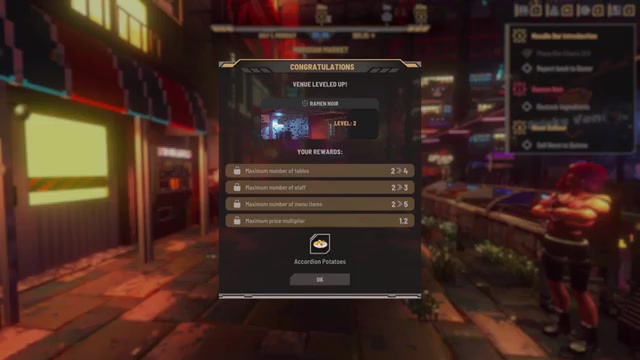
After serving roughly 20 customers, your noodle bar reaches tier two. This unlocks the ability to place more tables (up to 5 instead of 2), hire additional staff, and add more menu items. At tier two, you also gain the ability to increase your meal prices without losing customer satisfaction as quickly. Use this window to expand your seating and hire a second worker—either another waiter or a dedicated cleaner to keep your venue spotless.
Invest in Equipment: Fridges, Blenders, and Drinks Machines#
As your profit grows, buy equipment that expands your menu and improves efficiency. A drinks machine lets you serve beverages alongside meals, which customers appreciate and you can price higher. A blender unlocks dessert recipes like accordion potatoes (made with potatoes, garlic, and neutral oil). A dishwasher speeds up cleanup between services. Plan your purchases based on what recipes you want to offer next. For example, if you want to serve accordion potatoes, buy a blender first—without it, you can’t prepare the dish even if you’ve the ingredients.
Build Relationships with Vendors for Better Deals#
Vendor prices change daily and are influenced by your relationship with them. The more you buy from a vendor, the better discounts you’ll receive over time. Watch for daily deals too—vendors sometimes offer steep discounts on specific items. For example, a vendor might have “decaying onions” at a lower price, which is fine if you plan to use them immediately. Check your vendor list regularly (accessible via your inventory) to see who sells what and at what price. This is where small daily savings compound into meaningful profit gains.
Hire Specialists and Manage Worker Happiness#
As you grow, hire workers with specific roles: cooks, waiters, and cleaners. Each worker has different skill levels and wages. A highly skilled cook produces better-quality meals (which customers notice in reviews), but costs more. A cheap waiter might be slower, affecting customer satisfaction. Balance your budget with quality. Also monitor worker happiness—if a staff member’s happiness drops too low for too long, they’ll quit. You can improve happiness by increasing their wage, reducing their hours, or giving them time off. Check your staff management screen regularly to see how everyone is feeling.

Menu Strategy and Pricing#
Start Simple, Expand Gradually#
Your first menu should have one or two items: chicken noodle soup and maybe a beer. Don’t try to offer 10 dishes on day one—you’ll run out of ingredients and money. As you earn profits and unlock new recipes, add dishes slowly. Each new dish requires new ingredients, storage space, and equipment. Plan your expansions around what you can realistically stock and prepare.
Adjust Prices Based on Demand and Tier#
The game shows you what customers want this week (e.g., “Elite Noodles: Meat and Mushroom”). If you offer what they want, they’re happier and you can charge more. Your venue tier also determines your pricing power—tier one has lower max prices, but tier two and beyond let you charge premium rates. Watch your reviews: if customers say the food is good but the price is too high, lower it slightly. If reviews are average and you’re not making enough profit, raise prices gradually.
Use Exclusivity to Justify Premium Prices#
Some dishes have an “exclusivity” rating. If you’re the only restaurant in the area offering a specific recipe, you can charge more. For example, if you learn a unique beer recipe that no one else has, price it high. As competitors copy you or other restaurants offer similar items, your exclusivity drops and you’ll need to lower the price or improve quality to maintain margins.
Troubleshooting & Common Mistakes#
- Running out of money before day one ends: You hired too many staff or bought too much equipment. On your next day, reduce staff hours or lay off a worker temporarily. Focus on serving more customers to increase revenue before expanding further.
- Customers complaining about food quality: Your cook is unskilled or your ingredients are old. Hire a better cook (higher skill level) or make sure you’re using fresh ingredients first. Check your storage and use perishables before they decay.
- Getting arrested for curfew violation: Pay attention to the curfew warning and head home immediately. If you’re far from your apartment, use the metro or taxi—it’s free travel. Plan your day so you’re back at your venue before the curfew announcement.
- Staff quitting unexpectedly: Their happiness dropped too low. You either underpaid them, overworked them, or didn’t give them enough breaks. Increase their wage, reduce their hours, or hire someone else to share the load.
- Vendors running out of stock: Popular items sell out, especially during sales events. Buy early in the day or build relationships with multiple vendors who carry the same item. Diversify your supplier list.
- Not earning enough profit to pay debt: Your menu is too simple or your prices are too low. Unlock new recipes, expand your seating, and hire more staff to serve more customers. Once you hit tier two, raise your prices—customers can afford it.
- Equipment is too expensive: Prioritize purchases. A drinks machine is more valuable early on than a blender because it’s cheaper and adds profit to every meal. Buy blenders later when you’ve more cash.
- Can’t find a specific ingredient: Use your vendor list (press P) to see who sells what. If no one has it in stock, check back the next day—inventory refreshes. Some items are only available at certain vendors or during specific events.

Advanced Tips & Time Saves#
- Pre-plan your tier two expansion: Before you hit 20 customers, decide which new recipe you want to unlock and which equipment you’ll need. Buy that equipment on day one if you can afford it, so you’re ready to add the dish immediately when you tier up.
- Use the preamble app: Ava mentions a preamble application that highlights useful items and NPCs in your environment. Once it’s installed, it helps you spot vendors, customers, and opportunities you might miss. This is especially useful in crowded areas like Meridian Market.
- Build a relationship with one key vendor per category: Instead of buying from random vendors, pick one farmer, one butcher, and one green grocer and stick with them. Your repeated purchases will earn you discounts faster, and you’ll learn their inventory patterns.
- Hire workers with multiple skills: Some workers can do multiple roles (waiter and cleaner, for example). These multi-skilled workers are more flexible and can cover gaps if someone calls in sick or quits. They cost a bit more but are worth the investment as you grow.
- Monitor the daily newspaper: Each morning, you get a newspaper summary of events in Nivalis. It tells you about vendor sales, ingredient shortages, and abundance. If fish are abundant, consider adding a fish dish to your menu. If cloth is in shortage, prices will be high—avoid recipes that require it.
FAQ#
How much debt do I start with in Nivalis Nights?#
You start with 50,000 coins of debt that came with the noodle bar. You can pay it off gradually by choosing to pay 5%, 10%, or 15% of your outstanding balance each day, but it’s smarter to reinvest early profits into your business to grow faster. Once your daily profit is substantial, you can accelerate debt repayment.
How do I get new recipes in Nivalis Nights?#
Talk to other restaurant owners in Meridian Market like Mary’s Mitchell, Dag and Fitz, and Nodaburg. They won’t give recipes away easily because you’re competitors, but if you warm them up with friendly conversation first, some will share recipes as a favor. You can also create new recipes yourself when you’re feeling “inspired” by combining ingredients you’ve on hand and using equipment like a blender or food processor.
What happens if my staff members quit?#
If a worker’s happiness drops too low for too long, they’ll quit, leaving you short-staffed. You can prevent this by keeping their wages fair, not overworking them, and ensuring they’ve enough downtime. If someone does quit, hire a replacement immediately from the hiring terminal. Building a small buffer of staff (more than you need) helps you absorb unexpected departures.
Can I move to a different noodle bar location?#
Yes. There are other venues available in different districts of Nivalis, like one near the fishmonger. However, moving requires a higher-tier permit (tier three costs 250 coins) and you’ll need to buy all new furniture and equipment for that location. It’s a long-term investment, not something you do on day one or two. Focus on growing your current venue first.
What’s the best way to manage my money early on?#
On days one and two, buy only essential ingredients and hire one waiter and one cook. Avoid expensive equipment like blenders until you’re consistently profitable. Reinvest your early profits into expanding your menu (learning recipes) and adding more tables so you can serve more customers. Once your daily profit exceeds 100 coins, you can afford to buy equipment and hire additional staff without risking bankruptcy.
How do I improve customer satisfaction and reviews?#
Customer satisfaction depends on three factors: food quality (determined by your cook’s skill and ingredient freshness), cleanliness (hire a dedicated cleaner), and service speed (enough waiters and tables so customers don’t wait too long). Read your reviews carefully—they’ll tell you exactly what’s lacking. If reviews mention “flavors are okay but lacked attention to detail,” hire a better cook. If they mention long waits, add more tables and waiters.
Checklist#
- Meet Thaddeus at Meridian Market and accept the noodle bar deed.
- Buy your first batch of ingredients (ramen, chicken, onions) from vendors at Meridian Market.
- Return to your noodle bar in Lowtown and place 3–4 tables and matching chairs in your seating area.
- Hire your first waiter (e.g., Hannes Just) and set his working hours from 11 AM to midnight.
- Set your opening menu to chicken noodle soup and adjust the price to a moderate level.
- Ensure fresh ingredients are stored in the fridge and dry goods in cabinets.
- Serve your first 10 customers and read their reviews to understand what to improve.
- Talk to other restaurant owners to learn new recipes and build relationships with vendors.
- Once you’ve served 20 customers, upgrade to tier two and add more tables and staff.
- Buy a drinks machine and add beer to your menu to increase profit per customer.
- Monitor your daily profit and costs; aim to break even by day two and generate surplus by day three.
- Return to your apartment before the mandatory curfew each evening.
Source & credit#
This guide draws on the excellent video walkthrough by ProRogueBear — watch it for the full visual run-through, and give the creator your view:
https://www.youtube.com/watch?v=K8hWGsZHCOwFollowing Nivalis? Get an email when we publish a new guide — or update one after a patch.