
I’ve slain thousands of creatures across countless roguelites. I’ve built decks designed to obliterate, poison, and burn my way through procedurally generated nightmares. But Hungry Horrors, which launched on Steam Early Access in January, asked me to do something I never expected: make a Kelpie a nice sandwich. And somehow, that’s the most refreshing thing I’ve played all year. Clumsy Bear Studio’s debut title flips the roguelite deckbuilder formula on its head with a premise so simple it’s surprising nobody tried it sooner. After spending considerable time with the Early Access build, I’m convinced this is exactly the kind of creative risk-taking the genre desperately needs.
This Genre That Ate Itself
Let’s be honest about the state of roguelite deckbuilders in 2026: we’re drowning in them. Ever since Slay the Spire proved the formula could work brilliantly, the floodgates opened. Every month brings another game promising a fresh twist on the same fundamental loop—build deck, fight monsters, die, repeat. Some are good. Many are competent. But precious few feel genuinely new. Here, “innovations” we’ve seen lately amount to little more than reskinning damage types or bolting on gimmick mechanics that don’t fundamentally change how you engage with the game.
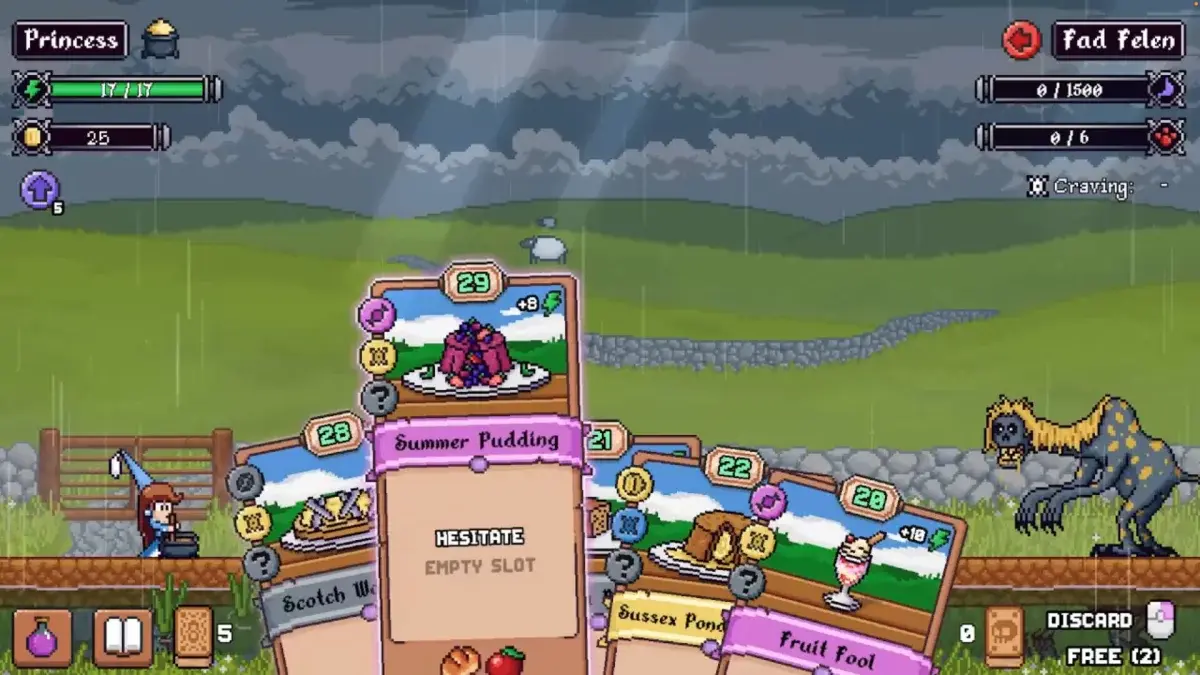
Poison becomes ice, fire becomes lightning, and you’re still doing mental math about how to optimize your damage output before the enemy’s health bar depletes. It’s comfortable, sure, but comfort breeds stagnation. Hungry Horrors asks a more radical question: what if the cards weren’t weapons at all? What if instead of calculating damage, you were figuring out recipes? It’s a deceptively simple reframe that cascades into something that feels distinct from everything else in the genre. And that distinction matters more than any new damage type ever could.
Serving Dinner to a Boggart
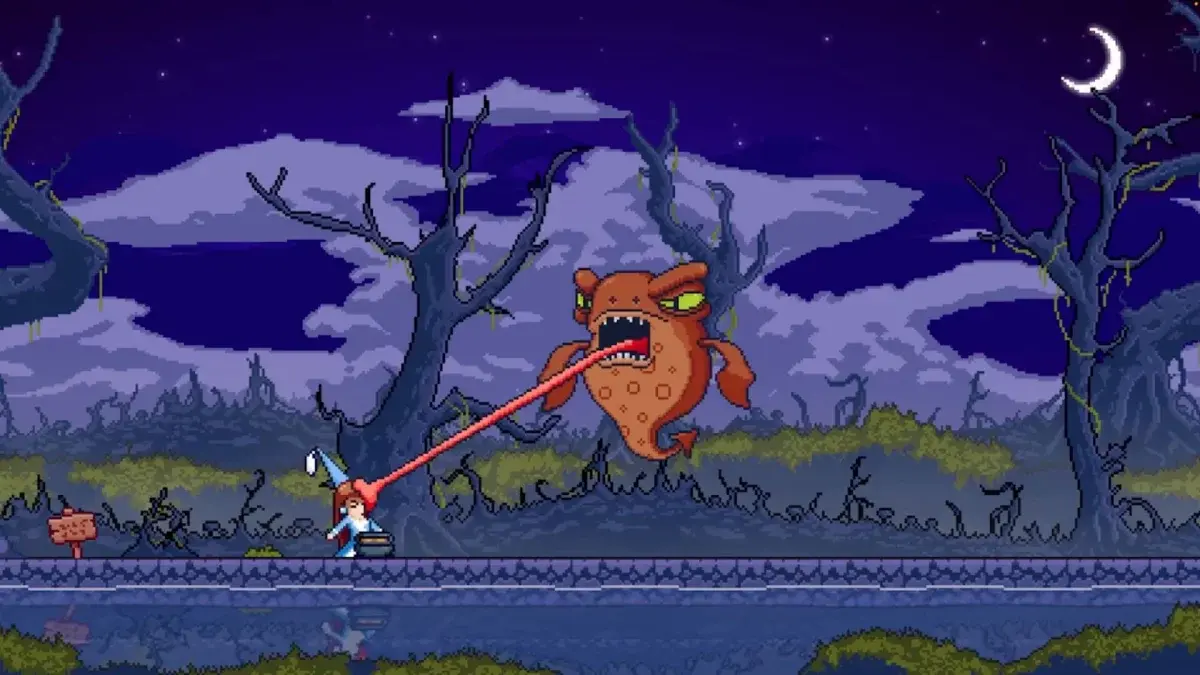
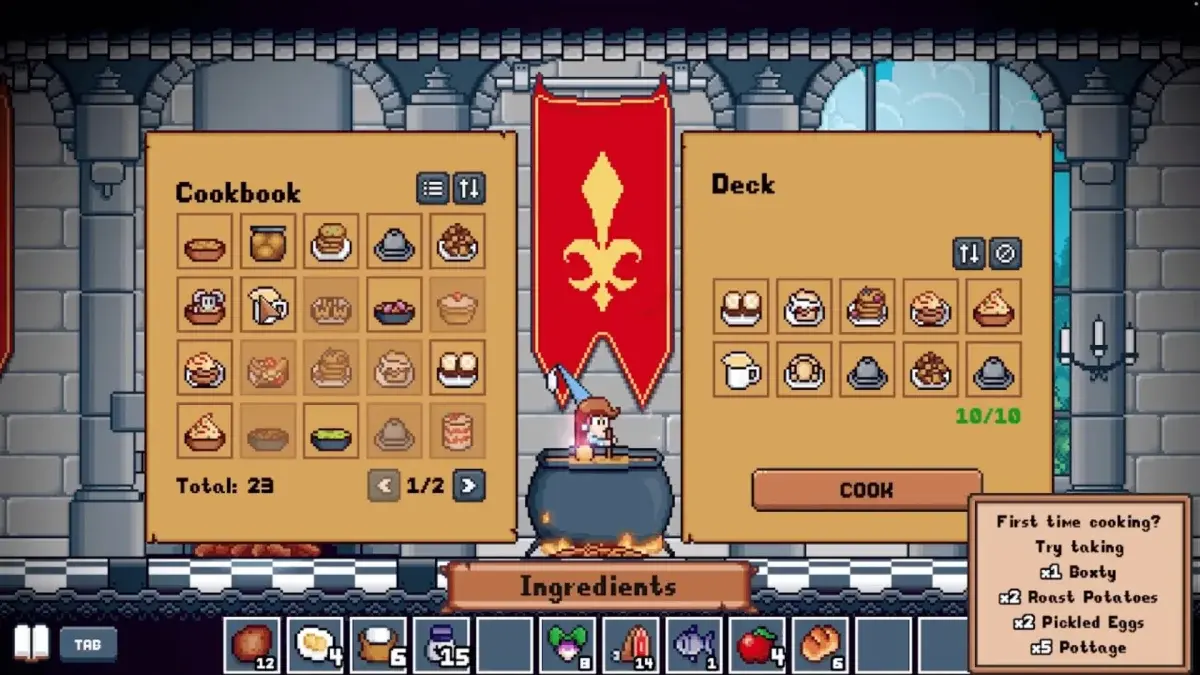
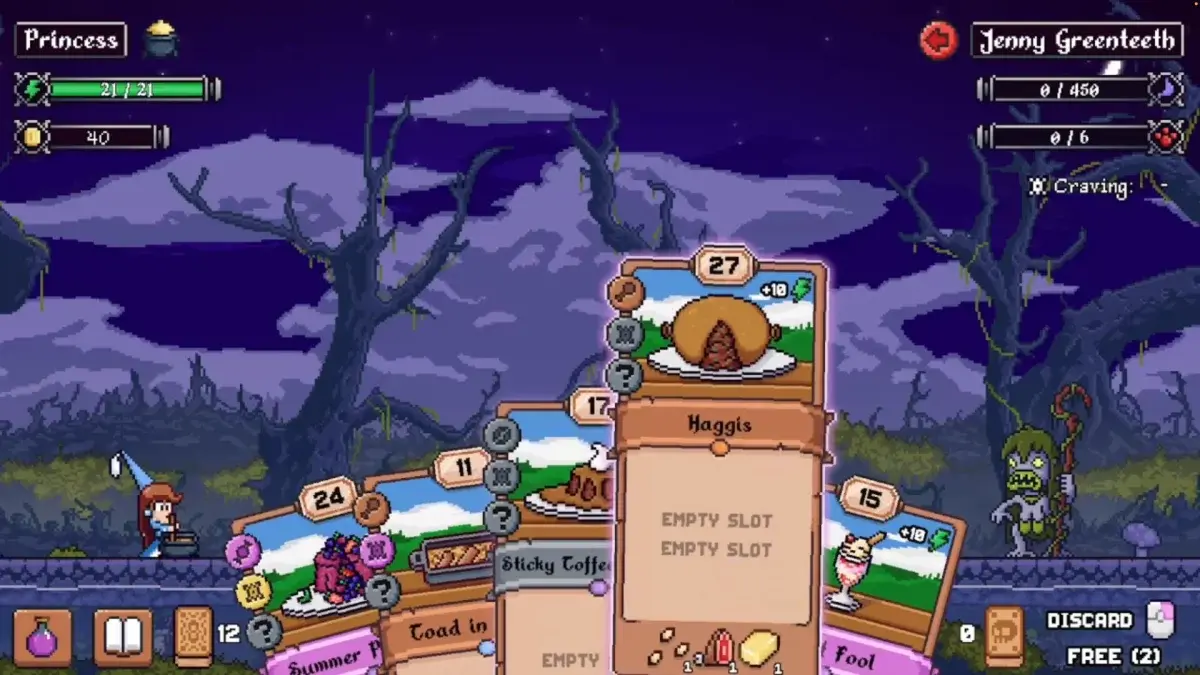
The core tension in Hungry Horrors doesn’t come from watching a health bar deplete—it comes from watching monsters creep closer. Instead of traditional combat where you chip away at enemy HP, creatures from British and Irish folklore steadily advance toward your princess protagonist while you scramble to cook something that will satisfy them. It’s a shift from numerical optimization to spatial anxiety, and it works remarkably well. Recipe combinations replace damage calculations entirely, and this changes how your brain engages with each encounter. Satisfying a Púca requires different thinking than optimizing DPS against a generic fantasy orc. You’re not asking “how do I kill this faster?” but rather “what does this creature actually want to eat, and can I make it before it reaches me?”
The monsters have preferences, requirements, and personalities rooted in their folklore origins, which means learning the bestiary feels more like cultural research than memorizing stat blocks. Failure carries its own unique sting here. When a monster reaches the princess, you don’t just see a generic game over screen—you get unique death animations based on the specific creature that got you. Getting devoured by a Kelpie hits different than a standard “you died” message. It’s darkly funny, surprisingly memorable, and makes each loss feel like its own little story rather than just a failed run.
A World Worth Walking Through
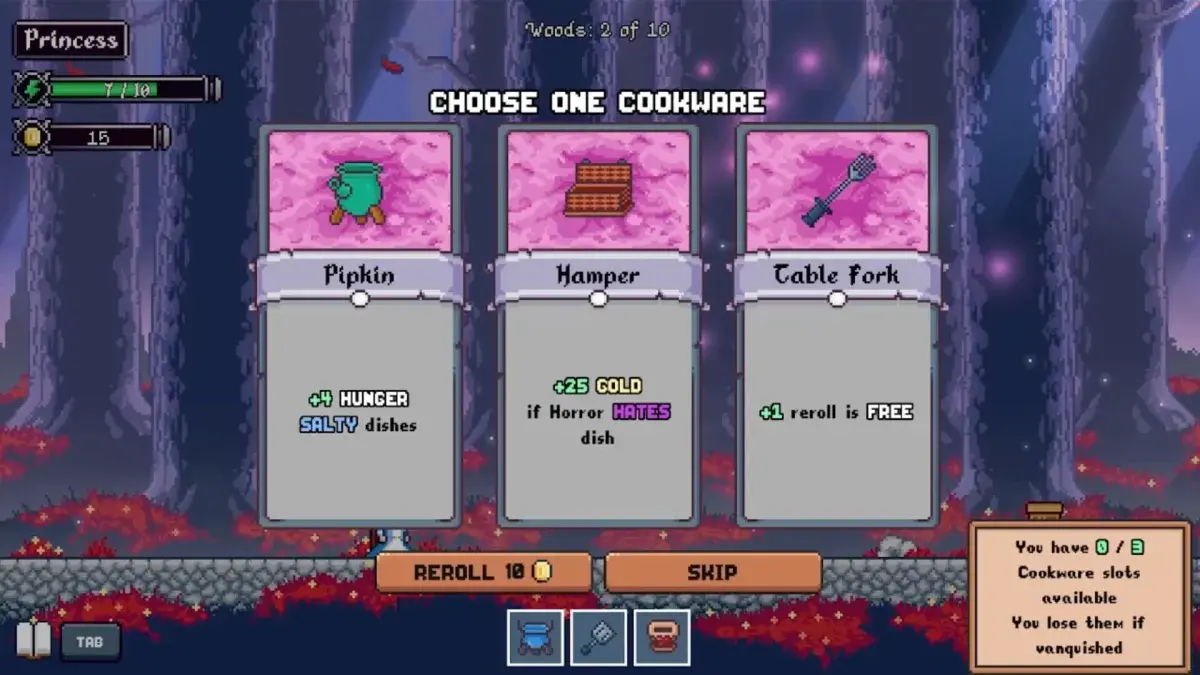
Most deckbuilders present themselves through menus and maps—abstract interfaces that prioritize information density over atmosphere. Hungry Horrors takes a dramatically different approach. The comparison to classic LucasArts and Sierra adventure games kept surfacing in my mind while playing, and I’m not alone. There’s a warmth to exploring these pixelated environments that spreadsheet-style interfaces simply can’t match. You’re inhabiting a world, not managing a system. The characters elevate everything further.
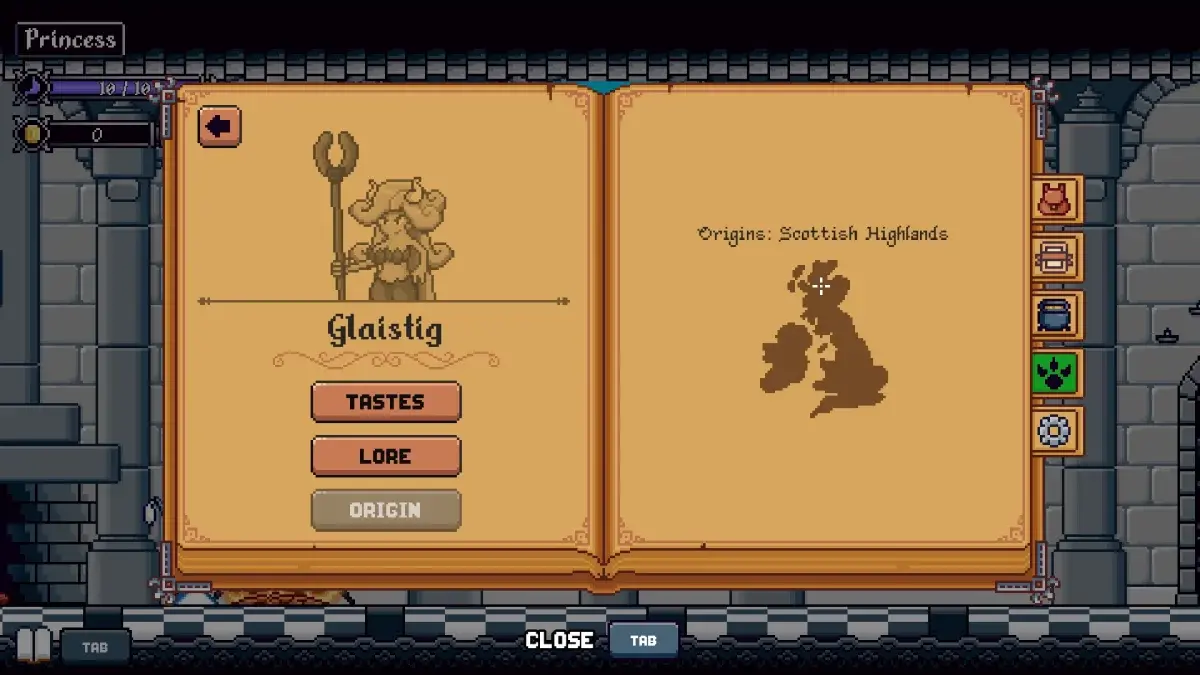
Your reluctant princess protagonist didn’t ask for this quest, and her sarcastic black cat companion makes sure you never forget it. Merlin shows up to offer guidance with the weary energy of someone who’s seen too many heroes fail. The British and Irish folklore underpinning the monster designs feels deeply researched—these aren’t generic fantasy creatures with Celtic names slapped on. There’s genuine love for the source material here, and it shows in every creature encounter and environmental detail.
Early Access Done Right
Hungry Horrors launched on Steam Early Access on January 19, 2026, and what struck me immediately was how polished it already feels. This isn’t a skeleton of a game asking for your patience and imagination—it’s a substantial experience that happens to have more content coming. For a debut title from a small indie studio, that level of quality at launch speaks volumes about the development approach. Clumsy Bear Studio was founded by a husband-and-wife team who share a passion for gaming, and Hungry Horrors radiates that passion project energy in the best possible way.
There’s a coherence of vision here that larger teams sometimes struggle to achieve. Every system, every piece of art, every line of dialogue feels like it came from people who cared about what they were making rather than checking boxes on a design document. The current content already offers substantial depth for the price of entry. I’m still discovering new recipes, encountering unfamiliar creatures, and finding combinations I hadn’t considered. That said, we don’t have clear details on the Early Access roadmap or how long this phase will last. The foundation is rock solid, but prospective players should know they’re buying into something still growing. Based on what’s here now, though, I’m optimistic about where it’s heading.
The Case for Non-Violence
There’s something quietly radical about a roguelite that removes combat entirely. Problem-solving through cooking opens the genre to players who might be exhausted by the endless cycle of violence that dominates gaming. You’re still facing challenges, still building strategies, still feeling the pressure of tough encounters—but the verbs have changed completely. Feed instead of fight. Satisfy instead of slay. It’s more than a cosmetic difference. Subverting player expectations creates memorable moments in ways that “deal 12 damage” simply never will. The first time a monster’s preferences surprised me, the first time a desperate recipe combination somehow worked, the first time I watched a satisfied Boggart waddle away instead of eating my protagonist—these stick in my mind far more than any critical hit ever has. Novelty matters in games, and Hungry Horrors delivers genuine novelty.
What excites me most is what this proves about the genre’s potential. Innovation doesn’t require abandoning deckbuilders—it just requires reimagining their core verbs. Hungry Horrors looked at a formula everyone assumed was settled and asked “what else could this be?” More developers should be asking that question. More players should be rewarding the ones who do. After years of killing monsters across dozens of roguelites, feeding them feels significant. Hungry Horrors isn’t perfect—Early Access rarely is—but it’s doing something genuinely different in a space desperate for fresh ideas. If you’ve felt even a flicker of fatigue with the genre lately, you owe it to yourself to try something that proves the formula still has room to surprise us.