 By
By This review follows Output Lag’s comprehensive review methodology.
About Age of Wonders 4: Rise from Ruin
- Developer
- Triumph Studios
- Publisher
- Paradox Interactive
- Release Date
- March 9, 2026
- Platforms
In truth, I’ve spent more hours than I’d like to admit perfecting the art of the turtled empire in 4X games. Walls go up, cities dig in, and my mages lob fireballs from behind impenetrable fortifications. When Rise from Ruin asked me to abandon everything I know about strategy gaming and embrace a life of perpetual motion, I really didn’t think I could do it. After doing it, however, I’m proud to admit I’m a convert—and my carefully constructed defensive instincts are in shambles.
Age of Wonders 4: Rise from Ruin’s Wandering Empire
In Age of Wonders 4: Rise from Ruin, this Nomad culture isn’t just a new faction with different unit skins. It’s a philosophical rejection of everything 4X games have taught us about empire-building. Instead of planting your capital and expanding outward like a methodical fungus, you’re constantly evaluating whether your cities should pack up and relocate entirely. That resource-rich province three hexes away? Don’t slowly sprawl and build toward it; just move your whole settlement there.
Triumph Studios gives you two distinct Nomad subtypes to play with, and they’re not just palette swaps. One leans into aggressive raiding, treating relocation as a military maneuver to keep enemies guessing. The other focuses on following resources like a civilization-sized herd of wildebeest, maximizing economic output by being wherever the grass is greenest. I found myself gravitating toward the raider approach, if only because watching an AI opponent fortify against my “capital” only to find it’s now three provinces away never stopped being satisfying.
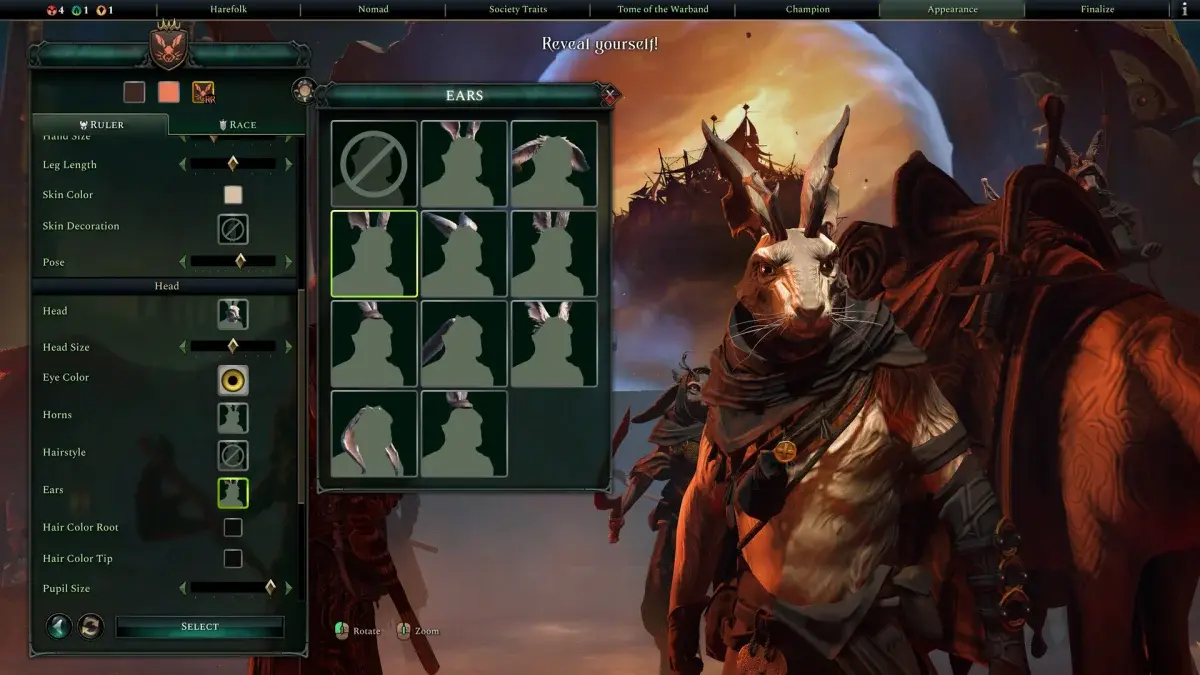
The Harefolk hero form in particular deserves its own special mention as well. Enhanced mobility on your leader transforms them from a strategic piece you protect into a hit-and-run specialist who embodies the Nomad philosophy. There’s something deeply amusing about a rabbit-eared wizard sprinting across the map, casting spells, and vanishing before retaliation arrives. It’s mobility as identity, and it works beautifully.
When Spells Shake the World
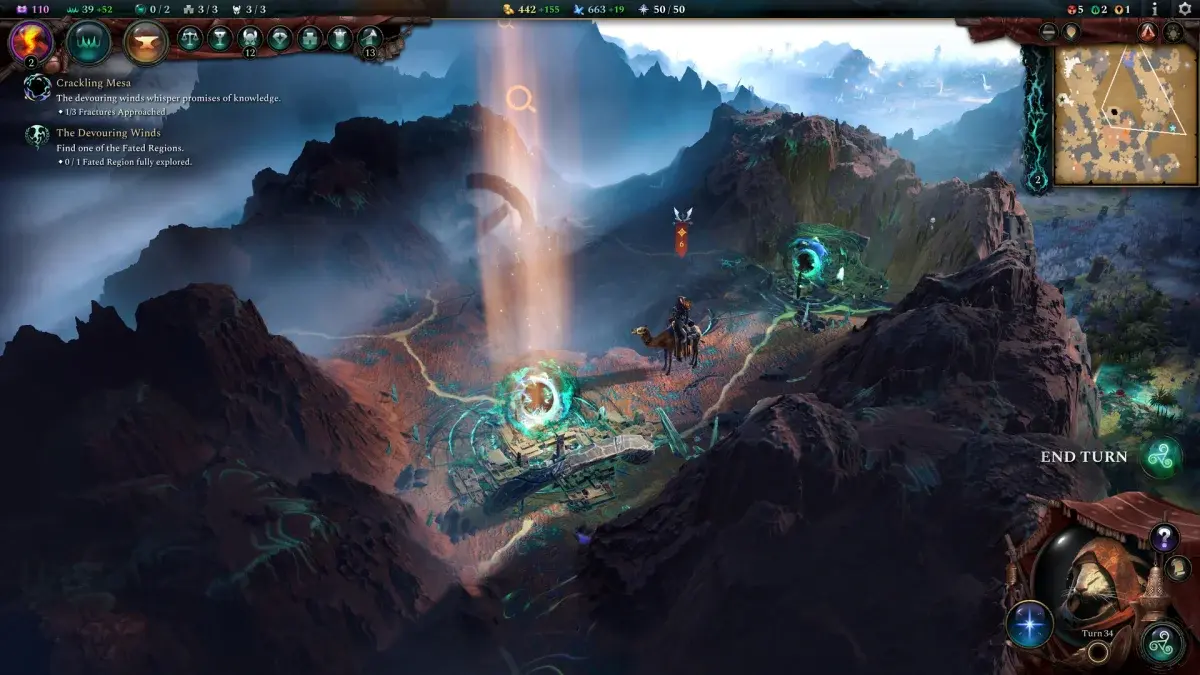
In truth, this changeup marks where Rise from Ruin gets genuinely brave. The cataclysm meter fills every single time your ruler casts a spell, and when it maxes out, bad things happen to your realm. Choosing to hurl that fireball isn’t just costing mana—it’s inching the entire world toward catastrophe. I’ve never thought so hard about whether I really needed to cast that buff spell, which is truly a unique mechanic in this often-stagnant genre.
This transforms magic from a routine resource-spending exercise into genuine gambling. Do you save your spells for emergencies, playing it safe while your cataclysm meter stays low? Or do you go full magical superpower, accepting that the realm will eventually shake itself apart? I tried both approaches across multiple campaigns, and they feel like completely different games. The conservative path rewards careful planning; the reckless path rewards speed and aggression before consequences catch up.
What impressed me most is how this interacts with the Nomad culture. A mobile empire can potentially outrun some cataclysm effects, turning realm instability into a strategic consideration rather than pure punishment. In practice, it is a mechanical synergy that makes you realize the designers were thinking several moves ahead.
Realms Worth Rebuilding
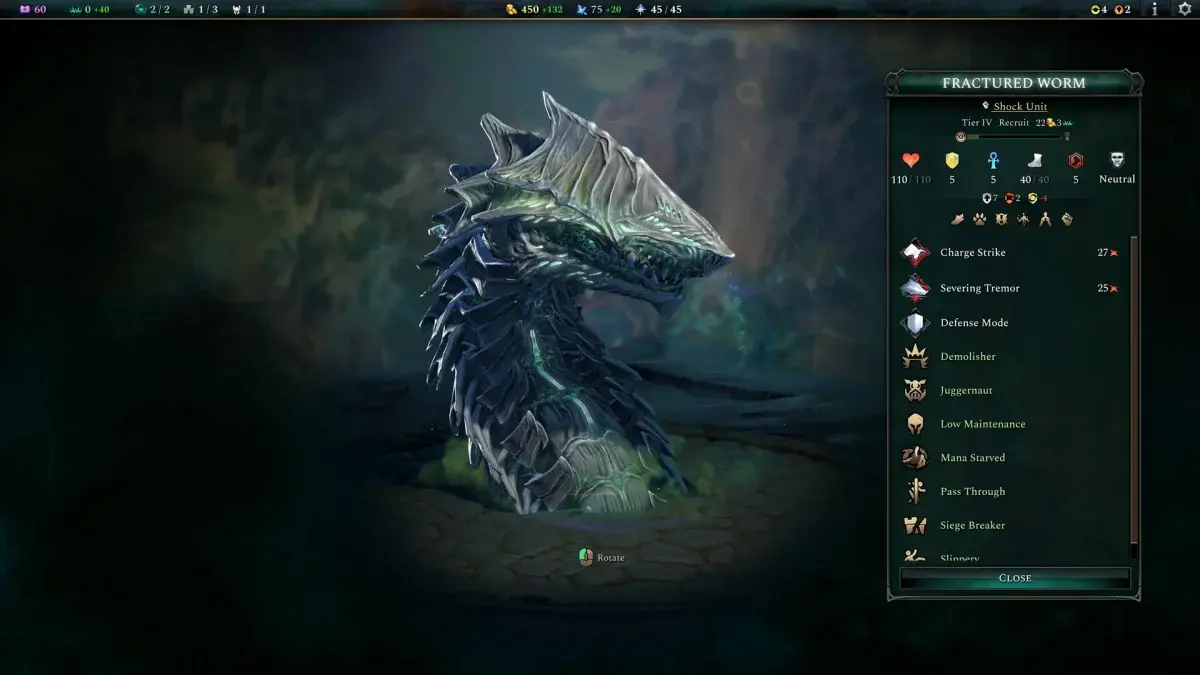
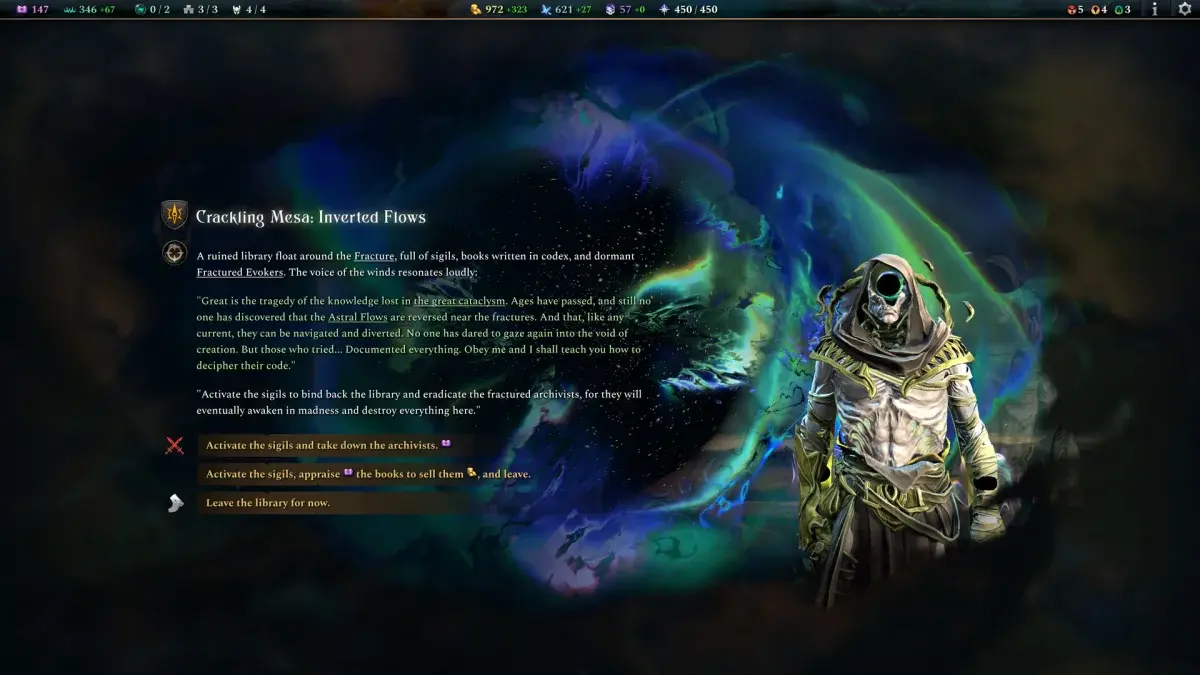
The two new story realms could have been simple showcases for the expansion’s toys. Instead, they’re smartly designed tutorials that teach through play rather than text boxes. The first realm eases you into Nomad thinking with forgiving geography and clear relocation incentives. By the time you hit the second realm, you’re making decisions that would have paralyzed you hours earlier.
I appreciated that these realms don’t feel like variations on a theme. One emphasizes the cataclysm mechanics with a realm already teetering on the edge of disaster, forcing you to be judicious with magic from turn one. The other lets you explore Nomad mobility in a more open sandbox. Neither overstays its welcome, and both offer meaningful choices rather than predetermined paths.
New Pages in the Grimoire
The additional tomes of magic slot into the existing system with surprising grace. They’re clearly designed with the cataclysm meter in mind—spells that offer bigger payoffs to justify their realm-shaking costs, or utility options that let you accomplish goals with fewer castings. Veteran players will immediately start theorycrafting new builds, and the integration feels native rather than bolted-on.
I spent an embarrassing amount of time in the faction creator combining new tomes with Nomad traits, and the possibilities feel fresh. After hundreds of hours in the base game, that’s no small achievement.

A World Worth Wandering
Rise from Ruin represents what a strategy DLC should really aspire to be. It doesn’t just hand you new units to slot into existing strategies—it asks you to fundamentally reconsider how you play a game its players probably have hundreds or thousands of hours in. The Nomad culture and cataclysm mechanics aren’t simple additions; they’re transformations to the entire game.
That said, this expansion demands fluency with Age of Wonders 4’s base systems. If you’re still learning the fundamentals, the Nomad playstyle will likely frustrate rather than liberate. And players who genuinely love the traditional turtle-and-expand approach may find the mobile lifestyle philosophically offensive. That’s okay—not every expansion needs to be for everyone.
For those ready to abandon their walls and embrace the wandering life, Rise from Ruin offers some of the freshest strategy gaming I’ve experienced this year. My defensive instincts may never recover, and I couldn’t be happier about it.