
There’s a version of this review where I open with a complaint about how crowded the Metroidvania space has gotten. How every other week there’s another indie studio promising interconnected maps, gated abilities, and hand-drawn art that “pushes the genre forward.” I’ve written that lede before. I’ve read it a hundred times. And Fallen Tear: The Ascension, on paper, invites every bit of that skepticism — a debut title from Winter Crew Studios, a small team in Manila who built this thing while holding down day jobs, launching into Early Access at 35% of its final content. The cynical read writes itself.
But here’s the thing: Fallen Tear doesn’t care about your cynicism. It’s too busy being genuinely, disarmingly good.
Raoah Feels Like a Place, Not a Map
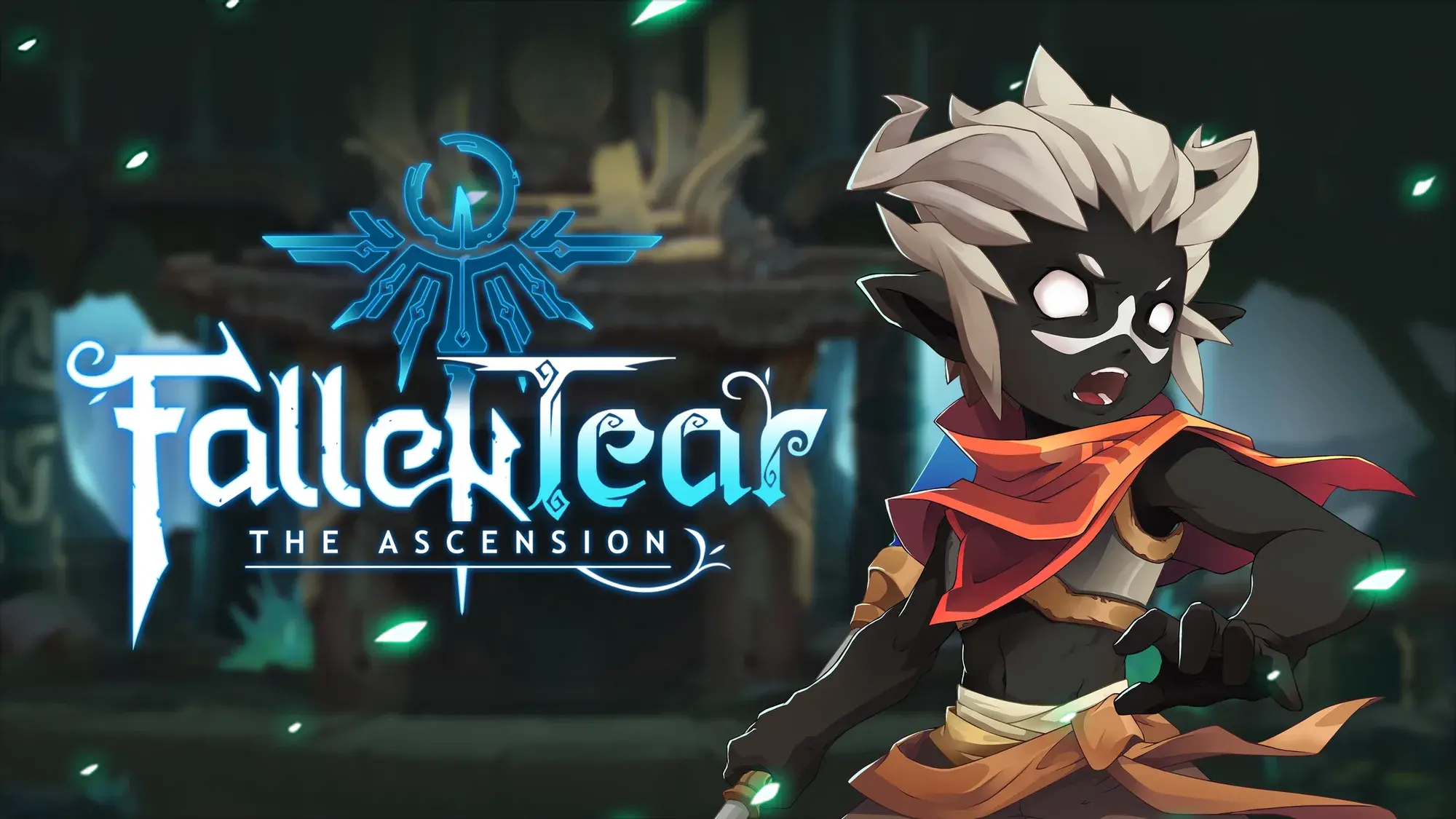
You play as Hira, a young hunter with a conveniently foggy past and a mysterious power tied to artifacts called Limiters. His adoptive mother disappears, the gods of the world of Raoah have gone corrupt, and the setup hits every JRPG story beat you’d expect — mysterious orphan, crumbling world, ancient destiny. None of that is new. What is new is how much the game actually makes you care about it. The writing isn’t trying to be Hollow Knight-cryptic or Celeste-confessional. It’s earnest in a way that reminds me more of Tales of or early Suikoden — characters say what they mean, motivations are clear, and the emotional stakes come from relationships rather than lore dumps. The full voice cast helps enormously here. Nearly every significant character is voiced, and the performances range from solid to genuinely great. Hira himself walks a nice line between wide-eyed kid and reluctant hero without veering into either extreme.
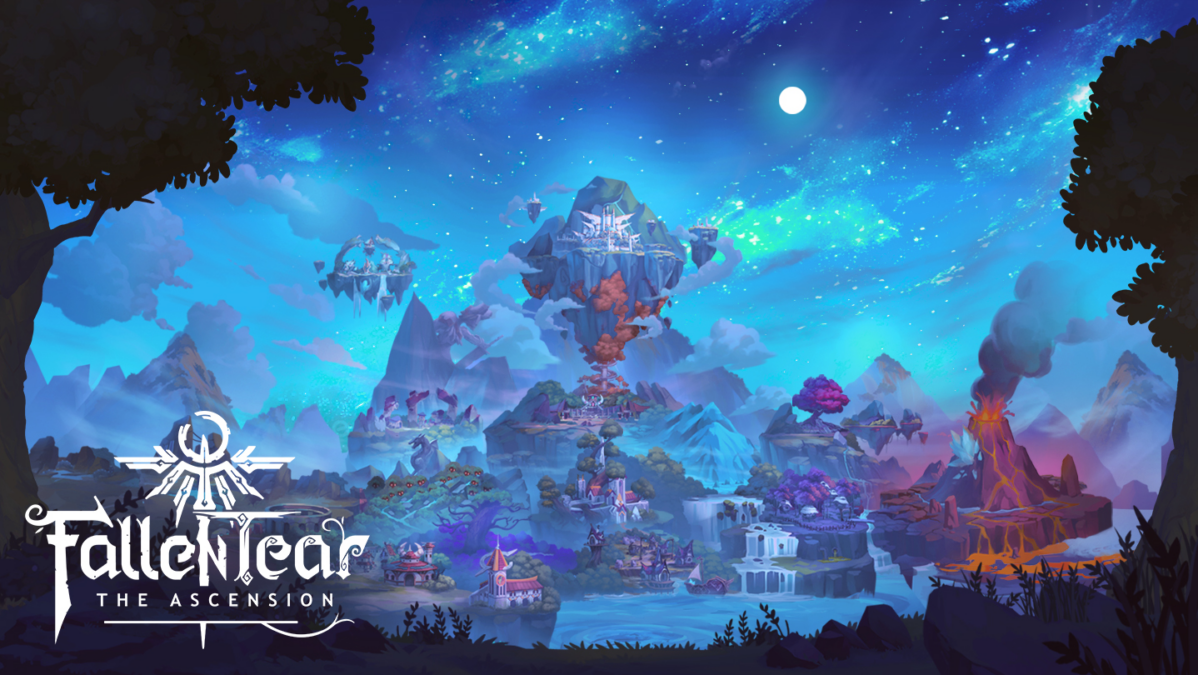
The world design is where Fallen Tear really starts flexing. Ten interconnected regions in the Early Access build alone, each with their own visual identity, enemy sets, and environmental storytelling. The hand-drawn animation is gorgeous — not in a “pretty backgrounds behind stiff sprites” kind of way, but in a fluid, expressive, everything-moves-with-purpose kind of way. Raoah feels lived-in. Forests hum with ambient sound. Ruins feel appropriately heavy. There’s a level of environmental detail here that most games in this space don’t bother with until they’re several patches deep.
Combat That Rewards Curiosity
Mechanically, Fallen Tear plays like a Metroidvania that grew up watching anime fight scenes. Hira’s moveset is tight — light attacks, heavy attacks, a parry, a dodge, a downward thrust that doubles as a pogo for the platforming heads. Everything is responsive and satisfyingly weighted. You’re not mashing through encounters; you’re reading patterns, timing counters, and swapping strategies on the fly. The boss fights in particular are standouts — big, dramatic, and fair in the way the best Souls-adjacent design tends to be. They punish recklessness without feeling cheap.
But the real hook is the Fated Bond system, and it’s the thing that elevates Fallen Tear from “another solid Metroidvania” to something that feels genuinely its own. As you explore Raoah, you recruit allies — mages, swordsmen, healers, tricksters — who aren’t just passive stat boosts sitting in a menu somewhere. Each Bond actively changes how you fight and navigate. Equip the dancer and you get health regeneration plus a spin attack. Bring the chef along and he throws a fire wheel that also burns through environmental obstacles. It’s a party system without the party management bloat, and it gives the combat a layer of build diversity that most games in this genre don’t even attempt. Think of it like the Pact system in Hades, except instead of modifiers, you’re building relationships with characters who have their own sidequests and story arcs tied to the main narrative.
The Growing Pains Are Real (But Expected)
I’d be lying if I said Fallen Tear doesn’t have rough edges — it’s Early Access, and some of those edges are sharper than others. The progression system is ambitious to the point of being slightly convoluted. You’ve got Mastery Skills that cost blue crystals from enemy drops, Hunter Skills earned from miniboss contracts, and Ascension abilities tied to your Bond progression. That’s three separate upgrade currencies feeding three separate skill trees, and the game doesn’t do a great job of explaining the interplay between them. You figure it out eventually, but the early hours feel like you’re juggling systems that could have been streamlined into something tighter.
Backtracking is the other sore spot. The map is big — which is mostly a positive — but Hira’s traversal in the early game feels slow relative to the distances you’re covering. Fast travel points are spread reasonably well, but the stretches between them can turn revisiting old areas into a slog, especially when you’re hunting for that one gated path you couldn’t access three hours ago. Better movement options in later updates would go a long way here. The journal system also needs work. It exists, technically, but it’s underutilized to the point where you can lose track of what you’re supposed to be doing if you put the game down for a few days.
And the final two bosses in the EA build are still tuned to full-game stats — Winter Crew has acknowledged this publicly and plans to nerf them for the Early Access phase. I respect the transparency, but getting bodied by a boss that’s balanced for a version of the game that doesn’t exist yet is still a frustrating experience in the moment.
A Handheld Metroidvania That Actually Holds Up
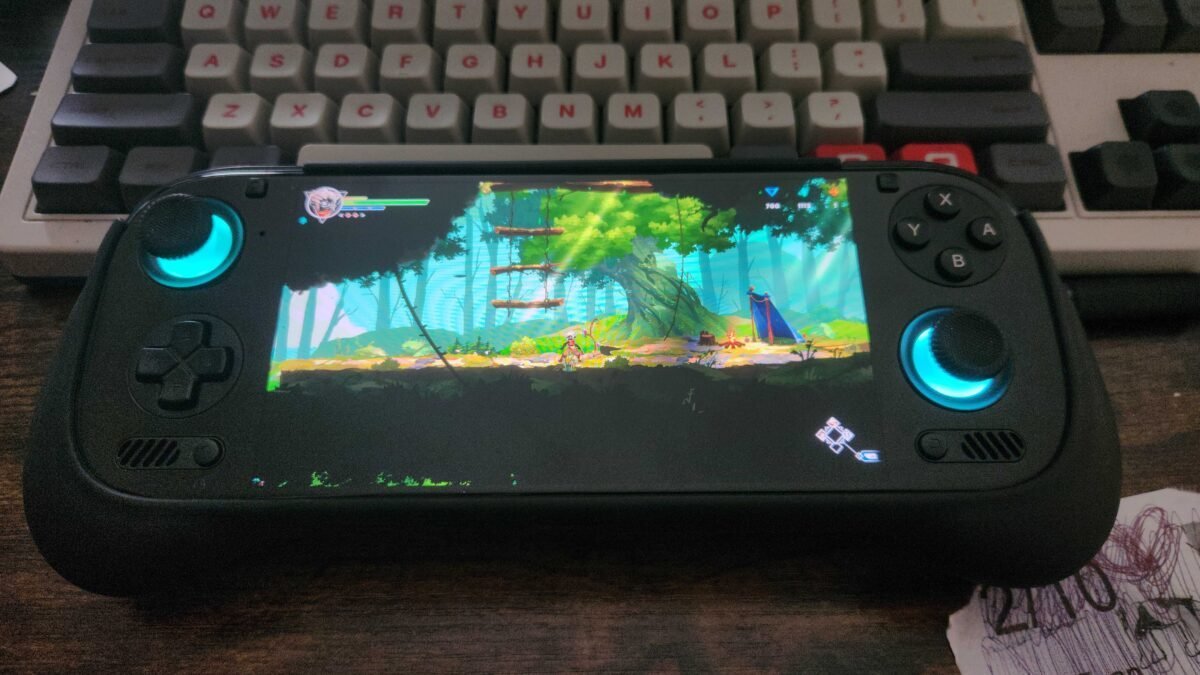
Quick sidebar: I played the majority of Fallen Tear on my Ayn Odin 3 via Game Native, and it’s worth calling out how well it translates to handheld. I averaged around 45 to 50 frames with out of the box configurations. The hand-drawn art scales beautifully to a smaller screen — if anything, the dense detail in the environments and character animations pops more when everything’s compressed into that form factor. Combat felt responsive with no noticeable input lag, and the session structure naturally accommodates pick-up-and-play. You can clear a region, hit a fast travel point, and put it down without losing your thread. It’s the kind of game that feels like it was designed for a TV but accidentally perfected for a handheld.
The Verdict (For Now)
Here’s where I land: Fallen Tear: The Ascension is one of the most impressive Early Access launches I’ve played in a long time. What’s here — roughly 15 to 20 hours depending on how thorough you are — feels less like a proof of concept and more like the first act of something that could genuinely compete with the best the genre has to offer. The art is stunning. The combat is sharp. The Fated Bond system is clever enough to build an entire identity around. And the fact that this was made by a small team in the Philippines working around full-time jobs makes the level of polish even more remarkable.
It’s not flawless. The progression could be cleaner, the backtracking could be less tedious, and the journal needs to actually do its job. But these are fixable problems attached to a foundation that’s rock solid. If Winter Crew delivers on even half of what they’ve outlined for the 1.0 roadmap — more regions, more bonds, multiple endings — this is a genuine Game of the Year contender in the indie space.
At $19.99, with the price going up as development continues, the Early Access window is the best deal you’re going to get. Your save carries over to 1.0. The core loop is already there. And honestly? It’s just a really good time.
Don’t sleep on this one.