
30-Second Quick-Start (TL;DR)
- Pick your archetype early: Star Engine (consistent, scales well) or Sovereign Blade (high-risk, single-target burst).
- For Star Engine: Grab Glow, Big Bang, Genesis, Chart of the Stars, and Reflect whenever you see them.
- Keep your deck small (10–15 cards) to cycle through star generators and defense cards reliably.
- Prioritize star generation over raw damage in the early game; defense comes from cards like Reflect and Particle Wall that scale with stars.
- Void Form and Sealed Throne are game-ending power cards if you find them—build around them.
- Use deck thinners like Be Gone and Charge to replace weak starter cards with better options.
- Divine Destiny relic (if available) gives you +6 stars at combat start—one of the best relics in the game for Regent.
- Don’t chase Sovereign Blade unless you’ve Seeking Edge and Summon Fourth to enable the infinite loop.
What This Guide Helps You Do
Master The Regent in Slay the Spire 2 by understanding its two core archetypes, learning which cards define a winning deck, and building toward consistent high-ascendancy runs. This guide is for players new to The Regent or looking to move beyond basic deck construction into the strategic layer that separates strong runs from dominant ones.

Requirements & Prep
No prerequisites. The Regent is available as a standard playable character in Slay the Spire 2. You’ll encounter relics, potions, and events as you play; the guide covers the most impactful ones.
Pro Tip: Keep a mental note of whether your early card offerings lean toward star generation or damage output. This’ll signal which archetype your run wants to pursue by Act 1.
The Regent’s Two Core Archetypes
Star Engine (Recommended for Higher Ascendancies)
The Star Engine is The Regent’s dominant archetype in high-difficulty runs. It works by generating stars (a resource that persists between turns, unlike energy) and using them to fuel both defense and offense through cards that cost stars instead of or in addition to normal energy.
Strengths: Better scaling at higher ascendancies, more consistent, excellent flexibility, strong area-of-effect damage, and numerous zero-cost cards that enable dense card combinations.
Weaknesses: Highly draw-order dependent; it’s easy to overdraft (a common mistake is including too many cards). The archetype contains several “bait” cards that seem good but underperform in practice.
Core mechanic: Convert energy into stars, then convert stars into damage, defense, draw, or debuffs. Stars carry over between turns, so you can build a resource pool and spend it strategically.
Sovereign Blade (High-Risk, High-Reward)
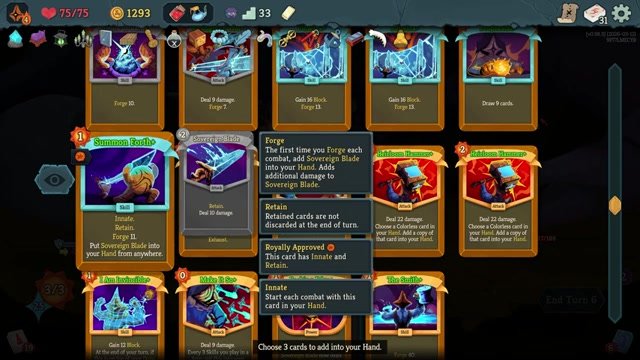
The Sovereign Blade archetype centers on building up a single sword card that grows in damage each turn you forge it. It produces huge single-target damage but struggles with area-of-effect scenarios and consistency.
Strengths: Enormous single-hit damage potential (mind-melting numbers on boss kills), many powerful forge cards, very satisfying payoff.
Weaknesses: Less consistent, weaker defense than Star Engine, poor area-of-effect damage, requires specific card combinations (Seeking Edge, Summon Fourth, Heirloom Hammer, Smith) to reach its full potential.
Core mechanic: Play cards with Forge to build the Sovereign Blade’s damage, then keep it in hand via cards like Foregone Conclusion and Summon Fourth. When combined with Seeking Edge (which makes it hit all enemies), the blade becomes a one-click board wipe—but only if you assemble the pieces.
Watch For: Sovereign Blade is satisfying but unreliable at higher ascendancies. Unless you’re seeing early Seeking Edge and Summon Fourth, don’t force it.
Route Overview: Building a Winning Star Engine Deck
The path to a strong Regent run follows this flow: Act 1 focuses on acquiring at least 2–3 star generators (Glow, Genesis, Venerate, Royal Gamble, or Hidden Case) while picking up cheap defense like Bullwalk or I’m Invincible. By mid-Act 1, you should have a small core of 6–8 cards. Acts 2 and 3 are about upgrading your engine with premium cards (Reflect, Particle Wall, Chart of the Stars, Void Form) and adding targeted damage (Comet, Radiate, Gamma Blast). Throughout, use deck thinners like Charge and Be Gone to replace weak starter cards. Your final deck should be 10–15 cards: 3–4 star generators, 2–3 defense/block cards, 3–5 damage cards, and 1–2 utility/draw cards. Relics like Divine Destiny, Duplicator Potion, and Throwing Axe amplify this strategy significantly.
Step-by-Step Walkthrough
Act 1: Establish Your Star Engine Foundation
Your first priority is identifying whether you’re building Star Engine or Sovereign Blade. Look at your first three campfire card offerings. If you see Glow, Genesis, Big Bang, or Hidden Case, you’re leaning Star Engine. If you see Bullwalk or Furnace early, Sovereign Blade might be calling.
For Star Engine, grab Glow immediately if offered—it’s an S-tier card. It costs one energy, gives you one star (two if upgraded), draws two cards, and cycles your deck. Even two Glows in your deck is powerful. If you don’t see Glow, look for Genesis (generates two stars per turn, three if upgraded) or Royal Gamble (nine stars for exhausting the card, plus automatic 10 defense if you’ve played Child of the Stars first).
Your early defense should be cheap and efficient. Bullwalk is good for its block and forge generation, but once you’ve got Reflect or Particle Wall, you’ll rarely look back. Venerate is your bedrock card if star generation is sparse—it’s free, gives one star, and costs one energy. Don’t skip it early, but don’t prioritize it over actual star generators.
By the end of Act 1, aim for a deck of 8–10 cards: 2–3 star generators, 2 defense cards, 2–3 damage cards (like Solar Strike or Falling Star), and maybe one draw card. Keep it tight. Every card should have a clear purpose.
Act 2: Upgrade Your Engine and Add Premium Defense
This is where you hunt for Reflect and Particle Wall. Reflect costs one energy and three stars but gives 17 block (21 if upgraded) and reflects damage back to enemies up to that value. Particle Wall costs two stars and gives 9 block—it’s your repeatable defense if you’ve got stars to spend. Both scale perfectly with Chart of the Stars, which is the glue card of the Star Engine: it gives 10 defense whenever you play a card that costs stars.
If you see Chart of the Stars, take it. Pair it with Child of the Stars (gain two block for each star spent) and you’ve built a machine that converts star spending into defense. This is the core loop.
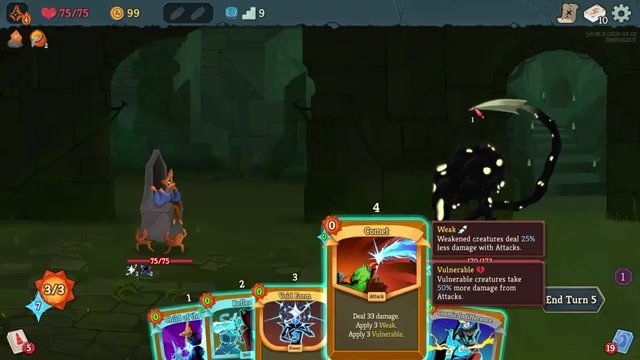
Add one premium damage card if you can: Comet (five stars, 33 damage, applies three weak and three vulnerable), Radiate (deals damage to all enemies based on stars generated that turn), or Gamma Blast (three stars, ~18 damage, applies weak and vulnerable). Radiate is particularly strong if you’re generating lots of stars, but it’s rare. Comet is more reliable.
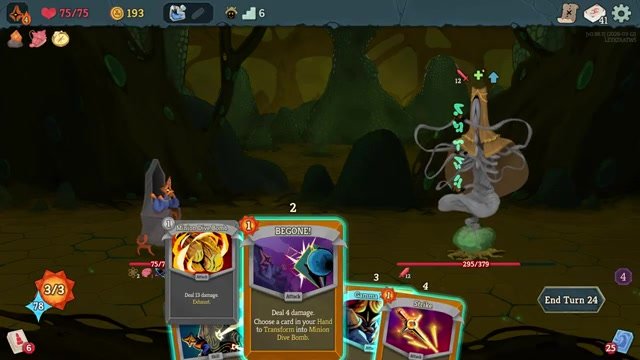
Use your first deck thinner now: Charge (zero cost, choose two cards in your deck to transform into zero-cost Minion Strikes, draw one card) or Be Gone (four damage, transform a basic card into Minion Dive Bomb, one cost, exhaust). These cards let you replace Strike and Defend cards with better options. This is crucial for deck quality.
By Act 2’s end, you should have 12–14 cards: 3–4 star generators, 2–3 defense cards (including Reflect or Particle Wall), 3–4 damage cards, 1–2 draw/utility cards, and maybe one deck thinner.
Act 3: Finalize and Leverage Power Cards
If you’ve found Void Form, this is where it shines. Void Form is a power card that ends your turn but makes your first two cards (or three if upgraded) completely free in energy and star cost. This changes everything: you can play Reflect for free, then spend your stars on high-impact cards. One thing to watch: if you’re running Chart of the Stars, free cards don’t generate the bonus defense. So play your zero-cost cards first, then your star-cost cards.
If you found Sealed Throne (only available from the Dusty Tomb relic), it’s the most broken card in the game: whenever you play a card, you gain energy. This enables infinite loops and turns your whole deck into a machine. Build around it if you’ve got it.
Add one more premium card if possible: Hidden Case (zero cost, draw one, gain one star, gain one energy, create five forge—excellent all-around), Convergence (zero cost, gain one energy, one star, retain your hand this turn—lets you hold key cards for next turn), or Decision Decision (zero cost, draw three, choose a card and play it three times—absurd with Royal Gamble or Chart of the Stars).
Your final deck should be 10–15 cards. Anything larger and you’ll have dead hands where you can’t cycle to your key cards. Anything smaller and you risk drawing the same cards repeatedly, which can be wasteful.
Relic Prioritization Throughout the Run
Divine Destiny (upgraded starter relic) is the crown jewel: you start each combat with six stars. This is game-changing and only available as an upgraded relic, so it’s not guaranteed.
Other S-tier relics: Duplicator Potion (gain four block for each star spent with Child of the Stars—this multiplies your defense), Throwing Axe (first card each combat is played twice—enables infinite loops), Dusty Tomb (gives you access to Sealed Throne), Frozen Egg (powers you add to your deck are upgraded, synergizes with Child of the Stars).
General-purpose relics: Very Hot Cocoa (+4 energy at start of combat), Pen Nib (+1 damage to all attacks), Ancient Orb (upgraded powers appear in your deck).
Card-by-Card Breakdown: The Star Engine Arsenal
Star Generators (Pick 3–4 of These)
Glow (S-tier): One energy, gain one star (two if upgraded), draw two cards. This is the best card in the game for star generation. Pick it up whenever you see it, even multiple copies.
Genesis (S-tier): Two stars to play, generate two stars per turn (three if upgraded). Incredible for mid-to-late game. If you pick this up early against a boss, you’ve won the star-generation lottery.
Big Bang (S-tier): Zero cost, draw one, gain one energy, one star, create five forge. Works in both Star and Sovereign Blade builds. If you upgrade it, it becomes innate (always in your starting hand). Multiple Big Bangs can finish entire enemy waves in late-game turns.
Royal Gamble (A-tier): Two stars to play, gain nine stars (exhausts the card). If you’ve played Child of the Stars first, you automatically get 10 defense. Huge payoff for a single card.
Hidden Case (A-tier): Zero cost, draw one, gain one energy, one star. All upside, no downside. Pick it up whenever you see it.
Venerate (B-tier): One energy, zero cost, gain one star. Your bedrock if other generators are sparse. Don’t skip it early, but it’s replaceable.
Defense & Block (Pick 2–3 of These)
Reflect (S-tier): One energy, three stars, gain 17 block (21 if upgraded), reflect damage back to all enemies up to that value. The best block card for Regent. Prioritize this above almost everything.
Particle Wall (A-tier): Two stars, gain nine block. Repeatable if you’ve got stars. Pairs perfectly with Chart of the Stars for scaling defense.
Chart of the Stars (S-tier): Zero cost, gain 10 defense whenever you play a card that costs stars. This is the glue. Combine with Child of the Stars for exponential defense scaling.
Child of the Stars (S-tier): Zero cost, power card. You gain two block for each star spent. Synergizes with Duplicator Potion (four block per star) for absurd defense.
Bullwalk (B-tier): Two energy, gain 10 block, forge 10. Good early defense and builds your Sovereign Blade if you’re hybrid building, but gets replaced by Reflect and Particle Wall.
I’m Invincible (B-tier): Three energy, gain 18 block. Solid early game, but expensive.
Damage Dealers (Pick 3–5 of These)
Comet (A-tier): Five stars, 33 damage, apply three weak and three vulnerable to enemies. Weak reduces enemy damage by 25% for three turns; vulnerable increases damage taken by 50%. This card is a one-two punch of offense and enemy debilitation. Pair with Chart of the Stars for 10 defense while dealing 33 damage.
Radiate (A-tier): Zero cost, deal three damage to a random enemy (five or six if upgraded), then deal damage to all enemies for each star you gained this turn. If you generate 10 stars in a turn and play Radiate, it hits 10 times. Rare but devastating.
Gamma Blast (A-tier): Three stars, ~18 damage, apply two weak and two vulnerable. Solid mid-tier damage with good utility. Generates six block via Chart of the Stars and Child of the Stars.
Shining Strike (A-tier): One energy, two stars, eight damage (if upgraded). Returns to the top of your deck (retained). With Unceasing Top relic (draw a card when you’ve no cards in hand), you can play this repeatedly, creating a loop. Sleeper card.
Falling Star (B-tier): Zero cost, apply one weak and one vulnerable. Your starting card. Keep it early, replace it later.
Solar Strike (B-tier): One energy, eight damage, gain one star. Solid bedrock damage if you’re not getting enough star generation elsewhere.
Guiding Star (B-tier): One energy, two stars, 12 damage, draw two cards. Good mid-game damage and draw.
Utility & Draw (Pick 1–2 of These)
Convergence (A-tier): Zero cost, gain one energy, one star, retain your hand this turn. Lets you hold key cards (Chart of the Stars, Reflect, Genesis) for next turn. Invaluable for planning ahead.
Decision Decision (A-tier): Zero cost, draw three, choose a card and play it three times. Insane with Royal Gamble (generate 27 stars) or Chart of the Stars (30 defense). Can enable infinite loops.
Glimmer (A-tier): Zero cost, draw three, put one card from your hand on top of your deck. Lets you set up your next turn (e.g., put Reflect on top if you know the boss attacks next turn).
Cosmic Indifference (A-tier): Zero cost, pull a card from your discard pile to the top of your deck. Retrieves key cards you’ve already played.
Deck Thinners (Pick 1–2 of These)
Charge (A-tier): Zero cost, choose two cards in your deck to transform into zero-cost Minion Strikes (seven damage, draw one). Removes weak starter cards and replaces them with better options.
Be Gone (A-tier): Zero cost, four damage, select one basic card and transform it into Minion Dive Bomb (one cost, exhaust). Removes curses, junk cards, or weak starter cards. Can also remove damaging cards from enemies that pull cards into your hand.
Power Cards (Game-Changers)
Void Form (S-tier): Power card, ends your turn. Your first two cards (or three if upgraded) are completely free in energy and star cost. This fundamentally changes how you play: free Reflect, free Comet, then spend stars on more cards. One caveat: free cards don’t trigger Chart of the Stars, so play them first, then star-cost cards. Incredibly powerful but requires planning.
Sealed Throne (S-tier): Power card, only available from Dusty Tomb relic. Whenever you play a card, gain energy. This enables infinite loops and turns your entire deck into a perpetual motion machine. Build around it if you get it.
Other Notables
Alignment (A-tier): Two stars, gain two energy instantly. Free energy is always good, especially if you want to play multiple cards in a turn.
Astral Pulse (A-tier): Zero cost, 14 damage to all enemies (18 if upgraded). Great area-of-effect damage, especially with Chart of the Stars providing 10 defense.
Bombardment (A-tier): Three energy, 18 damage, plays from the exhaust pile every turn for the rest of combat. Attacks after enemies, so it’s not ideal for survivability, but it’s consistent passive damage.
Crescent Spear (B-tier): One energy, one star, damage equal to all the star costs in your deck. If you’re running high-cost star cards (Decision Decision, Comet, Devastate), this scales well. Situational but can be strong late game.
Stardust (B-tier): Zero cost, deal five damage to a random enemy times the number of stars you’ve generated this turn. Exhausts all your stars, so it’s a finisher, not a sustainable damage tool. Not as good as Radiate because you lose your star pool.
Hedgemony (B-tier): Two stars, 15 damage, gain two energy back. Essentially a free card to play. Good cost-to-damage ratio.
Meteor Shower (A-tier): Two stars, 14 damage to all enemies, apply two weak and two vulnerable to all enemies. Rare (from Archaic Tooth relic), but excellent area-of-effect damage.
Building Your Ideal Deck: A Practical Example
Here’s a strong 14-card Star Engine deck structure:
- Star Generators (4): Glow (upgraded), Big Bang (upgraded), Genesis, Royal Gamble
- Defense (3): Reflect (upgraded), Particle Wall, Chart of the Stars
- Damage (4): Comet, Gamma Blast, Guiding Star, Solar Strike
- Utility (2): Convergence, Glimmer
- Deck Thinner (1): Charge
This deck cycles quickly, generates stars reliably, defends via scaling (Chart of the Stars + Child of the Stars + Duplicator Potion), and has multiple damage outlets. Every card serves a purpose, and the deck is small enough that you’ll see your key cards frequently.
Pro Tip: Don’t be afraid to skip cards. A 10-card deck that you understand is better than a 15-card deck with filler. Every card you add increases the chance of drawing weak combinations.
Common Mistakes & How to Fix Them
Overdrafting (including too many cards): Star Engine decks need tight cycling. If your deck is 20+ cards, you’ll have turns where you draw weak combinations and can’t execute your game plan. Aim for 10–15 cards. Skip cards, remove weak cards at shops, use deck thinners.
Prioritizing raw damage over star generation: Early game, star generation is more valuable than a single high-damage card. A Glow is worth more than a Comet because it enables future turns. Build your engine first, then add damage.
Taking Sovereign Blade cards without the combo pieces: Sovereign Blade requires Seeking Edge and Summon Fourth to shine. Without them, Bullwalk and Furnace are mediocre. Don’t force Sovereign Blade unless you see the enablers.
Forgetting that stars carry over between turns: This is The Regent’s unique advantage. You can bank stars one turn and spend them strategically the next. Plan ahead: if you know the boss attacks next turn, save stars for Reflect or Particle Wall.
Playing free cards before star-cost cards when you’ve Chart of the Stars: Free cards (from Void Form) don’t trigger Chart of the Stars. Play them first to build your hand, then play star-cost cards to generate the defense bonus.
Ignoring deck thinners: Removing Strike and Defend cards via Charge or Be Gone is one of the highest-impact plays you can make. These cards take up deck slots and dilute your draws. Replace them early.
Taking defense cards that don’t scale: Cards like I’m Invincible are fine early, but they don’t scale. Reflect and Particle Wall scale with your star generation, making them exponentially better. Prioritize scaling defense.
Chasing Radiate without enough star generation: Radiate is amazing, but it requires you to generate a lot of stars in a single turn. If your deck doesn’t have 3+ star generators, Radiate will underperform. Don’t take it unless your engine is solid.
Advanced Tips & Power Synergies
The Void Form + Free Cards Loop
If you’ve got Void Form (upgraded to three free cards) and multiple zero-cost cards (Glow, Big Bang, Glimmer, Convergence), you can play 3+ free cards, then spend your stars on expensive damage cards. Your turn becomes: play Glow (free), play Big Bang (free), play Glimmer (free), then play Comet (five stars, 33 damage) and Reflect (three stars, 17 block). You’ve done massive damage and defense in a single turn.
The Sealed Throne Infinite Loop
Sealed Throne (whenever you play a card, gain energy) combined with low-cost cards creates infinite loops. If you’ve got Sealed Throne and play a one-cost card, you gain one energy back, so you can play it again. With multiple one-cost cards, you can chain them infinitely, generating stars and damage without limit. This is the most broken scenario in the game.
Royal Gamble + Decision Decision
Play Decision Decision, choose Royal Gamble, play it three times. You generate 27 stars in a single turn. Then play Comet three times for 99 damage and nine weak/vulnerable applications. This is a board-clearing combo.
Chart of the Stars + Child of the Stars + Duplicator Potion
This is the defense holy trinity. Every star you spend triggers Chart of the Stars (10 defense), then Child of the Stars (2 block per star), then Duplicator Potion (4 block per star). So each star spent = 10 + 2 + 4 = 16 block. If you spend 10 stars, you gain 160 block. This is how Star Engine decks become unkillable.
Shining Strike + Unceasing Top Relic
Shining Strike returns to the top of your deck. If you’ve got Unceasing Top (draw a card when you’ve no cards in hand), you can play Shining Strike, end your turn with an empty hand, draw Shining Strike again, and repeat. This generates infinite stars and damage. Rare but devastating.
Throwing Axe Relic + Low-Cost Cards
Throwing Axe makes your first card each combat play twice. If you play Glow first, you get two Glows, doubling your star generation. If you play Big Bang first, you get two Big Bangs, doubling your energy and draw. This relic is incredibly powerful for Star Engine.
Risky Strat: Building around Radiate requires heavy star generation. If you don’t find enough generators, Radiate becomes a dead card. Only commit to Radiate if you’ve got 3+ dedicated star-generation cards by Act 2.
Relic Rankings for The Regent
Based on testing, here are the top relics for Regent:
S-Tier (Game-Winning):
- Divine Destiny: +6 stars at start of combat. The single best relic.
- Duplicator Potion: +4 block per star spent (with Child of the Stars). Multiplies your defense.
- Throwing Axe: First card each combat plays twice. Doubles your first card’s effect.
- Dusty Tomb: Gives access to Sealed Throne, the most broken card in the game.
- Frozen Egg: Powers you add to your deck are upgraded. Synergizes with Child of the Stars.
A-Tier (Very Good):
- Very Hot Cocoa: +4 energy at start of combat. Works for any deck.
- Pen Nib: +1 damage to all attacks. Consistent scaling.
- Ancient Orb: Upgraded powers appear in your deck. Amplifies power cards.
- Unceasing Top: Draw a card when you’ve no cards in hand. Enables loops.

Troubleshooting: What to Do When Your Run Isn’t Working
Problem: You’re not generating enough stars. Solution: Pivot to defense-heavy and use energy-cost damage cards (Solar Strike, Guiding Star). Don’t force star-cost cards if you don’t have the generators. Add Venerate and Hidden Case at the next shop.
Problem: You’re dying to early bosses. Solution: Your deck is too greedy on damage. Add Reflect or Particle Wall at the next opportunity. Use Convergence to hold defense cards for the turn you need them. Prioritize survival over scaling.
Problem: You picked up Radiate but it’s not doing anything. Solution: Radiate requires 5+ stars generated in a single turn. If you don’t have the generators, it’s a dead card. Consider using Be Gone to transform it into Minion Dive Bomb if you need the deck slot.
Problem: You’ve got Void Form but your hands are weak. Solution: You need more zero-cost cards. Glow, Big Bang, Glimmer, Convergence, Alignment (if upgraded)—these are your free cards. Without them, Void Form is just a slower turn. Add zero-cost cards at shops.
Problem: Your deck is too big and you’re not cycling to key cards. Solution: Use Charge or Be Gone to remove Strike and Defend cards. Skip cards at campfires. Visit shops to remove weak cards (costs gold but worth it). Aim for 10–15 cards maximum.
FAQ
Q: Should I always pick Glow? A: Yes. Glow is the best star-generation card and one of the best cards in the game. Even if you’re leaning Sovereign Blade, Glow is a pickup.
Q: How many star-generation cards do I need? A: Aim for 3–4. Two is too few and leaves you vulnerable. Five+ is overkill unless you’ve got Void Form or Sealed Throne.
Q: Is Sovereign Blade viable at high ascendancies? A: Not reliably. It’s fun and can win, but Star Engine is more consistent. Sovereign Blade needs specific enablers (Seeking Edge, Summon Fourth, Heirloom Hammer) that are rare. Star Engine works with any combination of the right cards.
Q: What’s the ideal deck size? A: 10–15 cards. Smaller decks cycle faster but may lack coverage. Larger decks have more options but inconsistent draws. 12–14 is the sweet spot for most runs.
Q: Should I take Reflect or Particle Wall first? A: Reflect. It’s the better card overall (17 block vs. 9 block), but both are excellent. Take whichever you see first and grab the other if you see it later.
Q: How do I know if my run is Sovereign Blade or Star Engine? A: Look at your first three campfire offerings. If you see Genesis, Glow, Big Bang, or Hidden Case, go Star Engine. If you see Bullwalk, Furnace, or Seeking Edge, consider Sovereign Blade. By Act 1’s end, your deck will signal which direction it wants to go.
Quick Reference Card: Star Engine Cheat Sheet
- Core Loop: Generate stars → Spend stars on defense (Reflect, Particle Wall, Chart of the Stars) and damage (Comet, Gamma Blast, Radiate).
- Must-Have Cards: Glow, Reflect, Chart of the Stars, Child of the Stars, Comet, Convergence.
- Star Generators to Grab: Glow, Genesis, Big Bang, Royal Gamble, Hidden Case (in order of priority).
- Defense Cards to Grab: Reflect, Particle Wall, Chart of the Stars, Child of the Stars.
- Deck Size Target: 10–15 cards (12–14 is ideal).
- Deck Thinning: Use Charge and Be Gone to remove Strike and Defend cards early.
- Key Synergy: Chart of the Stars + Child of the Stars + Duplicator Potion = exponential defense scaling.
- Power Cards: Void Form (free cards), Sealed Throne (infinite energy), Decision Decision (play cards three times).