 By
By This review follows Output Lag’s comprehensive review methodology.
About MARVEL Cosmic Invasion
- Developer
- Tribute Games Inc.
- Publisher
- Dotemu
- Release Date
- December 1, 2025
- Platforms
Earlier this year, I crowned Absolum as generational—a roguelike beat ’em up so perfectly calibrated that it felt like Dotemu had cracked some ancient code buried in arcade cabinet motherboards. I said my free time was in absolute peril when Marvel Cosmic Invasion dropped. I was wrong. My free time isn’t in peril—it’s already dead, buried under a pile of cosmic cubes and the sound of Josh Keaton’s Spider-Man quipping for the thousandth time.
Dotemu and Tribute Games have done it again. After perfecting the Turtles with Shredder’s Revenge, they’ve turned their pixel-perfect alchemy toward Marvel’s cosmic catalog, adapting the Annihilation storyline into what might be the best Marvel arcade game since Capcom stopped caring. This isn’t just another licensed beat ’em up riding on nostalgia—it’s a masterclass in how tag-team mechanics can revolutionize a genre that’s been throwing the same punches since 1987.
But here’s the thing: Marvel Cosmic Invasion is almost too good at what it does. It’s like ordering your favorite meal at your favorite restaurant and realizing halfway through that you might actually be getting tired of perfection. The formula is so refined, so polished, so exactly what you’d want from a Marvel beat ’em up that it paradoxically feels… safe?
Don’t get me wrong—I’ve put forty hours into this thing already. But somewhere around hour twenty, I started wondering if Dotemu’s become too good at this specific thing.
The Cosmos Must Fall
Let’s address the Galactus-sized elephant in the room: this isn’t an MCU game. There’s no quippy Star-Lord, no “I am inevitable” Thanos, no multiverse shenanigans. Instead, Tribute Games dove deep into Marvel’s cosmic comics, specifically the 2006 Annihilation event where Annihilus—imagine if a bug had an existential crisis and decided genocide was the answer—launches his Annihilation Wave across the universe.
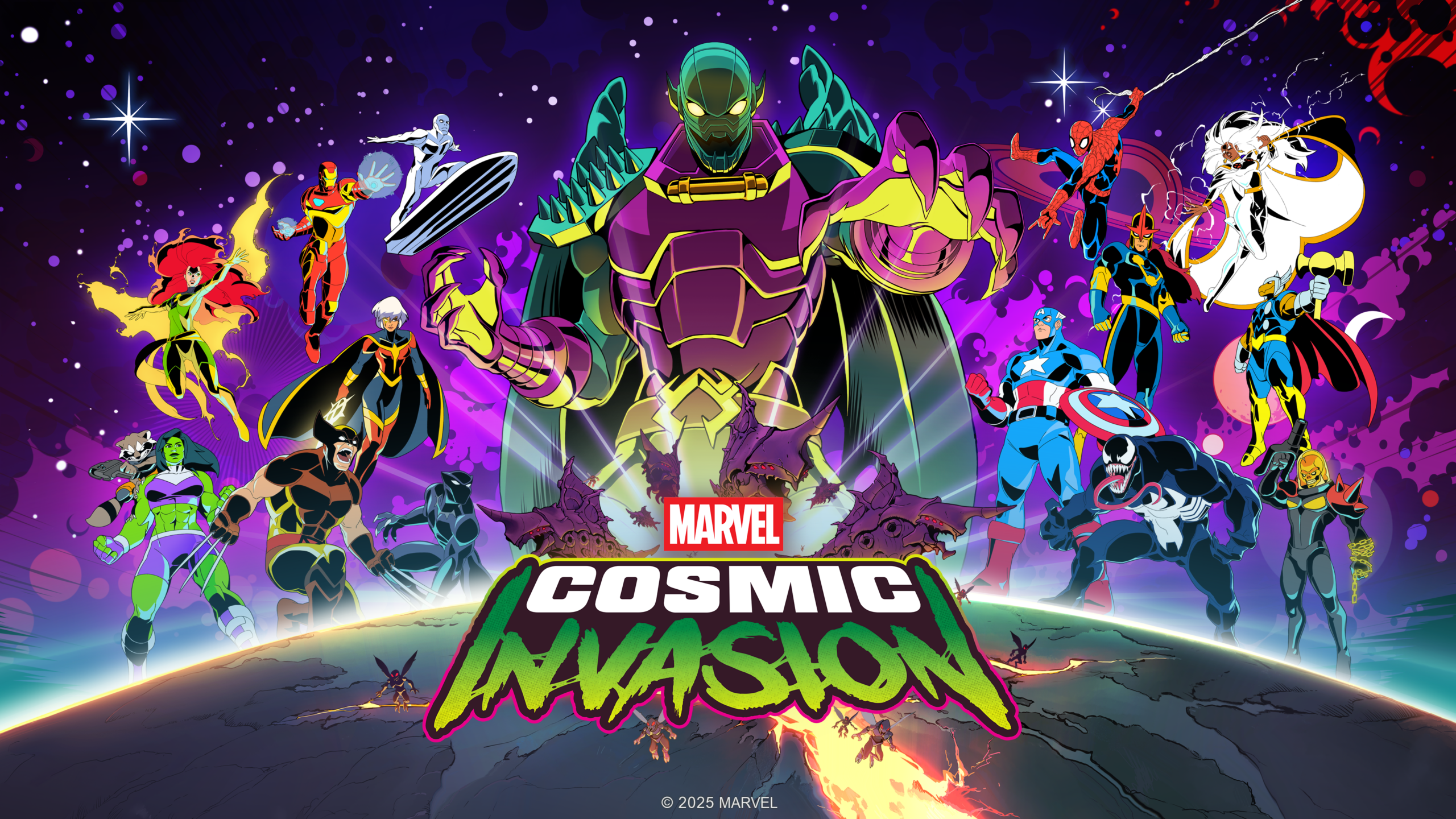
The roster reflects this comic-first approach beautifully. Sure, you’ve got your Spider-Men and your Wolverines to keep the normies happy, but the real joy is in the deep cuts. Phyla-Vell? She’s here, and she’s incredible. Cosmic Ghost Rider? Beta Ray Bill? These aren’t characters chosen for movie synergy—they’re here because someone at Tribute Games actually reads comics and thought “you know what would be sick? If players could tag-team between a horse-faced Thor and a flaming skeleton riding a space motorcycle.”
The visual design pulls straight from 90s Marvel, all Jim Lee muscles and Rob Liefeld pouches (thankfully no Liefeld feet). Every sprite pops with that oversaturated comic book coloring that makes everything feel larger than life. When Storm calls down lightning, the entire screen flashes white. When Venom transforms, his symbiote tendrils writhe with disturbing organic fluidity. It’s the X-Men arcade cabinet at your local pizza joint, if that cabinet had been blessed by the pixel art gods and given a 4K makeover.
Tag, You’re Hit
Here’s where Marvel Cosmic Invasion earns its stripes: the tag-team system isn’t just a gimmick—it fundamentally changes how beat ’em ups work. You choose two heroes at the start of each level, and switching between them is instant, costs minimal resources, and can be done mid-combo. It’s Marvel vs Capcom 2 translated into side-scrolling violence.
The magic happens when you realize every character truly plays differently. Spider-Man webs enemies into setups. She-Hulk grabs and throws. Phoenix floats above the chaos raining psychic destruction. Storm controls space with weather. Iron Man keeps distance with beams. Wolverine gets in close and goes full berserker. These aren’t palette swaps with different special moves—they’re completely distinct play styles that demand different approaches.
But the real genius is in the combinations. Tag She-Hulk in mid-combo to launch an enemy, switch to Storm for an aerial rave, call in She-Hulk for an assist slam, then finish with Storm’s lightning super. It’s the kind of thing that makes you feel like you’re conducting a symphony of violence, each character an instrument in your cosmic orchestra of pain.
The flying characters add another layer—literally. Half the roster can take to the skies, creating this dual-plane battlefield where you’re managing ground and aerial threats simultaneously. It should feel gimmicky, but instead it adds genuine tactical depth. Do you bring two ground-pounders for maximum combo potential? A flyer and a brawler for coverage? Two flyers for aerial dominance? Every combination feels viable, and more importantly, every combination feels different.
Maximum Versus Syndrome
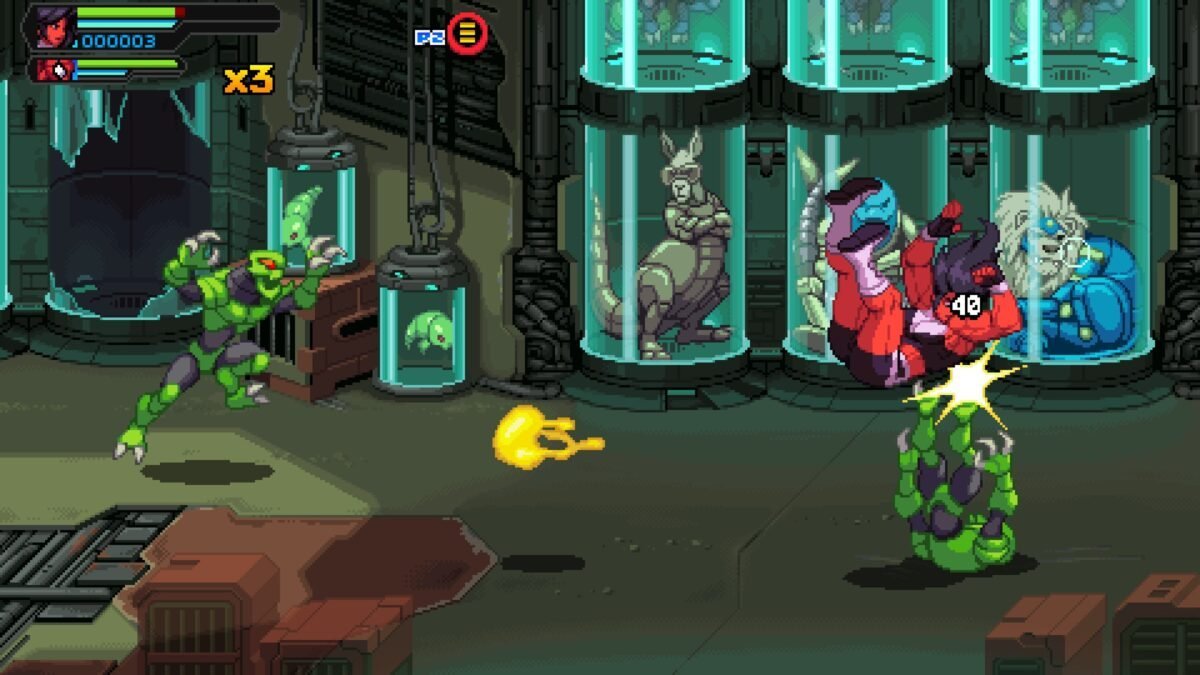
The Marvel vs Capcom DNA runs deeper than just the tag mechanics. Wolverine does his rapid claw barrage from Marvel Super Heroes. Iron Man’s Proton Cannon is here in everything but name. Captain America’s shield dynamics feel ripped straight from MvC2. Even the way characters shout their moves—”MAXIMUM SPIDER!”—feels like a love letter to Capcom’s glory days.
This extends to the enemy design too. There’s a Sentinel mini-boss colored like the New York Knicks that made me actually laugh out loud. The way certain enemies can be juggled indefinitely if you know the timing. The screen-filling super moves that pause everything for maximum impact. It’s all here, translated beautifully into the beat ’em up format.
What’s brilliant is how this never feels like mere imitation. Tribute Games understood what made those Capcom fighters special—the weight, the impact, the sense that every hit matters—and translated that feeling into a different genre entirely. When Beta Ray Bill’s hammer connects, you feel it in your bones. When Venom’s tendrils grab three enemies at once, the controller practically vibrates with satisfaction.
The Annihilation Paradox
But here’s where things get complicated. Marvel Cosmic Invasion is almost too smooth, too polished, too perfectly calibrated. The default difficulty is a joke—my partner and I breezed through the entire campaign with maybe two restarts total. The enemy variety is solid but not spectacular. The levels, while beautifully drawn, lack the creative set pieces that made Shredder’s Revenge feel so dynamic. No vehicle sections, no environmental hazards to speak of, just beautiful corridors full of things to punch.
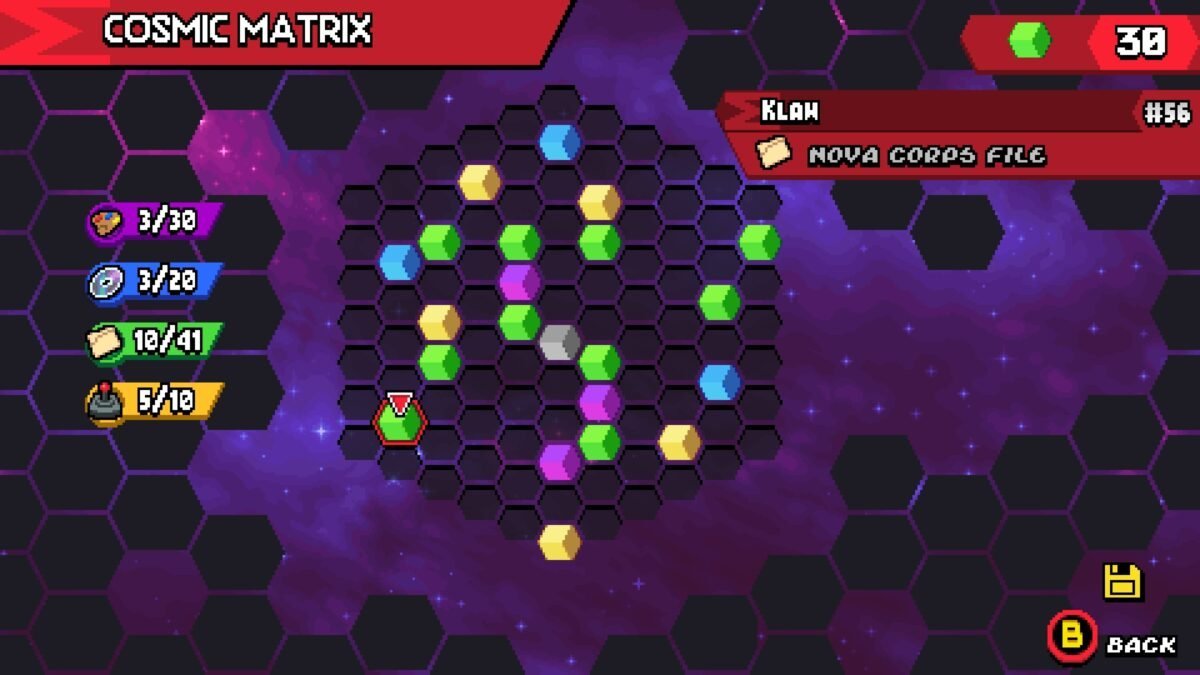
The progression system is bizarrely basic for a 2025 release. Characters level up, but every character gets the exact same upgrades in the exact same order—health, then focus, then a passive, then a palette swap. No move unlocks, no customization, no choices. It feels like a vestigial system, included because beat ’em ups are supposed to have progression now, but without any thought to what that progression should actually do.
And then there’s the voice acting. Look, I appreciate that they got Cal Dodd and the other 90s X-Men voice actors. The nostalgia hit is real. But these characters never. Stop. Talking. Every punch, every jump, every swap triggers a voice line. By hour ten, I wanted to strangle Spider-Man myself just to make him stop quipping. There’s a fine line between authentic and annoying, and Marvel Cosmic Invasion pole vaults over it with enough force to make Stilt-Man jealous.
Hard Mode Salvation
Everything changes when you unlock Hard difficulty. Suddenly, enemies hit like trucks. Boss patterns become actually threatening. That tag system you’ve been playing with becomes absolutely essential for survival. Resource management matters. Positioning matters. Those combos you’ve been styling with become the difference between victory and defeat.
This is where Marvel Cosmic Invasion reveals its true form—not as a casual nostalgia trip, but as a deeply technical fighter masquerading as a beat ’em up. Hard mode demands you understand frame data, spacing, and resource management in ways the genre rarely requires. It’s here that the game finally shows its teeth, and they’re adamantium sharp.
The boss fights especially shine on higher difficulties. Annihilus becomes a genuine nightmare, summoning waves while pelting you with cosmic energy. Knull covers the screen in symbiote tendrils that require precise positioning to avoid. These aren’t just health sponges—they’re puzzles that require you to fully utilize your team’s abilities to solve.
The Dotemu Dynasty
What strikes me most about Marvel Cosmic Invasion is how it represents Dotemu’s evolution as a publisher. Streets of Rage 4 proved they could revive dead franchises. Shredder’s Revenge showed they could perfect existing formulas. Absolum demonstrated they could create original IP that stood alongside the classics. And now Marvel Cosmic Invasion proves they can take the biggest license in entertainment and make it feel fresh.
But I wonder if they’re becoming victims of their own success. Every Dotemu beat ’em up feels exceptional because they all hit the same exceptional notes. Gorgeous pixel art? Check. Pitch-perfect gameplay? Check. Online co-op that actually works? Check. Just enough modern convenience without losing the arcade soul? Check, check, check.
It’s the blessed problem of being too good at one specific thing. Marvel Cosmic Invasion is undeniably excellent, but it’s excellent in ways I’ve now experienced three times this year. The formula works—God, does it work—but I’m starting to crave some chaos in my order, some rough edges on my polished gems.
The House Always Wins
Marvel Cosmic Invasion succeeds because it understands that the best arcade games aren’t about complexity—they’re about expression. Every character feels like they have their own language, every combo tells its own story, every tag creates its own moment. When you’re in the flow, swapping between characters mid-combo while your partner sets up the next juggle, it transcends its genre completely. This isn’t just hitting things—it’s a conversation conducted entirely in violence.
The four-player co-op is absolute chaos in the best way. Eight heroes on screen simultaneously, swapping in and out, calling assists, triggering supers—it’s like watching a comic book panel explode into motion. The netcode is rock solid, the drop-in/drop-out works flawlessly, and the game scales difficulty based on player count intelligently. It’s the platonic ideal of what online beat ’em ups should be in 2025.
For Marvel fans, this is essential. For beat ’em up fans, it’s mandatory. For anyone who’s ever dropped a quarter into an X-Men cabinet and felt that specific joy of Colossus throwing Wolverine into a crowd of Sentinels, this is your game singing your song in your key.
Maximum Cosmic
Marvel Cosmic Invasion is exactly what it needs to be: a loving tribute to Marvel’s cosmic comics, a mechanical evolution of the beat ’em up genre, and another jewel in Dotemu’s increasingly heavy crown. The tag-team system revolutionizes combat in ways that will influence the genre for years. The roster is a beautiful mix of crowd-pleasers and deep cuts. The presentation is flawless, the gameplay is tight, and the co-op is best-in-class.
But it’s also safe. Predictable. Another Dotemu beat ’em up that does exactly what you expect a Dotemu beat ’em up to do, just with Marvel characters this time. After the roguelike innovation of Absolum, returning to straight arcade action feels almost regressive, no matter how perfectly that action is executed.
Still, when I’m air-juggling symbiotes as Beta Ray Bill while my partner’s Cosmic Ghost Rider burns through ground forces, when we tag in perfect synchronization to unleash dual supers that clear the screen in cosmic fire and lightning, when everything clicks and the combo counter hits quadruple digits—none of my criticisms matter. In those moments, Marvel Cosmic Invasion isn’t just good. It’s transcendent.
Dotemu’s delivered their third exceptional beat ’em up in as many years. The fact that I’m slightly tired of their excellence is my problem, not theirs. Marvel Cosmic Invasion is the best Marvel beat ’em up ever made, even if it’s not quite the best beat ’em up of 2025. That honor still belongs to their own Absolum, which dared to push the genre forward rather than perfect it in place.
But perfection, even familiar perfection, is still perfection. And at $30, with this much content, this many characters, and this level of polish? Excelsior, true believers. Excelsior indeed.
This review is based on a retail build of the game provided by the publisher.