 By
By This review follows Output Lag’s comprehensive review methodology.
About DemonSchool
- Developer
- Necrosoft Games
- Publisher
- Ysbyrd Games
- Release Date
- November 19, 2025
- Platforms
I’ve been chasing a very specific high for years—the one I got from playing the original Persona games on PlayStation, back when demon negotiation was weird, the atmosphere was oppressive, and everything felt deliciously off-kilter. Not the social sim polish of modern Persona, but that raw, unsettling energy where high school horror met tactical combat in ways that shouldn’t work but absolutely did. Every year, another indie promises to capture that feeling. Every year, I’m left wanting.
Then DemonSchool showed up, drenched in Italian horror aesthetics and dripping with style, and suddenly I’m seventeen again, playing Persona 2 under a blanket at 2 AM while my mother thinks I’m asleep.
Necrosoft Games didn’t just make a tactics RPG—they made a mood piece that happens to have some of the smartest combat I’ve played all year. It’s Persona filtered through Dario Argento, tactical gameplay stripped to its essence, and a punk rock middle finger to authority wrapped in pixel art so gorgeous it hurts. This isn’t just another “Persona-inspired” indie. This is something weirder, smarter, and infinitely more stylish.

Blood-Soaked Hallways and Motion Comics
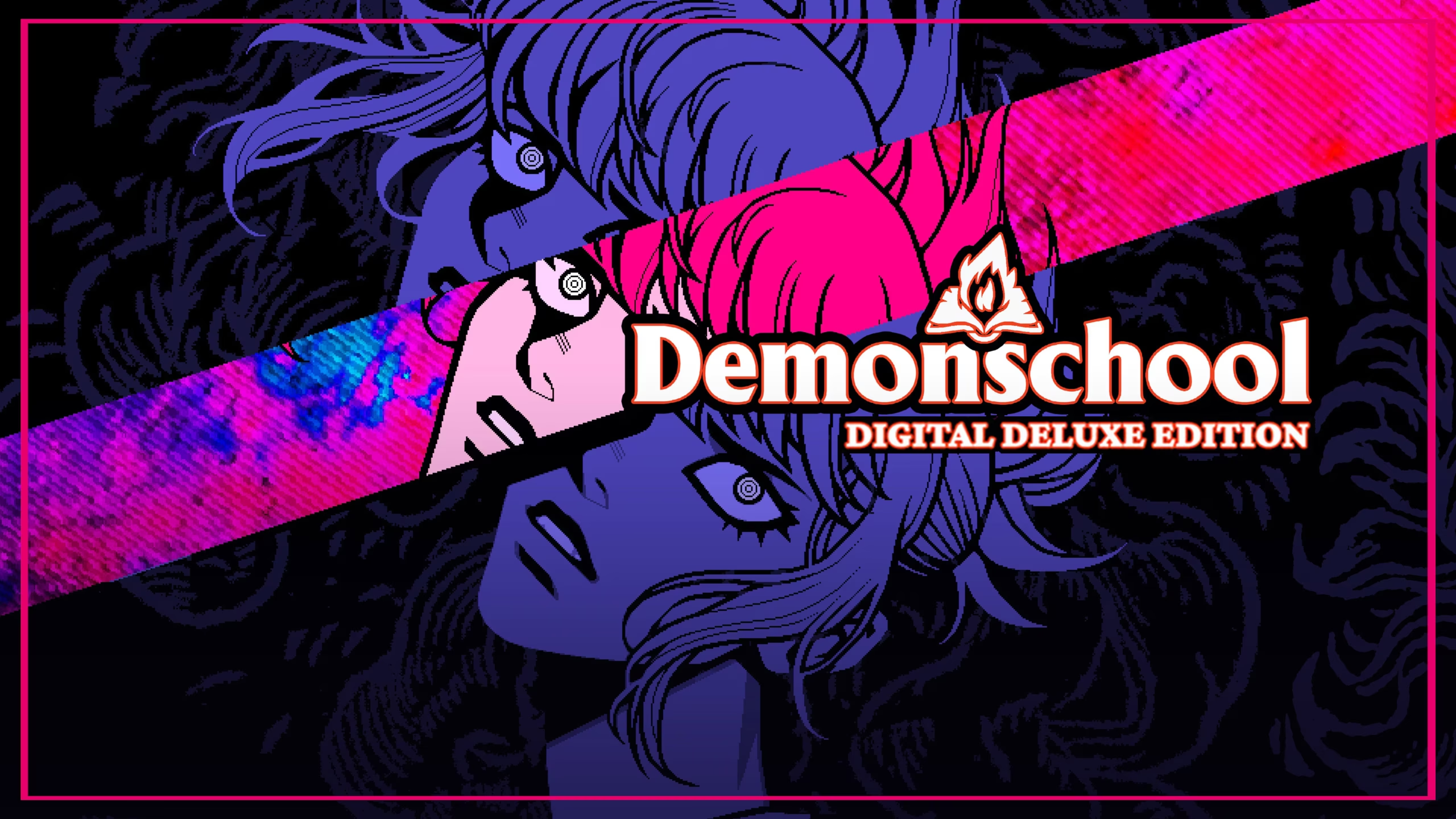
The first thing that hits you about DemonSchool is the visual assault—and I mean that in the best way possible. Drawing from 1970s Italian giallo horror films, every frame pulses with oversaturated reds and sickly greens, stark shadows cutting through neon-lit alleyways. Character portraits look ripped from Suehiro Maruo manga, all sharp angles and unsettling beauty. The game opens with students exploding into fountains of blood in a classroom, setting a tone that never quite lets you relax.
You play as Faye, the last of a demon-hunting bloodline, enrolling at a university on the mysterious Hemsk Island. She’s got pink hair, throws punches like she means it, and treats the impending apocalypse with the same energy most students reserve for midterms. Within minutes, she’s dragged the overachieving Namako, the muscle-bound sweetheart Destin, and the pacifist film nerd Knute into forming a demon-hunting club. Because of course that’s what you do in college.
The aesthetic isn’t just window dressing—it’s the entire vibe. 2D sprites move through 3D environments with this uncanny smoothness that feels like watching a possessed puppet show. Combat erupts in stylized violence, all crunchy sound effects and exaggerated impacts. The whole thing looks like what would happen if Atlus hired Lucio Fulci to art direct a Shin Megami Tensei game.
Chess Meets Choreography
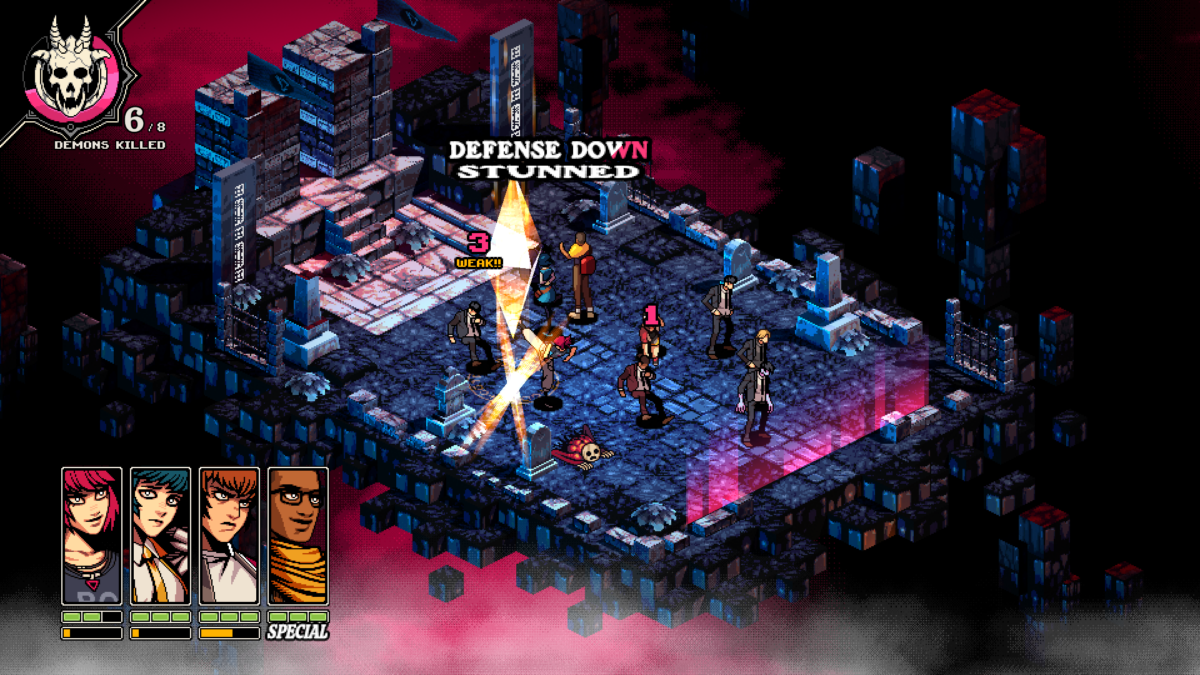
But here’s where DemonSchool gets really interesting: the combat system takes everything you know about tactics games and strips it down to pure essence. Forget menu diving, forget choosing attack types, forget confirming every little action. In DemonSchool, movement IS action.
Each battle has two phases: planning and execution. During planning, you have eight action points to distribute among your party. Move Faye forward? She automatically punches whoever’s in her path. Send Namako dashing through enemies? She debuffs them on contact. Position Destin to intercept an incoming attack? He’ll knock the enemy backward into your next character’s strike zone.
The genius is in the transparency. You can rewind any action during planning, experimenting endlessly until you find the perfect sequence. See exactly what enemies will do. Test different approaches. Build elaborate combo chains where one character’s knockback sets up another’s critical hit. It’s less about reacting to surprises and more about solving a violent puzzle where the solution involves perfect positioning and timing.
When you finally commit and hit execute, everything happens at once in this beautiful, chaotic ballet. Characters dash across the screen, enemies fly through the air, combos chain together in ways that make you feel like a tactical genius. Getting an ‘S’ rank by completing a battle in the minimum number of turns becomes an obsession, turning every encounter into a speed-chess match against yourself.
School Days, Demon Nights
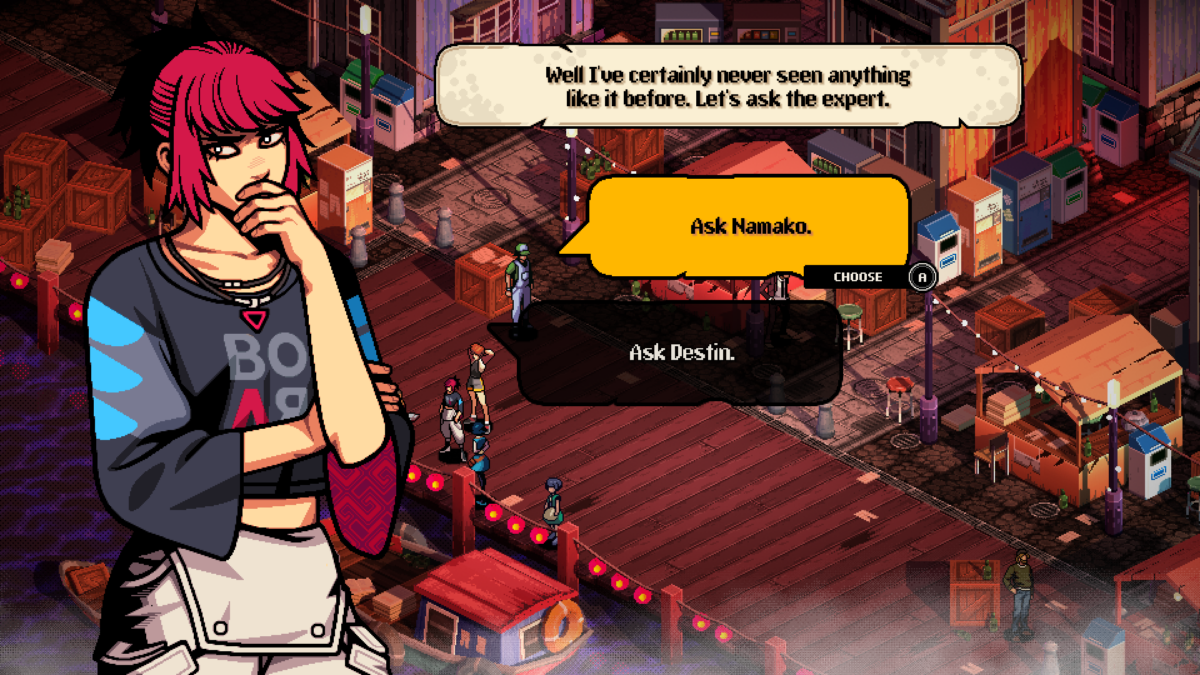
Between battles, DemonSchool embraces its school-life structure with a calendar system that feels more punk rock than prep school. Each day splits into morning, evening, and night segments that you fill with side quests, relationship building, and the occasional karaoke session. Weekends bring mandatory quizzes from your demon-hunting professor (because even when fighting the apocalypse, you can’t escape homework).
The game features fifteen recruitable characters, each with distinct combat styles and personal questlines. Building relationships isn’t just about unlocking combat bonuses—though combo attacks absolutely get stronger with higher bonds. It’s about uncovering why the sassy rival Kestrel hides behind aggression, or what drives the mysterious Ti to keep everyone at arm’s length. The writing walks this perfect line between genuinely touching and absolutely ridiculous, like when you help a student perfect their “quantum sandwich” or debate the philosophical implications of lost media with Knute.
What sets this apart from other social-sim hybrids is how it handles time management. Side quests don’t advance time, removing that Persona-style anxiety about optimization. You can explore, talk to NPCs, and tackle optional content without feeling like you’re wasting precious calendar days. It’s a small change that makes the experience feel more like hanging out and less like min-maxing a spreadsheet.
Fighting Your Masters
Where DemonSchool really shines is in how each character fundamentally changes your approach to combat. This isn’t just swapping out damage dealers—each demon hunter has their own philosophy of violence that reshapes the entire battlefield.
Take my favorite setup: Kestrel’s pull mechanic combined with Faye’s devastating punches. Kestrel yanks enemies into a cluster, Faye demolishes the group, and suddenly what looked like an unwinnable situation becomes a two-turn masterpiece. Or run the pacifist Knute, whose ward placements turn the battlefield into a minefield of buffs and debuffs that multiply damage exponentially.
The variety keeps combat fresh even after dozens of hours. Just when you think you’ve mastered the system, a new character joins with mechanics that break everything you thought you knew. That muscle mommy Ti I mentioned? She can throw enemies into each other for chain damage. Another character can turn enemy attacks into healing opportunities. By endgame, you’re conducting symphonies of destruction that would make Beethoven weep.
Boss fights deserve special mention for being absolute nightmares in the best way. These aren’t just bigger health bars—they’re paradigm shifts that force you to completely rethink your strategies. One boss splits the battlefield in two. Another summons waves of minions that must be managed while dealing damage. They’re puzzles within puzzles, each requiring multiple attempts to decode before that glorious moment when everything clicks.
Memory Gaps and Murder
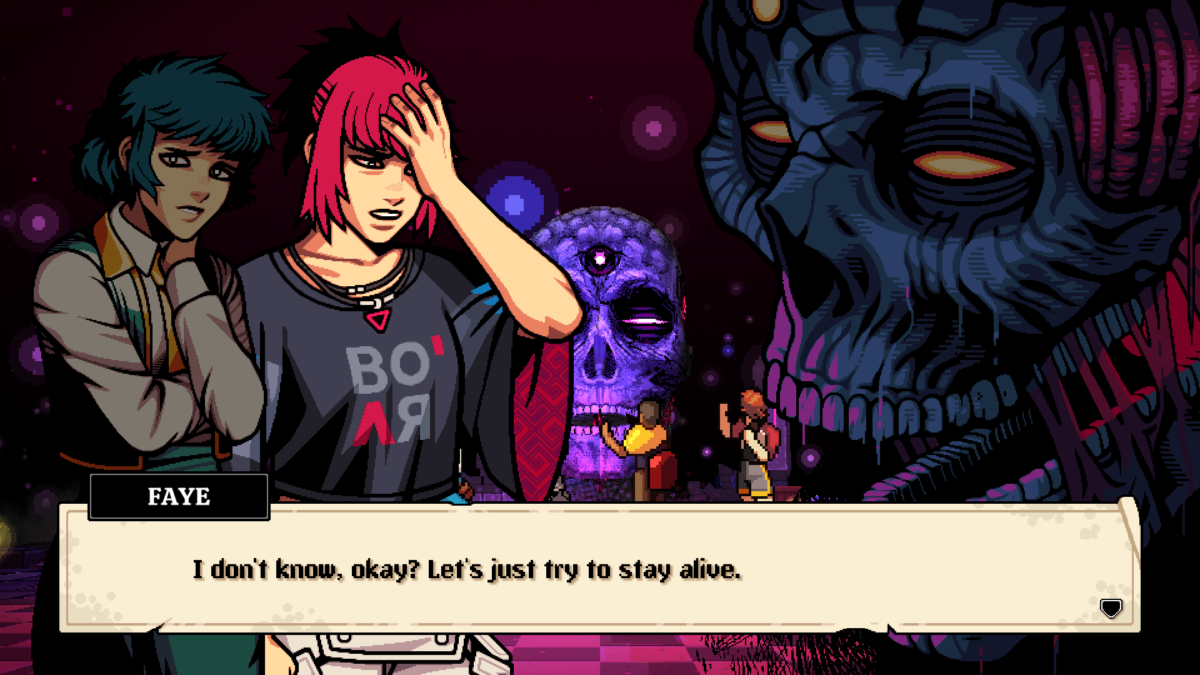
The story tackles something genuinely unsettling beneath its punk-rock exterior: the idea that demons don’t just kill people—they erase them. Evidence disappears. Families forget. That student who sat next to you in chemistry? Nobody remembers they existed once the demons take them. It’s a brilliant bit of existential horror that gives weight to every failed side quest and missed rescue.
Your misfit demon hunters combat this creeping dread with snark and solidarity, but the game never lets you forget the stakes. NPCs vanish between chapters. Background characters you’ve grown fond of simply stop appearing. The memory manipulation means even your victories feel temporary, like you’re fighting against an tide that’s slowly erasing everything you’re trying to save.
This could feel oppressive, but DemonSchool balances its darkness with genuine warmth. The relationships you build feel earned precisely because they exist in defiance of this encroaching void. Every stupid joke, every successful combo, every late-night conversation in the clubhouse becomes an act of resistance against oblivion.
Rough Edges in Paradise
DemonSchool isn’t perfect. The pacing can drag in the middle chapters when the calendar system forces you through weeks where the story has little to say. Some relationships feel underdeveloped—poor Mercy gets introduced early but never finds her narrative footing. The combat, while brilliant, can become repetitive when you’re fighting the same demon configurations for the fifth time in a row.
Technical issues plagued my playthrough too. Music occasionally cut out mid-battle. One crash lost me twenty minutes of progress. The UI, while stylish, sometimes prioritizes form over function—good luck reading some of those menu options on a Steam Deck screen.
But these feel like growing pains rather than fundamental flaws. Patches are already addressing the technical issues, and the core experience is strong enough to push through the rough spots.
The New Semester
DemonSchool succeeds because it understands what made those early Persona games special wasn’t just the dating sim elements or the demon fusion—it was the vibe. That feeling of being young and overwhelmed, fighting cosmic horror with nothing but your friends and your fists, finding hope in the face of absolute doom.
Necrosoft Games took that feeling, stripped away decades of genre cruft, and rebuilt it with Italian horror sensibilities and tactical combat that respects your intelligence. Every system feeds into the next: relationships enhance combat, combat rewards unlock story beats, story beats open new relationship paths. It’s a elegant ecosystem of punk rock and precision.
At $25, this is an absolute steal for anyone who’s ever wanted Persona to be weirder, tactics games to be faster, or horror games to have better soundtracks. It won’t replace your memories of playing Persona 3 for the first time, but it doesn’t need to. DemonSchool is carving out its own space in the genre, one perfectly-placed punch at a time.
In an industry full of games trying to be the next Persona, DemonSchool had the audacity to be the first DemonSchool. Class is in session, and attendance is mandatory.