
Marathon’s server slam open preview weekend launched February 26th, and after a weekend of white-knuckle extractions and devastating losses, I can confirm one thing: Bungie has made something that feels genuinely different from anything else in their catalog. This isn’t Destiny with permadeath bolted on. It’s a calculated gamble on a genre that has claimed more victims than success stories, and after roughly fifteen hours with the beta, I’m cautiously optimistic. And absolutely terrified to queue again.
This Longest 200 Meters of My Life
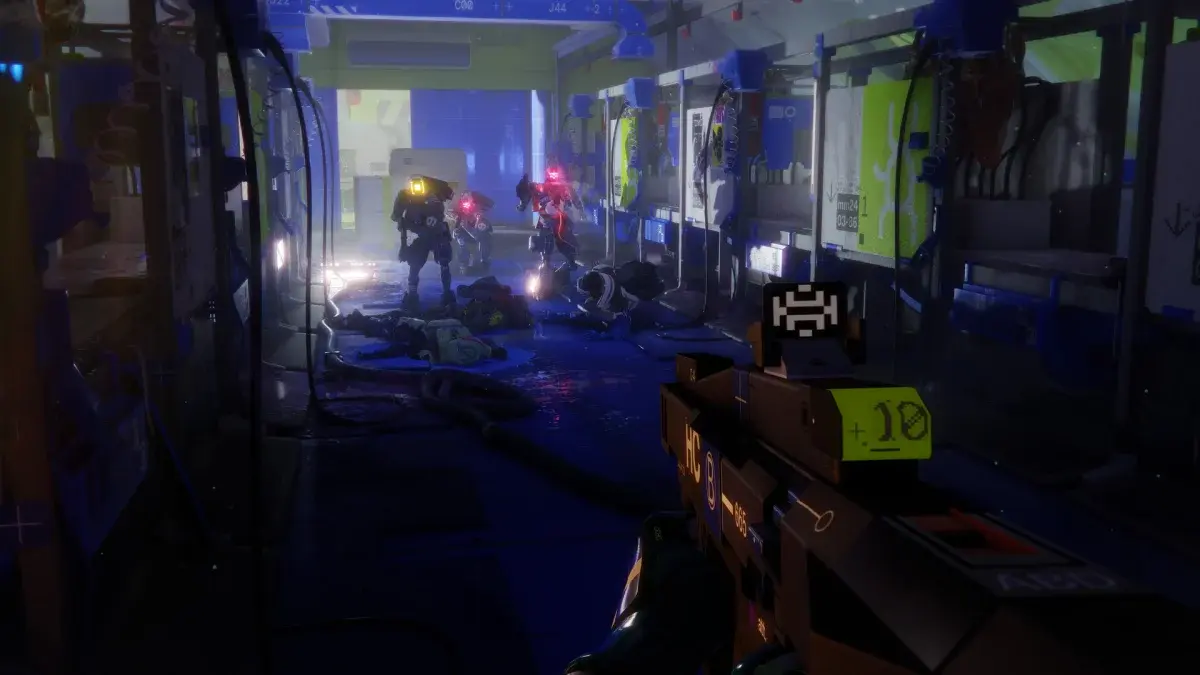
Extraction is the core tension that defines Marathon, and it’s incredibly entertaining. You drop into Tau Ceti IV with whatever gear you’re willing to risk, scavenge for valuable loot while avoiding AI combatants and other players, and attempt to extract before time runs out or someone puts you down. Death means losing everything you brought in and everything you found. The stakes are real in a way that most shooters simply can’t replicate.
What surprises me most is how effectively Marathon communicates this tension through its moment-to-moment gameplay. Every distant gunshot becomes a calculation: is that fight moving toward me or away? Every open doorway is a potential ambush. The extraction countdown timer creates a natural escalation that funnels players into increasingly desperate decisions. By the end of each drop, my shoulders were up around my ears from tension I didn’t realize I was holding.
This Isn’t Destiny With Permadeath
If you’re coming to Marathon expecting Destiny’s empowering space magic fantasy, you’re going to have a rough adjustment period. Bungie’s signature weapon feel is absolutely present—guns have that satisfying weight and responsiveness the studio is famous for—but it’s been deliberately restrained. In Destiny, you’re a demigod mowing through armies. In Marathon, you’re fragile, mortal, and acutely aware that every engagement could be your last.
Here, time-to-kill is brutal compared to Bungie’s previous work. Where Destiny’s Crucible gives you time to react, reposition, and recover, Marathon punishes hesitation with a trip back to the menu screen. Positioning and information matter far more than raw aim. The player who knows where enemies are coming from wins; the player with better reflexes but worse intel dies confused. Movement systems reinforce this philosophy—there’s no Titan skating or Warlock gliding here, just deliberate, tactical repositioning that rewards patience over aggression.
This recalibration took me several hours to internalize. My first instinct was to push aggressively, to trust in Bungie’s gunplay to carry me through firefights. That instinct got me killed repeatedly. Marathon wants you to think like a survivor, not a soldier. It’s a fundamental shift in design philosophy that I suspect will frustrate some Destiny veterans while delighting players who’ve been waiting for Bungie to make something with genuine teeth.
The Cel-Shaded Corpses of Tau Ceti IV
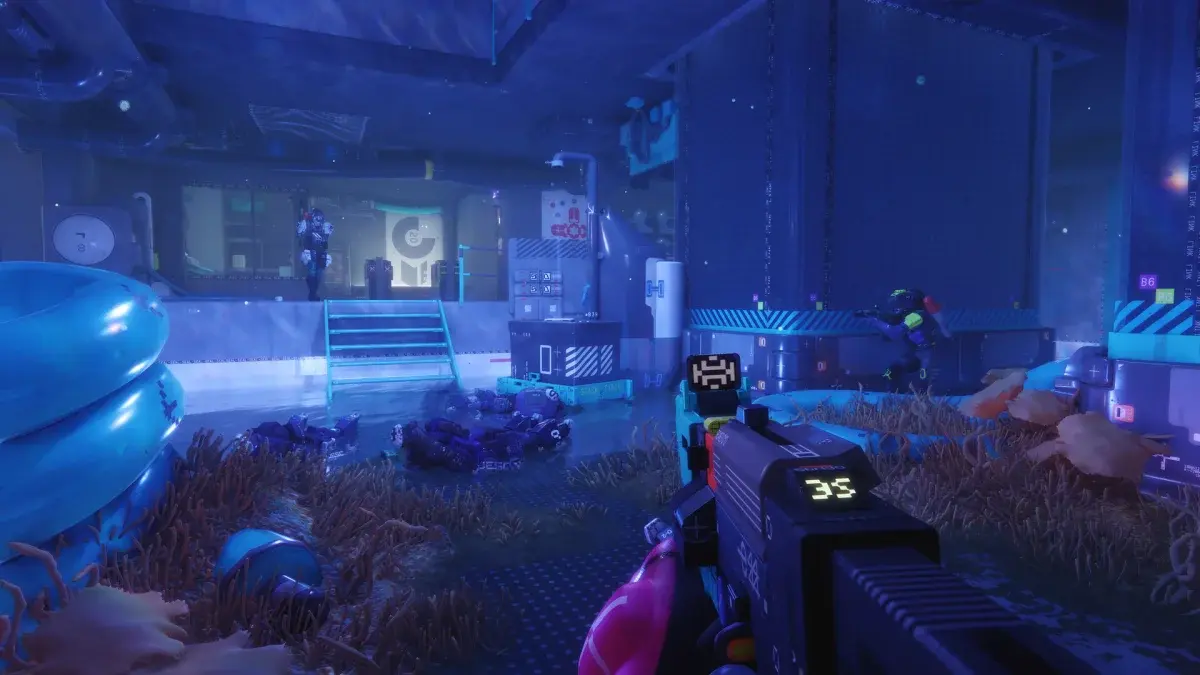
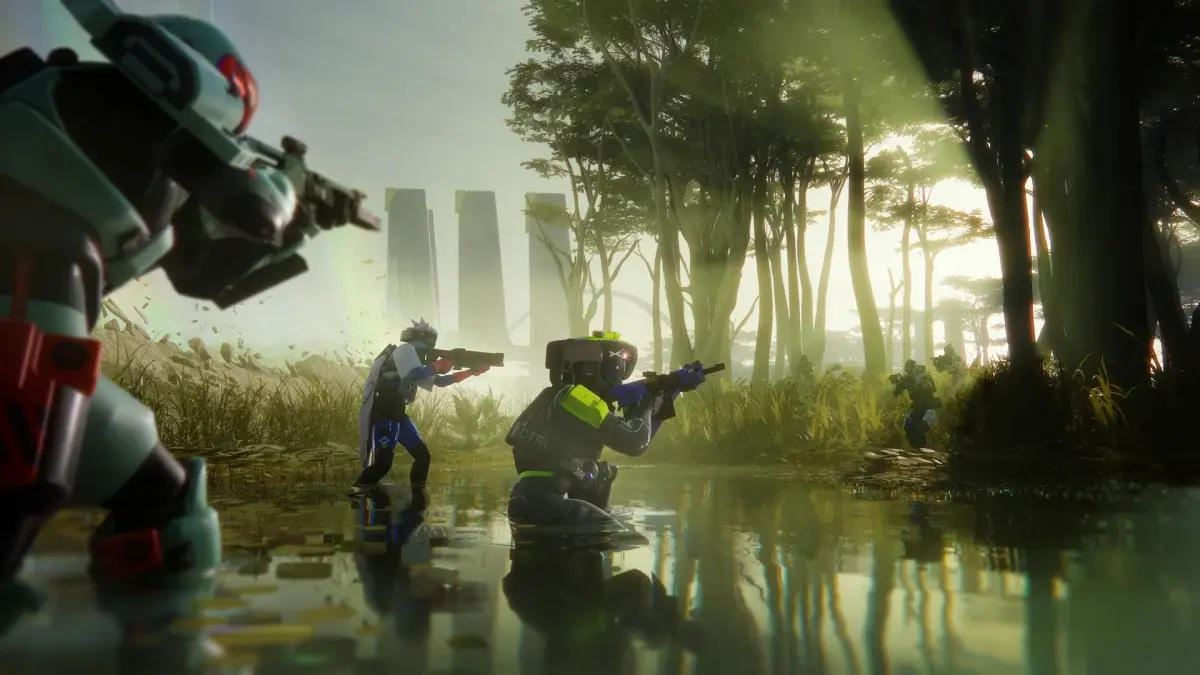
Marathon’s visual identity is striking and immediately sets it apart from the genre’s typically grimy aesthetic. The cel-shaded art style renders Tau Ceti IV’s alien landscapes in bold colors and clean lines, creating a world that’s simultaneously beautiful and hostile. It’s a deliberate contrast to Escape from Tarkov’s military realism, and it works better than I expected. There’s something uniquely painful about losing valuable loot in a place this gorgeous.
The visual clarity also serves a crucial gameplay function. In Tarkov, identifying threats often means squinting at murky shadows and indistinct silhouettes. Marathon’s stylized approach makes character and gear designs instantly readable—crucial for those split-second friend-or-foe decisions that determine whether you extract or die. I could identify Runner loadouts at a glance, which helped me make faster tactical decisions about whether to engage or evade.
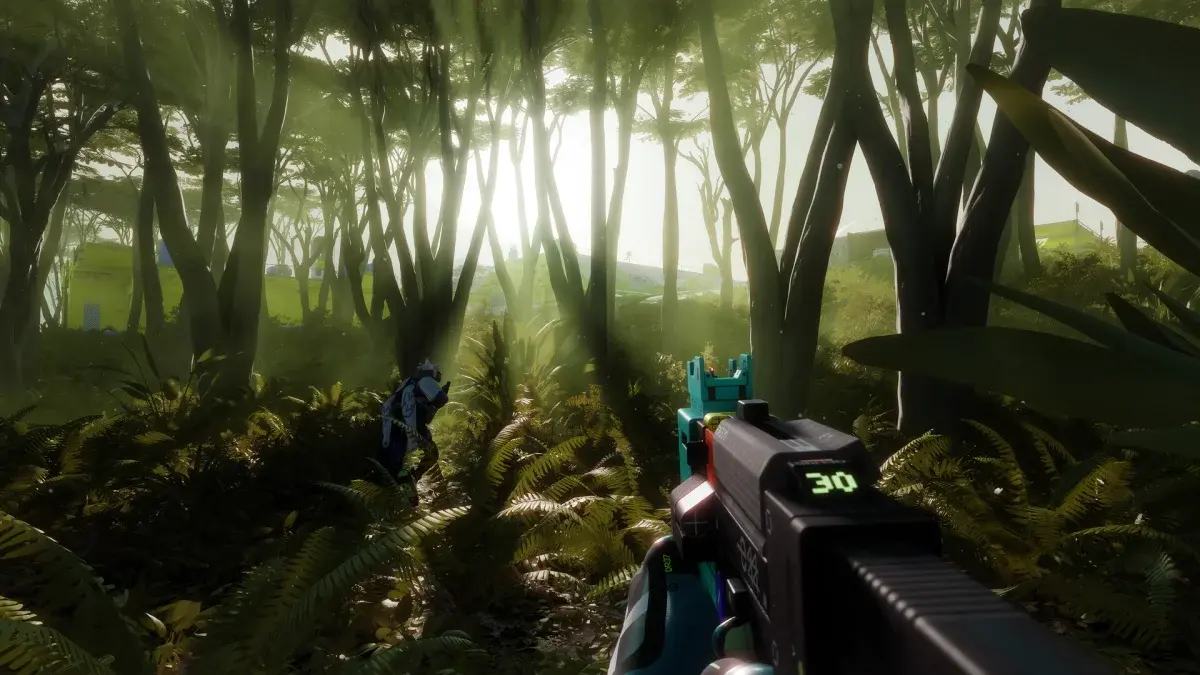
The environmental design deserves particular praise. Each map I played had distinct visual landmarks that made navigation intuitive without relying on minimap dependency. The alien architecture of Tau Ceti IV feels otherworldly while remaining functionally readable as a competitive space. It’s a difficult balance that Bungie seems to have nailed, creating arenas that are both aesthetically memorable and mechanically sound.
The Ghost of The Cycle: Frontier
We need to talk about the extraction shooter graveyard. The Cycle: Frontier launched with similar ambitions and shut down roughly eighteen months later. Numerous other attempts at the format have failed to gain traction outside Escape from Tarkov’s dedicated audience. Marathon is entering a genre with a brutal failure rate, and Bungie’s recent history—including significant layoffs in 2024 amid Destiny 2’s declining numbers—makes the stakes feel existential.
What’s Marathon doing differently? From what I can see in the beta, Bungie is betting on accessibility without sacrificing depth. The free-to-play model appears cosmetic-only so far, though monetization concerns will linger until we see the full launch storefront. The visual style makes the game more approachable than Tarkov’s intimidating realism. The tutorial and early-game systems ease players into the extraction loop rather than throwing them into the deep end immediately.
Server stability during the beta’s peak hours was promising but imperfect. I experienced a few disconnects during high-traffic periods, though nothing catastrophic. The real infrastructure test will come at launch when mainstream audiences flood in. Bungie’s experience running Destiny’s live service gives them relevant expertise here, but extraction shooters present different challenges—the consequences of a disconnect mid-raid are far more severe than getting booted from a Destiny strike.
What Joe Ziegler Means by ‘Stories Worth Telling’
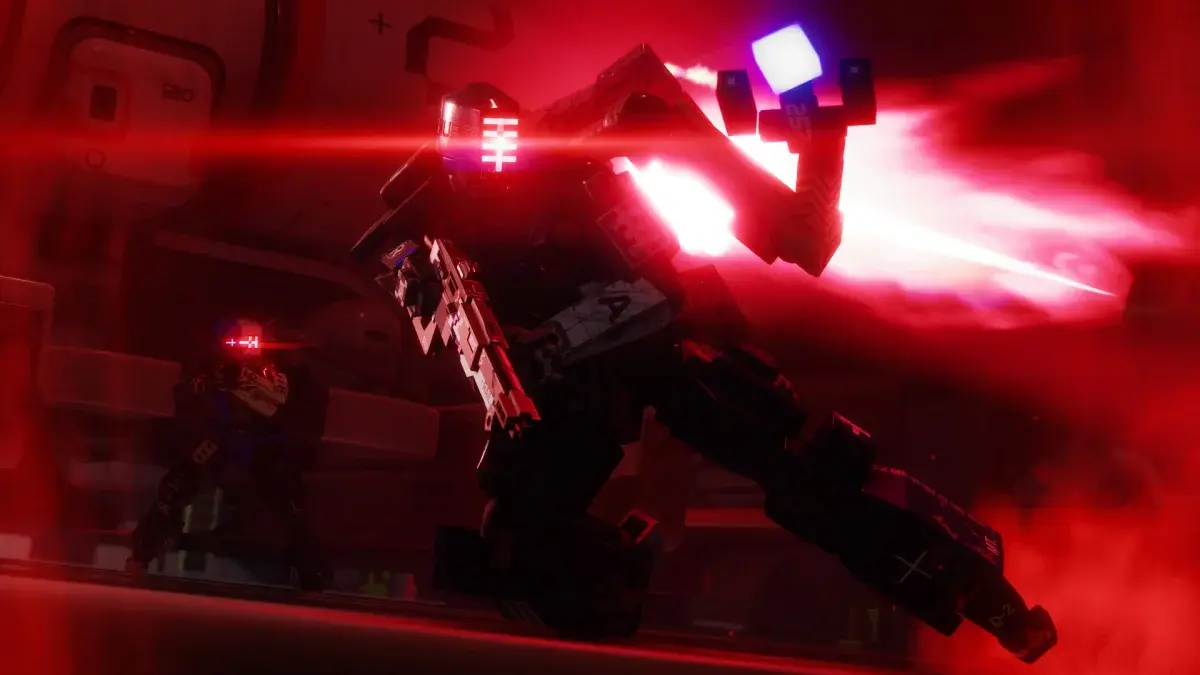
Game Director Joe Ziegler has described Marathon’s design philosophy as wanting “every extraction to feel like a story worth telling.” After a weekend with the beta, I understand what he means. The emergent narratives that arise from extraction gameplay are genuinely compelling in ways scripted content rarely achieves. My failed extraction with that artifact? That’s a story I’m still thinking about. The time I stumbled into a three-way firefight and escaped with loot from all three combatants? I’ll remember that raid for months.
Community clips are already flooding social media—dramatic betrayals between temporary allies, narrow escapes with health bars in the red, heroic extracts against impossible odds. The format naturally generates these moments because the stakes make every decision meaningful. When loss is real, victory feels earned in a way that conventional shooters struggle to replicate.
The question is whether Marathon can sustain this magic or if the stories will become routine. Tarkov veterans often describe a curve where the tension gradually fades as you master the systems and build comfortable wealth. Marathon’s long-term design decisions—loot economy, seasonal resets, progression systems—will determine whether it can keep generating fresh stories or becomes another grind once the novelty wears off. The beta can’t answer that question, but it does prove the foundation is solid.
The Newcomer Problem
Marathon faces a fundamental accessibility challenge: how do you onboard players who’ve never experienced extraction shooter tension without alienating the genre veterans who’ll form your core audience? The beta’s tutorial adequately explains the mechanical basics—movement, looting, extraction procedures—but it can’t prepare you for the emotional reality of losing everything to a single mistake.
Bungie has implemented some smart cushioning for new players. Early-game gear sets are cheap enough that losses don’t sting as badly while you’re learning. The matchmaking appears to consider player experience levels, though I can’t confirm the exact algorithms at work. The visual clarity I mentioned earlier also helps newcomers parse situations that would be overwhelming in more realistic extraction shooters.
But the core tension remains intact, and some players simply won’t enjoy it. If losing progress frustrates you more than it motivates you, Marathon probably isn’t your game. Bungie is walking a tightrope between mainstream accessibility and genre authenticity, and based on the beta, they’re leaning toward authenticity. That’s the right call for long-term health, but it means Marathon’s audience ceiling may be lower than some might hope.
What Bungie Needs to Fix Before Launch
The beta revealed several issues that need attention before full release. Audio occlusion is inconsistent—footsteps on metal surfaces are clearly audible, but movement across some terrain types produces unreliable sound cues. For a game where audio information is life or death, this needs polish. I died at least twice to enemies I should have heard coming.
Extraction point camping is already emerging as a dominant strategy on certain maps. The current extraction timing and positioning allows aggressive players to set up ambushes with minimal counterplay options. Bungie needs to either add multiple extraction options, implement anti-camping mechanics, or redesign the problem zones. This is a solvable issue, but it needs solving before launch.
Here’s the thing: The inventory management UI also needs streamlining. There are too many clicks between dying and redeploying, which disrupts the “one more raid” compulsion that extraction shooters depend on. The current flow involves navigating multiple menus to rebuild a loadout, and while organization options exist, the default experience is clunkier than it should be. Quality-of-life improvements here would significantly improve the moment-to-moment experience.
Marathon’s beta proves Bungie can make an extraction shooter that feels distinct and compelling—one that leverages their gunplay expertise while embracing the genre’s punishing emotional core. Whether they can sustain it through launch, live service updates, and the brutal competitive landscape is the real extraction they’re attempting. For now, I’m ready to see what’s in store.