
This dealer’s skeletal fingers slide a card across the felt, edges singed and smoking. You’re not playing for chips anymore—you’re playing for your soul. Black Jacket’s demo dropped this week, and after several hours at hell’s blackjack table, I’m ready to declare that the post-Balatro renaissance has its next contender. Developed by Mipumi Games and published by Skystone Games, Black Jacket takes the formula that made Balatro a 2024 phenomenon and applies it to blackjack with impressive results. The demo, now available on Steam, has been generating enthusiastic responses from players and press alike. Having spent considerable time with it myself, I’m inclined to agree.
Here, Devil’s in the Details
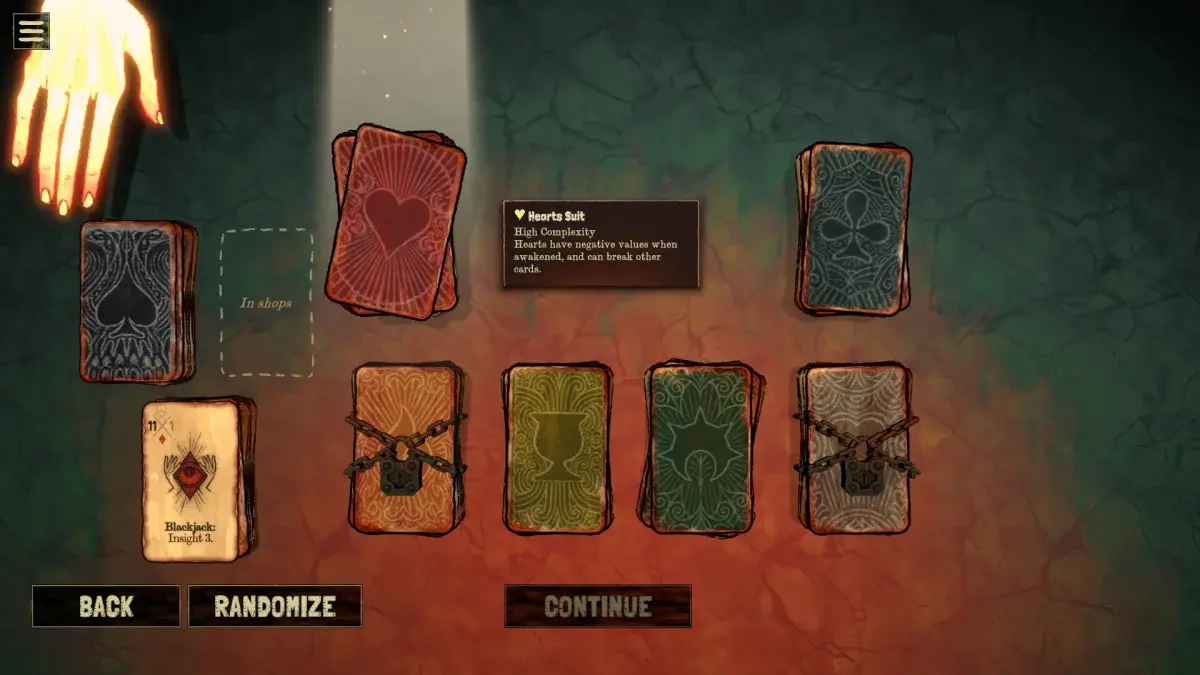
It’s clear Mipumi Games understood that presentation matters as much as mechanics. Menu options don’t just highlight when selected—they burn away, leaving scorched remnants before revealing the next screen. Your cursor is a skeletal hand, and every card in your deck features singed edges that curl slightly, as if they’ve been pulled fresh from hellfire. It’s the kind of committed aesthetic that transforms a card game into an experience. The hell-themed presentation isn’t just window dressing; it permeates every interaction in ways that reinforce the stakes.
You’re not grinding for high scores or currency here—you’re gambling for your soul’s freedom. That narrative framing gives weight to every hand dealt, every risk taken. When you bust on a 22, it feels less like a mechanical failure and more like the house getting what it always wanted. What impresses me most is how these aesthetic choices enhance rather than distract from the gameplay. The visual flourishes are quick and punchy, never interrupting the flow of a hand. Mipumi has found that sweet spot where style and substance feel inseparable, where the singed cards and infernal atmosphere make the blackjack itself feel more consequential.
21 Ways to Lose Your Soul
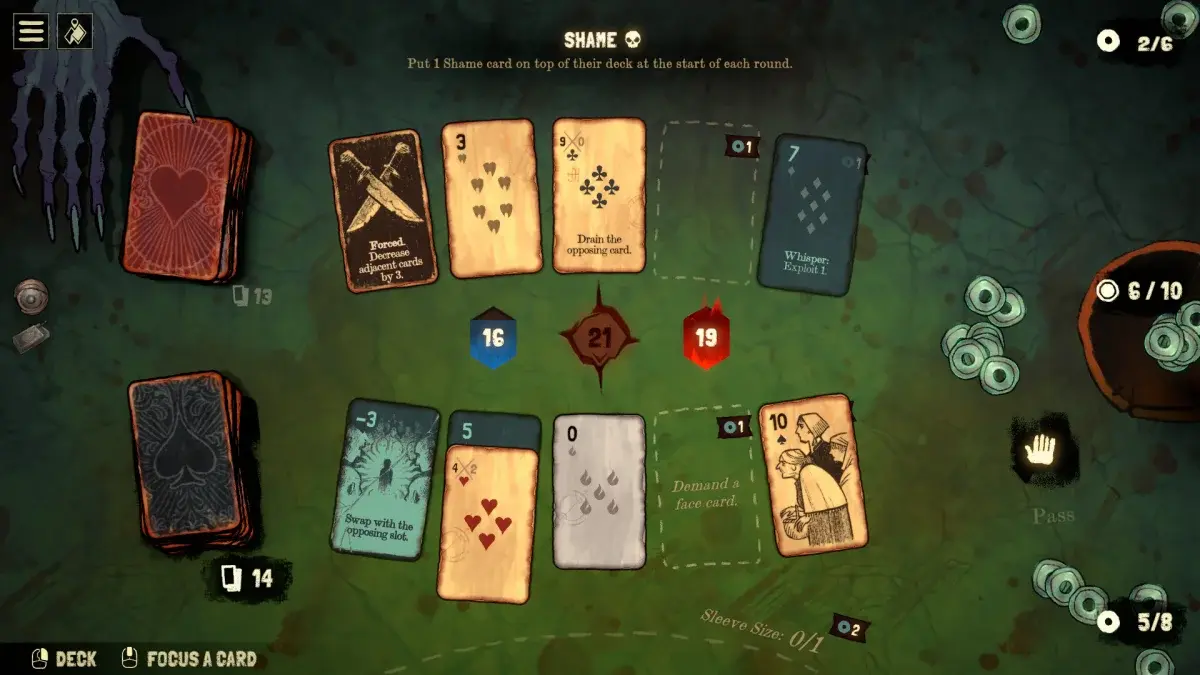
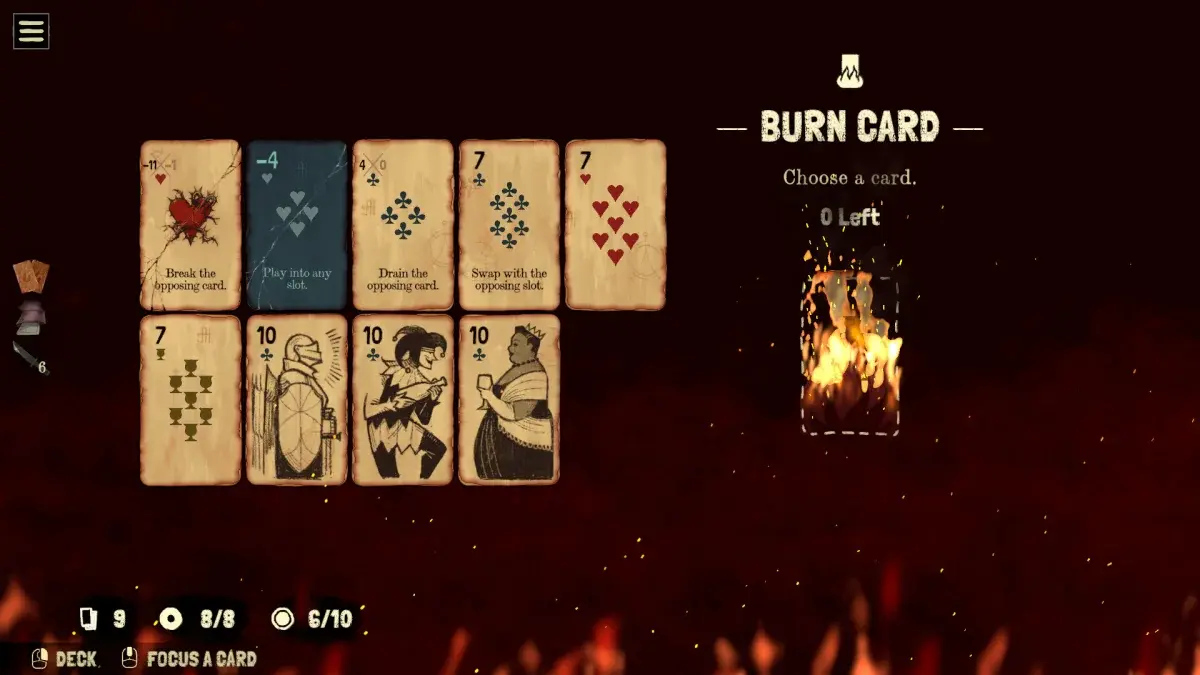
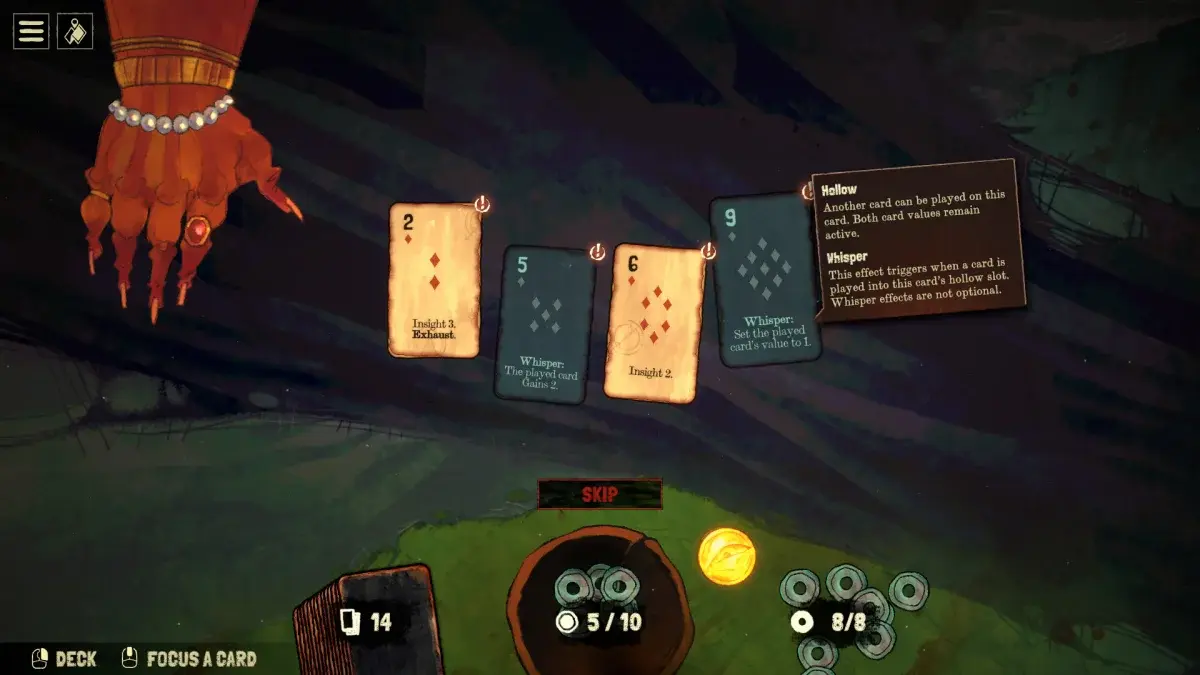
At its core, Black Jacket plays by familiar rules: get as close to 21 as possible without going over, beat the dealer’s hand. But like Balatro did with poker, the game layers special card powers and combination mechanics on top of that foundation until something entirely new emerges. Cards aren’t just numbers—they’re abilities waiting to chain together in increasingly elaborate ways. The combination chaining is where Black Jacket’s depth reveals itself. Certain cards trigger effects when played in sequence, others modify your hand total in unexpected ways, and building a deck that enables these synergies becomes the meta-game within the game.
Early runs feel like standard blackjack with occasional surprises; later runs, once you understand the card interactions, feel like solving puzzles while gambling. It’s that roguelike deckbuilder magic where knowledge compounds into mastery. What makes blackjack particularly well-suited to this treatment is its inherent push-your-luck tension. Every hit is a gamble, every stand a calculated risk. Black Jacket amplifies this by giving you more tools to manipulate outcomes while also raising the stakes. You might have a card that lets you survive a bust, but using it means it won’t be available later when the dealer’s showing an ace. The risk calculus becomes deliciously complicated in ways the demo only hints at.
Reed Between the Lines
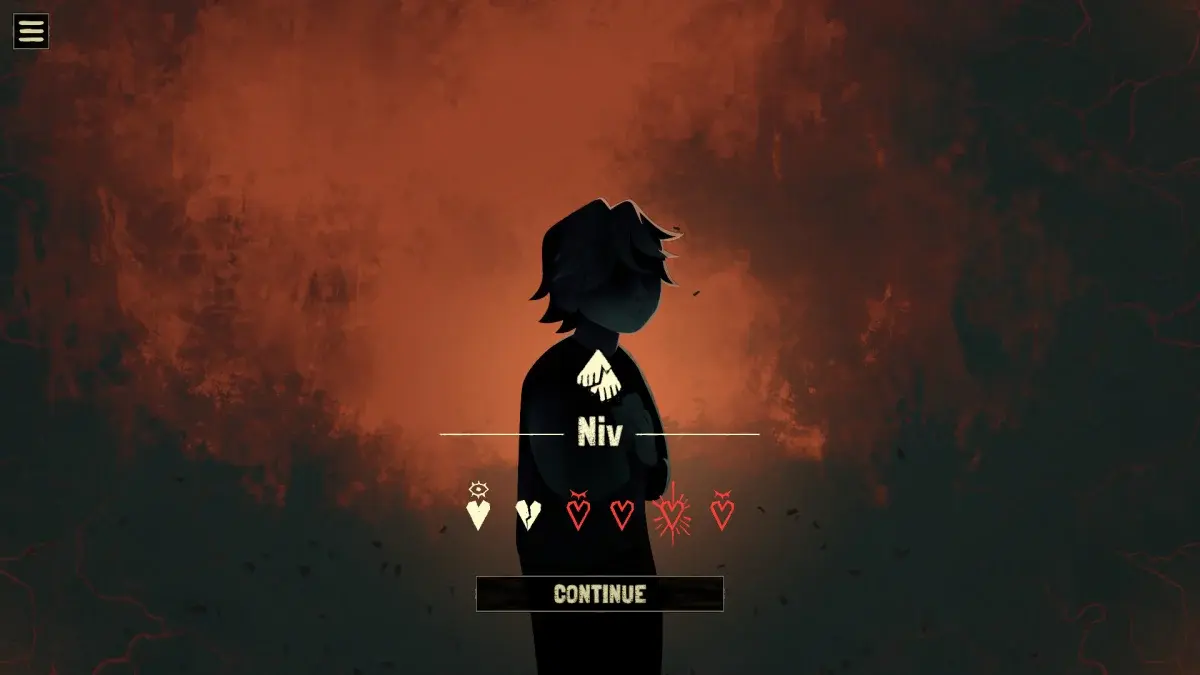
The demo introduces players to Reed, a tutorial character who guides you through Black Jacket’s mechanics. What’s remarkable about Reed is how much personality comes through despite—or perhaps because of—the minimalist approach to character design. You never see Reed’s face or hear their voice. Everything is communicated through hand gestures alone. This constraint forces Mipumi to be incredibly deliberate with animation, and the results are striking. Reed’s hands convey impatience, encouragement, warning, and satisfaction through movement alone.
A dismissive wave communicates “you’ve got this” more effectively than any voice line could. A finger raised in caution before a risky play says everything about the stakes without saying anything at all. It’s a masterclass in visual storytelling through restraint. By limiting themselves to hands, the developers created a character more memorable than many fully-rendered NPCs. This approach extends to the game’s broader design philosophy—Black Jacket trusts players to understand through showing rather than telling, and the demo is stronger for it.
The Balatro Question
Let’s address the elephant in the room: yes, Black Jacket is essentially “Balatro but blackjack.” And honestly? That’s not a criticism. Balatro proved that traditional card games could be transformed into compelling roguelike experiences, and there’s plenty of room for other games to explore that space with different foundations. Poker and blackjack are fundamentally different games, and that difference creates meaningfully distinct experiences. Where Balatro’s poker hands encourage building toward specific combinations over multiple cards,
Black Jacket’s blackjack foundation creates faster, more immediate decisions. Each hand resolves quickly, and the tension comes from individual moments rather than accumulated scoring. The risk calculus shifts from “how do I maximize this hand’s point value” to “do I push my luck right now, in this moment.” It’s a different rhythm, a different kind of satisfaction. The emerging subgenre of card game roguelikes has real legs precisely because traditional card games offer such varied foundations to build from. We’ve seen poker and blackjack get this treatment; I wouldn’t be surprised to see games tackle rummy, bridge, or even something like cribbage in the coming years. The design space is vast, and Black Jacket demonstrates that skilled developers can find fresh angles within it.
All In on 2026
Mipumi Games and Skystone Games are planning an ambitious rollout for Black Jacket’s full release sometime in 2026. The planned platform list is remarkably broad: PC via Steam with Linux and MacOS support, Nintendo Switch and the upcoming Switch 2, PlayStation 4 and 5, Xbox One and Series X|S, and even mobile. That kind of spread suggests confidence in the game’s appeal across different player bases, and based on the demo, that confidence seems warranted. The partnership between developer Mipumi Games and publisher Skystone Games appears to be positioning Black Jacket for maximum reach. While pricing remains TBD, the multi-platform approach indicates they’re betting on volume and accessibility rather than limiting the game to a single ecosystem.
For a roguelike deckbuilder that works in quick sessions, mobile support in particular could be significant. What the demo doesn’t reveal is perhaps as interesting as what it shows. We don’t yet know the full scope of the card pool, how meta-progression systems work between runs, or how many distinct opponents or bosses await in the full game. The demo provides enough to demonstrate the core loop works brilliantly, but the longevity of any roguelike depends on variety and depth that only the full release will reveal. After spending time with Black Jacket’s demo, betting on this game feels like a safe wager. Mipumi has nailed the fundamentals: satisfying mechanics, committed atmosphere, and that elusive “one more run” quality that defines great roguelikes. The full release can’t come soon enough. Until then, the demo is free, and if you’ve ever enjoyed a deckbuilder or spent a night at a blackjack table, hell’s casino is worth a visit.