
I have to admit, I’ve before now, across my hundreds of games of Stellaris, I’ve never had a session where I had no planets hours in. No borders expanding across the galaxy map, no planets to manage, no defensive starbases forming a protective shell around my territory. Instead, I was threading my Arkship through the space between empires, dropping Waystations like breadcrumbs, negotiating contracts with civilizations that viewed me as something between a useful tool and a potential threat. After a decade of painting the galaxy my faction’s color, Stellaris finally dared me to exist in the negative space, and I’m loving the journey.
Life Aboard the Arkship
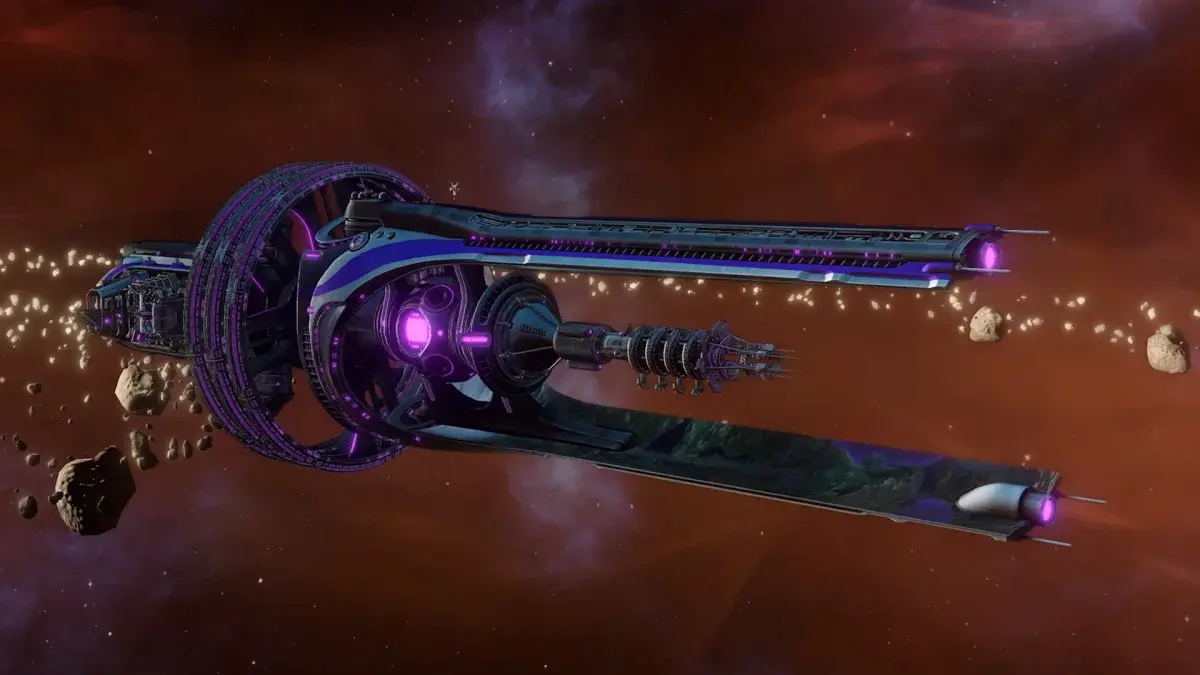
Stellaris: Nomads’s Arkship is everything. Your capital, your fleet, your population center, your identity. Choosing between Military, Scientific, and Civilian class configurations is not simply selecting a bonus; it fundamentally reshapes how you’ll engage with the galaxy for the next several dozen hours. My Military Arkship bristled with weapons platforms and fighter bays, turns contract enforcement into my primary revenue stream. In another session I went with a Scientific configuration and spent the early game charting anomalies and selling research data, my Arkship more of a mobile laboratory than fortress.
In return, the real challenge is the commitment each upgrade demands. Installing a hydroponic expansion wing means sacrificing potential hangar space. Reinforcing your hull plating trades off against sensor arrays. Every module represents a strategic choice you’ll live with, and the Arkship’s limited capacity prevents the usual Stellaris approach of eventually having everything. I found myself agonizing over decisions that would have been automatic in base game empire management.
This ship-as-civilization concept elegantly dissolves the traditional wide versus tall debate. You can’t sprawl across dozens of systems because you don’t claim systems. You can’t turtle in a single hyper-developed homeworld because your homeworld moves. What remains is pure adaptation: reading the galactic situation and configuring your mobile nation to exploit it.

Charting the Waylines
Waystations transform how I think about space itself. In traditional Stellaris, empty systems are obstacles between valuable planets. For nomads, those empty systems become the board you’re playing on. I established a Waystation at a junction between three major empires and watched it become the most valuable piece of infrastructure I owned, a neutral trading hub that generated influence simply by existing where everyone needed to pass through.
Credit where it’s due, Influence spreads through presence and reputation rather than borders. Settled empires still respect their colored boundaries, but nomads exist in the connective tissue between them. My network of Waylines and stations created a shadow geography overlaid on the traditional map, routes of commerce and communication that I controlled without owning a single planet. When a trade war erupted between two neighbors, my Waystations became essential neutral ground.
The galaxy feels genuinely larger when you’re threading through it rather than painting it your color. Systems I would have dismissed as resource-poor backwaters in a standard campaign became crucial waypoints, their strategic value derived from position rather than production. I started thinking like a navigator instead of a conqueror.
Mercenaries, Mediators, and Migrants
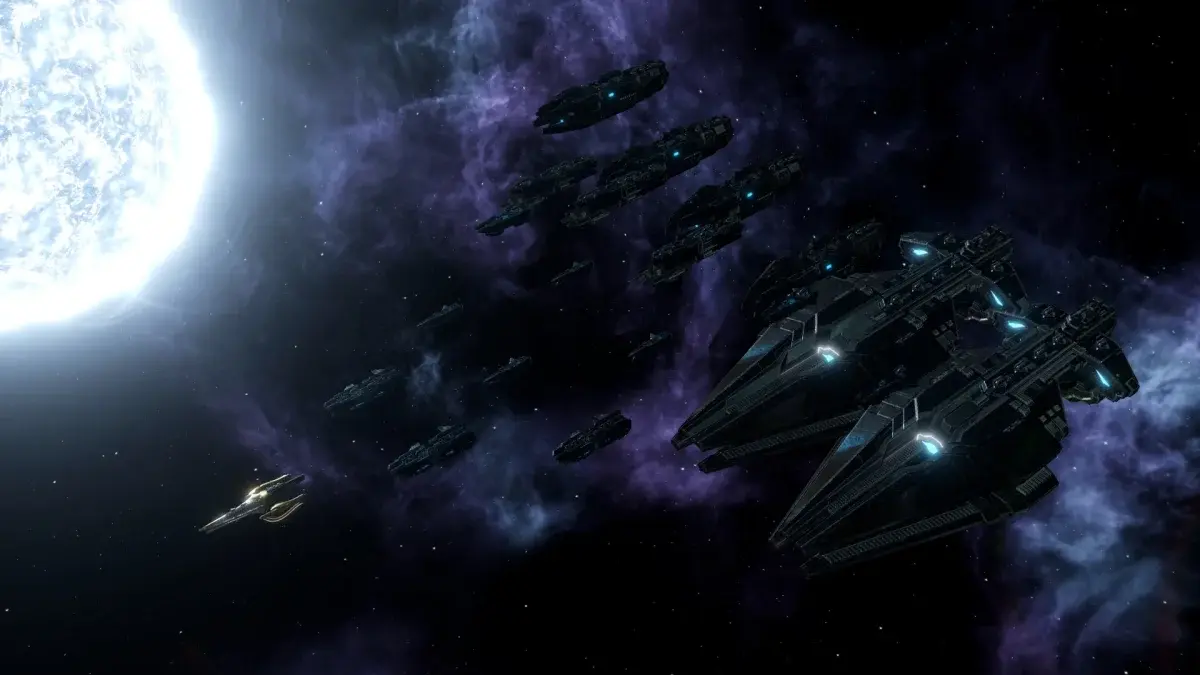
The contract system provides structure without the rigidity of traditional 4X objectives. Early game, I took whatever work kept my Arkship fueled and my population fed: escorting merchant convoys, surveying dangerous systems, occasionally cracking skulls for empires that didn’t want their fleets associated with dirty work. As my reputation grew, contracts became more selective. I could afford to refuse jobs that conflicted with my long-term positioning.
Playing as perpetual outsiders creates fresh diplomatic dynamics with empire types I’ve encountered hundreds of times. That xenophobic fallen empire that usually just exists as a late-game obstacle? They’ll still talk to nomads because we don’t threaten their territory. The federation of democracies that would never ally with my authoritarian neighbors? They’ll hire my Arkship for sensitive operations because I’m not technically part of any political bloc. Nomads slip through diplomatic cracks that don’t exist for settled civilizations.
The tension between independence and reliance on settled empires drives engaging plots. I needed their contracts for resources and their Waystations for network expansion, but every dependency risked entanglement in their conflicts. When my primary employer declared war on a nation hosting three of my Waystations, I had to choose between profitable neutrality and lucrative loyalty. These aren’t decisions base Stellaris asks you to make.

Defenders Without a Home
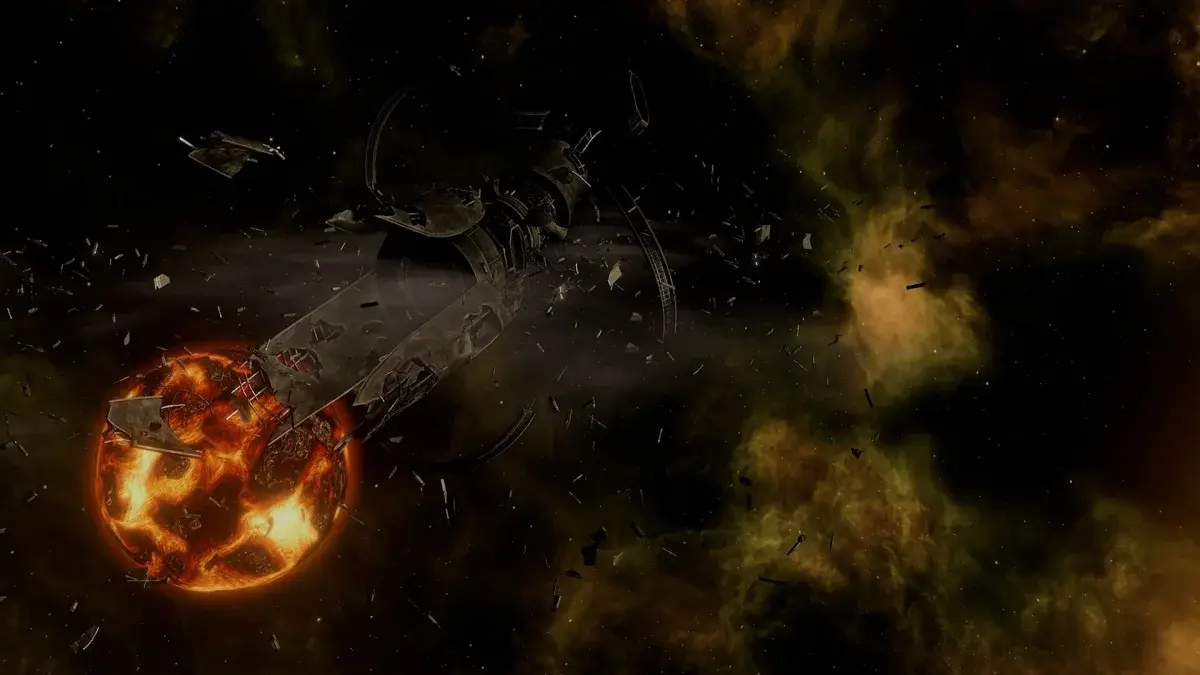
Crisis events hit differently when you can’t turtle behind fortified borders. The Prethoryn Scourge doesn’t care about my Waystation network. The Unbidden will consume my Arkship as readily as any planet. When the late-game threats emerged, I couldn’t rely on chokepoint fortresses and defensive pacts. I had to move, constantly repositioning to stay ahead of the devastation while coordinating with settled empires suddenly very interested in my mobile military capacity.
Thing is, The Defender of the Galaxy storyline transforms nomads from galactic drifters into unlikely saviors. There’s genuine narrative weight to homeless wanderers rallying settled civilizations against existential threats. My Arkship had spent decades as a mercenary, a trader, an outsider. Becoming the linchpin of galactic defense felt earned rather than assigned.
Late-game maintains momentum better than base Stellaris thanks to constant mobility. No waiting for fleet reinforcements to trickle across your empire. No managing dozens of planets while crisis fleets burn through your territory. Just your Arkship, your Waystation network, and the desperate coordination of civilizations that spent centuries treating you as convenient help. The pacing stays tight when your entire nation can relocate in a single jump.
The Stars aren’t Our Destination
Nomads represents Stellaris at its most conceptually ambitious. Paradox not only brought some massive new mechanics; they questioned the fundamental assumptions underlying 4X strategy as a genre. Expansion without territory. Power without borders. Home without a planet. At $24.99, it’s priced like a major expansion and delivers like one, offering dozens of hours of genuinely fresh engagement with a decade-old game.
Veterans conditioned by traditional territorial play will face a steep adjustment period. Hell, I did. I spent my first campaign fighting instincts built over hundreds of hours, reaching for colonization options that didn’t exist, planning defensive lines I couldn’t build. Muscle memory failed me at first. Some interactions with settled empires feel underdeveloped compared to nomad-specific content, and contract variety can thin out in extended campaigns. But the core meat and potatoes of the expansion bring a lot of fun and unique gameplay.
Nomads asks a question Stellaris has never asked before: what if home was the journey, not the capital planet? If that question interests you, the answer is worth the voyage.